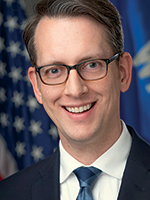
Photo of Mike Bare
D Wisconsin House · District 80 On the 2026 ballot

Rep. Mike Bare

Compare
Total votes
426
all sessions
Attendance
100%
of floor votes
Near the chamber average
With party
97%
of cast votes
Near the chamber average
Bipartisan score
1%
crosses aisle rarely
Near the chamber average
Sponsored
731
bills & resolutions
Near the chamber average
Committees
5
assignments
731 bills and resolutions

Sponsored bills

Total
731
Primary
731
Co-sponsor
0
This page
731
matching current filters
Primary AB 1199
Failed · Wisconsin House · Lead sponsor
Relating to: fee for the inland waters trout stamp. (FE)

Maddy summaryThis bill proposes changing the fee for the inland waters trout stamp from $9.75 to $15.75. It directly affects anglers who purchase this stamp to fish for trout in inland waters. The change is made by amending the relevant section of the state statutes. The bill was introduced in 2026 but failed to pass during the legislative session.

Failed Apr 9, 2026 0 co-sponsors
Primary AB 1203
Failed · Wisconsin House · Lead sponsor
Relating to: net zero emissions, carbon-free and renewable energy standards, and creating an office of sustainability and clean energy, granting rule-making authority, making an appropriation, and providing a penalty. (FE)

Maddy summaryThis bill establishes a comprehensive clean energy framework requiring Wisconsin to achieve 100 percent clean electricity production and net-zero carbon emissions by 2050. It creates a new Office of Sustainability and Clean Energy within the Department of Administration to develop and update an economy-wide decarbonization roadmap using sector-based modeling. The legislation sets specific interim targets for carbon-free electricity, including 50 percent by 2030, 65 percent by 2035, 80 percent by 2040, 90 percent by 2045, and full carbon-free status by 2050. State agencies must consider purchasing renewable energy from providers with long-term contracts, though the requirements do not apply if generation is not technically feasible or cost-effective. The bill also provides funding for technology implementation and defines carbon-free resources to include hydroelectric power alongside other renewable sources.

Failed Apr 9, 2026 0 co-sponsors
Primary AB 1234
Failed · Wisconsin House · Lead sponsor
Relating to: human growth and development instruction. (FE)

Maddy summaryThis bill requires Wisconsin school boards to provide age-appropriate, medically accurate instruction on human growth and development to students from kindergarten through 12th grade. The legislation mandates that any such program include specific topics such as reproductive anatomy, puberty, gender identity, sexual orientation, online safety, and the benefits of abstinence alongside information about contraceptives and disease prevention. Schools must use evidence-based materials recognized by leading medical organizations and ensure instruction supports communication between students and their families about healthy decision-making. The bill also addresses how to handle gender separation in classrooms and emphasizes teaching consent, respectful behavior, and healthy relationships.

Failed Apr 9, 2026 0 co-sponsors
Primary AB 890
Failed · Wisconsin House · Lead sponsor
Relating to: vaccination of minors without parental consent. (FE)

Maddy summaryAB 890 allows healthcare providers to administer medically appropriate vaccines to minors aged 16 or older without parental consent if the minor requests it. The bill requires providers to obtain the minor’s consent before billing third parties for the vaccination; if the minor declines third-party billing, they pay directly and the department bills them per existing fee rules. This directly affects minors aged 16+ seeking vaccinations, healthcare providers, and billing processes for such services. The policy changes focus on expanding minor autonomy for specific vaccinations while maintaining clear billing requirements.

Failed Apr 9, 2026 0 co-sponsors
Primary AB 854
Failed · Wisconsin House · Lead sponsor
Relating to: violence prevention grants and making an appropriation. (FE)

Maddy summaryAB 854 creates a grant program funded by taxes on vapor products to support violence prevention efforts. It directs $30,000 for fiscal year 2025-26 and $120,000 for 2026-27 toward local health departments or tribal health centers. These entities can use the funds to run violence prevention programs or award grants to community organizations, but they cannot distribute money to law enforcement agencies or any groups working with them. The bill specifies that applications for these grants must be submitted by June 30 each year.

Failed Apr 9, 2026 0 co-sponsors
Primary AB 182
Signed into law · Wisconsin House · Lead sponsor
Relating to: changes to the low-income housing tax credit. (FE)

Maddy summaryAB 182 amends state tax statutes to clarify how low-income housing tax credits are allocated to owners in multi-entity business structures. It specifies that partnerships, limited liability companies, and tax-option corporations cannot claim the credit directly; instead, partners, members, or shareholders must claim it based on their ownership share or a written agreement. A new provision (76.639(3)(b)) explicitly allows insurers who are partners/members/shareholders to claim credits based on their stake in qualifying housing projects. The bill requires entities to calculate and provide credit allocations to owners, with written agreements needed for non-proportional allocations, and holds individual claimants responsible for tax disputes.

Signed into law Apr 9, 2026 0 co-sponsors
Primary AB 373
Signed into law · Wisconsin House · Lead sponsor
Relating to: creating a refundable individual income tax credit for the parent of a stillbirth and making an appropriation. (FE)

Maddy summaryAB 373 creates a refundable $2,000 individual income tax credit for parents who experience a stillbirth in the state, as documented by a fetal death report. The credit is refundable, meaning parents who owe less in income tax than the credit amount will receive the difference as a cash payment from state funds. Eligibility requires the stillbirth to meet state reporting criteria (per §69.18), and rules specify $2,000 for joint filers per stillbirth or $1,000 each for unmarried parents or separate filers. The credit must be claimed within the standard tax filing deadline and cannot be used by nonresidents or for partial tax years.

Signed into law Apr 9, 2026 0 co-sponsors
Primary AB 1168
Failed · Wisconsin House · Lead sponsor
Relating to: medical debt abolition and making an appropriation. (FE)

Maddy summaryThis bill establishes a program to eliminate medical debt for eligible Wisconsin residents by creating a $10 million annual appropriation for the Department of Health Services to purchase and cancel outstanding medical bills. To qualify, residents must either have household income at or below 400 percent of the federal poverty line or owe medical debt equal to at least 5 percent of their annual household income. The department will identify eligible individuals, negotiate with healthcare providers and debt collectors to buy their outstanding balances, and then formally abolish the debt while minimizing tax consequences for recipients. The program prioritizes purchasing debt from providers serving low-income populations and those in areas disproportionately affected by medical debt, with annual reporting required to track the number of debts eliminated and demographic information of affected residents.

Failed Apr 8, 2026 0 co-sponsors
Primary AB 1179
Failed · Wisconsin House · Lead sponsor
Relating to: creating WisEARNS, granting rule-making authority, and making an appropriation. (FE)

Maddy summaryThis bill creates a new state program called WisEARNS designed to help workers in Wisconsin who do not have access to employer-sponsored retirement plans save for their future. The legislation establishes a WisEARNS board with members representing investors, small business owners, employees, employers, and financial experts to oversee the program's implementation. The program would automatically enroll eligible employees who work in Wisconsin and lack retirement savings options into a state-managed retirement savings account, with the board responsible for selecting a vendor to administer the plan. The bill also authorizes the state treasurer to make rules for the program and includes an appropriation to fund its initial operations.

Failed Apr 7, 2026 0 co-sponsors
Primary AB 916
Failed · Wisconsin House · Lead sponsor
Relating to: a home repair program and making an appropriation. (FE)

Maddy summaryAB 916 creates a state-funded home repair program to address habitability issues and improve energy efficiency in affordable housing. It provides grants of up to $25,000 per unit to eligible homeowners (income ≤100% of area median income who own or occupy their homes) and interest-free loans of up to $25,000 to eligible landlords (owning ≤5 properties/15 units of affordable housing). The program prioritizes repairs for homes with health/safety hazards, energy efficiency upgrades, and accessibility improvements for individuals with disabilities or young children. Properties must be between 10 and 40 years old to qualify, and funds are administered by the state authority or contracted counties/nonprofits with strict reporting requirements.

Failed Apr 7, 2026 0 co-sponsors
Showing 11 to 20 of 731 bills