

Maddy summaryHR 2004, titled "Tyler’s Law," requires the Secretary of Health and Human Services to study how often hospital emergency departments test for fentanyl during overdose cases (beyond standard drug tests), including associated costs, patient benefits/risks, and impacts on privacy and patient-physician relationships. The study must be completed within one year of the bill's enactment. Based on the study results, the Secretary must issue guidance within six months on whether emergency departments should routinely test for fentanyl, how to inform clinicians about test contents, and how such testing may affect future overdose risks and health outcomes. This bill directly affects hospital emergency departments and patients experiencing overdoses by shaping future testing protocols.
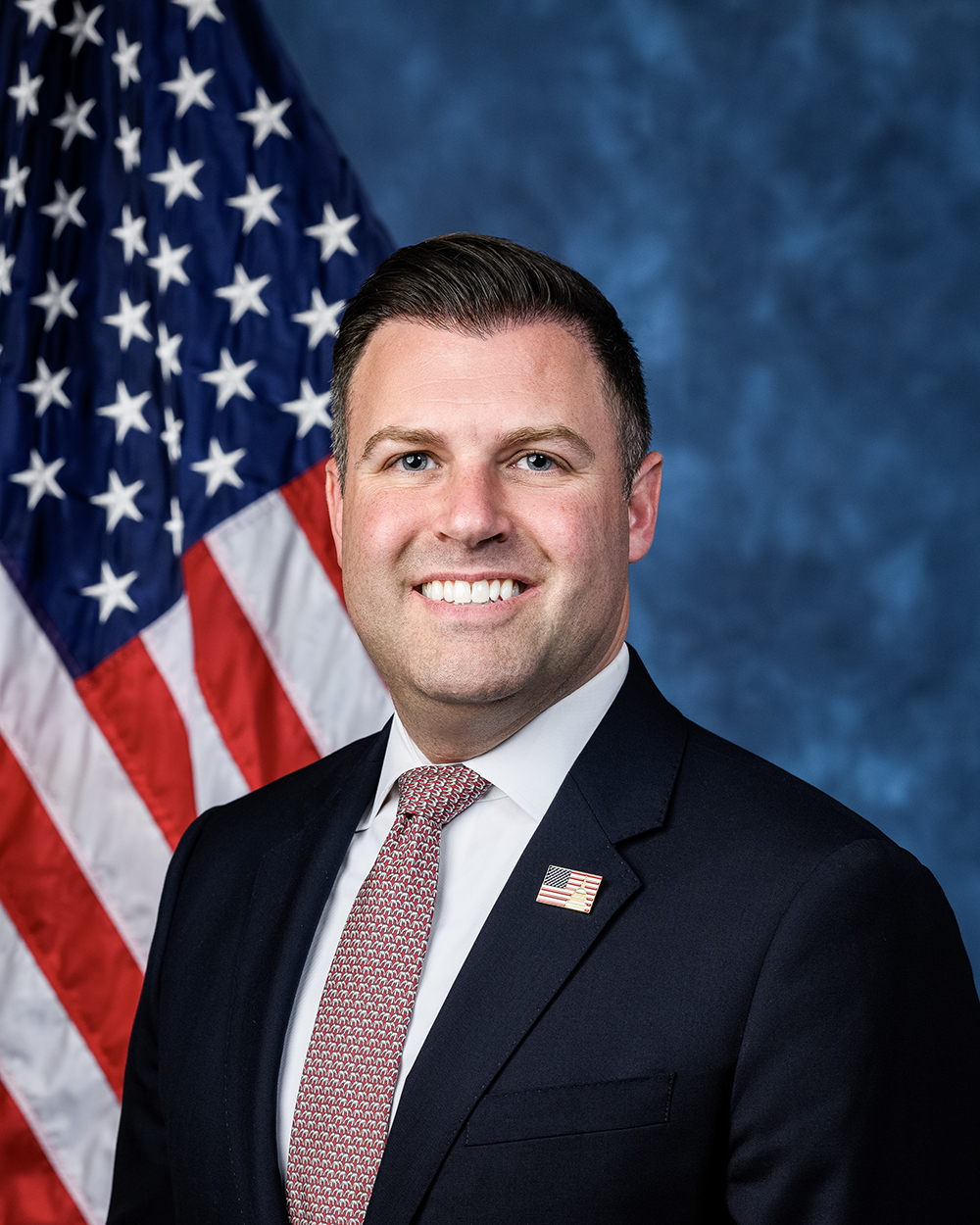
Rep. Ryan Mackenzie
Sponsored bills
Maddy summaryHR 1266, the Combating Illicit Xylazine Act, adds xylazine - a veterinary sedative increasingly found in illicit drug mixtures - to Schedule III of the Controlled Substances Act, regulating its use and trafficking. It directly affects veterinarians, animal owners, and manufacturers by allowing xylazine to be legally dispensed for animal use under specific veterinary prescriptions, while prohibiting non-veterinary human use. The bill includes transition periods (60 days for practitioners, 1 year for labeling) to ease compliance for manufacturers and practitioners, and requires the DEA and FDA to expedite necessary applications. It also mandates two congressional reports on xylazine's illicit use and trafficking patterns, and directs the Sentencing Commission to review penalties for offenses involving xylazine.
Maddy summaryThis bill requires all new passenger vehicles manufactured for sale in the U.S. to include AM radio as standard equipment (not an optional add-on) by 2027-2028, depending on manufacturer size. It mandates that AM radio receivers must be easily accessible to drivers and allows compliance through digital AM broadcast technology. During a transition period, manufacturers must clearly label vehicles without AM radio but cannot charge extra for this feature. The bill also mandates a GAO study on AM radio's role in emergency alerts and includes a 10-year sunset provision for the rule. It preempts state laws regarding AM radio access in vehicles.
Maddy summaryThe PSC Nonpartisan COURTs Act creates a private right of action for any citizen to sue in federal district court if their state fails to meet constitutional or federal redistricting requirements. The bill grants federal courts exclusive jurisdiction over these challenges, requiring that statewide claims be heard by a randomly selected three-judge panel and mandating that all levels of the judiciary expedite the review process. If a court finds a redistricting plan unlawful, it must first allow the state to propose a compliant replacement; if the state does not act in time, the federal court is authorized to adopt its own remedial map.
Maddy summaryThe Problem Solvers Independent Commissions Act would require all states to draw their congressional district maps through independent commissions rather than state legislatures, starting with the redistricting cycle following the 2030 census. These commissions would be composed of an equal number of members from the two largest political parties and unaffiliated citizens, selected through a random process that allows legislative leaders to remove up to 20 percent of applicants from each group. The bill mandates that commission members complete training on redistricting law and ethics, hold public meetings, and avoid private communications with elected officials or lobbyists while developing maps. If a state's commission fails to enact a final plan before the candidate filing deadline, the existing districts would remain in place for up to eight weeks before the state's highest court appoints special masters to draw the map, explicitly barring the legislature from intervening.
Maddy summaryThe Problem Solvers MAPS Act requires states to draw congressional districts that are contiguous, compact in shape, and nearly equal in population. It prohibits mapmakers from creating boundaries intended to advantage or disadvantage specific candidates, incumbents, or political parties. Additionally, the law mandates that state officials consider preserving existing political subdivisions like counties, cities, and tribal land boundaries when establishing new districts. These rules apply to any congressional district created on or after the date the act is signed into law.
Maddy summaryThe Problem Solvers TRUST Act would prohibit states from changing their U.S. House of Representatives district maps during the ten-year period following a census, unless a court orders new lines to comply with federal or state constitutional requirements. If such a court order is issued, the state must make changes that result in the smallest possible alteration to the existing map. The bill also sets a one-year deadline for filing legal challenges against a redistricting plan after it becomes law. These rules would apply to congressional redistricting occurring after the November 2032 federal elections and would not affect how states draw districts for local or state offices.
Maddy summaryThe Pray Safe Act of 2025 establishes a federal Clearinghouse within the Department of Homeland Security to provide houses of worship, faith-based organizations, and nonprofit groups at risk of threats with evidence-based safety resources. The Clearinghouse will publish online best practices for security planning, facility safety, and incident response, while listing existing federal and state grant programs to help these organizations implement these measures. It requires annual updates based on user feedback and includes a centralized resource section for contacts like Protective Security Advisors and Fusion Centers. The program expires four years after enactment and does not create new funding but coordinates existing federal and state safety resources.
National Law Enforcement Officers Remembrance, Support and Community Outreach Act. [ sic ] This bill temporarily directs the Department of the Interior to award a grant to the National Law Enforcement Officers Memorial Fund for the expenses associated with operating and enhancing the community outreach, public education, and officer safety and wellness programs of the National Law Enforcement Museum.
Maddy summaryThe Net Effective Cost Transparency and Prescription Drug Affordability Act of 2026 requires Medicare Part D and Advantage plans to use a standardized public bidding process for pharmacy benefit managers starting in 2028, ensuring that the lowest projected net effective cost is generally selected. The bill mandates that plan sponsors maintain real-time tools to track actual drug costs and escrow funds to refund enrollees if they are overcharged relative to their bids. It also establishes a new five-star rating system for these plans based on how closely actual spending matches projections, with low-performing plans required to notify beneficiaries of alternative options. Additionally, the legislation extends similar transparency requirements to commercial health plans by requiring them to disclose projected net effective costs in their bid submissions.