

Maddy summaryThis bill, HR 2936 (the ABC-ED Act), aims to reduce emergency department crowding by requiring real-time tracking of hospital bed capacity and related metrics like patient wait times. It allows federal grants to modernize public health data systems that monitor emergency department boarding rates, bed availability, and ambulance offload times, with results displayed on a public dashboard (while protecting privacy). The bill also adds two new Medicare Innovation Center pilot programs: one focused on improving care for older adults (through staffing, infrastructure, and senior care coordination) and another for psychiatric crisis care (including dedicated units and faster facility transfers). Finally, it mandates a one-year study by the Government Accountability Office to evaluate best practices for these data systems and their impact on emergency department efficiency.
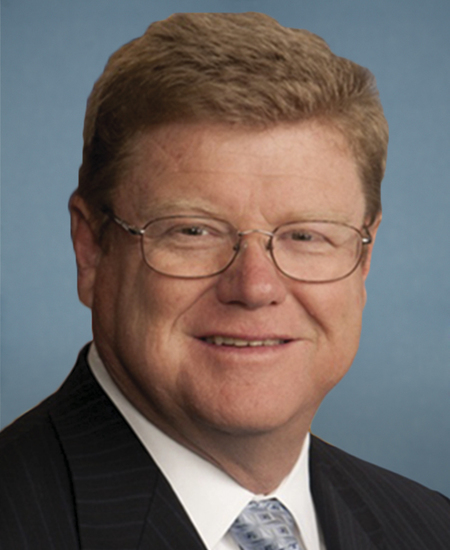
Rep. Mark E. Amodei
Sponsored bills
Maddy summaryThis bill amends the Elementary and Secondary Education Act to explicitly include accounting education as part of a well-rounded K-12 curriculum. It requires schools to develop and strengthen programs teaching accounting, including increasing access to high-quality accounting courses for students from groups historically underrepresented in accounting careers. The key provision inserts specific language into existing law, directing schools to promote accounting career awareness and expand course availability through grade 12. This directly affects K-12 students, particularly those from underrepresented backgrounds, by making accounting education a recognized component of career-focused learning.
Transportation Freedom Act This bill reduces taxes on auto companies and repeals specified environmental regulations on cars and trucks. The bill establishes a new tax deduction equal to 200% of eligible wages paid or incurred by domestic producers of automobiles or automobile components, subject to limitations. It also allows an entity to reduce (and adjust) its financial statement income (for purposes of calculating liability for the alternative minimum tax) by the amount of eligible wages it elects to deduct. The bill nullifies the 2024 rules of the Environmental Protection Agency (EPA) regarding (1) the finalization of specified greenhouse gas (GHG) programs and the reduction of emissions from certain light-duty and medium-duty vehicles (e.g., cars and trucks that are under a certain weight) starting with model year 2027, and (2) phase three of GHG emission standards for heavy-duty vehicles (e.g., school buses and tractor-trailer trucks). It also repeals the 2024 rules of the National Highway Traffic Safety Administration (NHTSA) regarding corporate average fuel economy (CAFE) standards for certain cars, trucks, and vans. Additionally, the bill eliminates (1) the option given to California to set standards for car emissions that are more stringent than those set under the Clean Air Act, and (2) the option for other states to adopt California's standards. NHTSA and the EPA must establish new CAFE and GHG standards, respectively, for vehicles that are economically practicable and technologically feasible. The GHG standards may not require the production or sale of electric vehicles.
Maddy summaryThis bill requires the U.S. government to strengthen measures against hostage-taking by Iran and other adversaries. It mandates annual reports on $6 billion in Iranian funds transferred to Qatar (including certifications on humanitarian use), reviews of past hostage cases in Iran to identify individuals for sanctions, and restrictions on Iranian diplomats at the UN who face terrorism-related sanctions. The bill also directs the Secretary of State to evaluate whether U.S. passports should be invalid for travel to Iran due to detention risks, and requires a strategy to deter hostage-taking by U.S. adversaries. These provisions aim to hold accountable those involved in hostage-taking while protecting U.S. citizens.
Maddy summaryHR 2552, the RIFLE Act, repeals the federal tax on firearm transfers (Section 5811 of the Internal Revenue Code). This directly affects firearm sellers and purchasers by removing the tax paid when transferring firearms. The bill also updates related tax code references to reflect the repeal and specifies the tax removal applies to transfers after the law's enactment. It clarifies that the repeal does not change how firearms are regulated under the National Firearms Act or involve the Consumer Product Safety Commission.
Sanctioning Russia Act of 2025 This bill imposes penalties on certain persons (individuals and entities) if the President determines that the Russian government or a person acting at Russia's direction is involved with (1) refusing to negotiate a peace agreement with Ukraine; (2) violating a negotiated peace agreement; (3) initiating another invasion of Ukraine; or (4) overthrowing, dismantling, or seeking to subvert the Ukrainian government. If the President makes such a determination, the bill requires certain actions including the President must impose visa- and property-blocking sanctions on specified persons such as the Russian president, certain Russian military commanders, and any foreign person that knowingly provides defense items to the Russian armed forces; the President must increase the rate of duty on all goods and services imported from Russia into the United States to at least 500% relative to the value of such goods and services; the President must increase the rate of duty on all goods and services imported into the United States from countries that knowingly engage in the exchange of Russian-origin uranium and petroleum products to at least 500% relative to the value of such goods and services; the Department of the Treasury must impose property-blocking sanctions on any financial institution organized under Russian law and owned wholly or partly by Russia, and any financial institution that engages in transactions with those entities; and the Department of Commerce must prohibit the export, reexport, or in-country transfer to or in Russia of any U.S.-produced energy or energy product.
Maddy summaryThe Public Land Renewable Energy Development Act of 2025 establishes rules for solar and wind energy projects on federal public lands and National Forest System lands. It requires project owners to pay current rents and fees (with a limited exception for projects that applied for permits by December 2016) and directs 25% of revenue from these projects to the state, 25% to the county (based on land area), 25% to speed up renewable energy permit processing, and 25% to a new conservation fund. The fund finances habitat restoration, wildlife corridor protection, wetland conservation, and improved public access to federal lands affected by renewable energy development. This bill directly affects renewable energy developers, states, counties, and federal agencies managing public lands.
Maddy summaryHR 2457, the Mining Schools Act of 2025, establishes a competitive grant program to fund education and training programs for the U.S. mining industry. It directs the Secretary of Energy to award up to 10 annual grants to eligible "mining schools" - defined as accredited engineering programs (including Tribal Colleges) or specific geology/engineering departments at public universities in states with significant mining GDP - to recruit students and enhance curriculum. Grants must support education in critical areas like critical mineral extraction, environmental reclamation, rare earth element processing, and reducing reliance on foreign mineral supplies. The program requires geographic diversity in grant selection and mandates an advisory board (with industry and academic members) to review applications and ensure funds are used for specified educational purposes, with no new federal funds authorized.
Maddy summaryHR 2410 creates a 20% federal tax credit for developers converting older non-residential buildings (at least 20 years old) into affordable housing. The credit applies to qualified conversion costs, requiring that 20% of units be rent-restricted for residents earning 80% or less of the area median income for 30 years. It establishes a $12 billion national credit limit, with $3 billion reserved for conversions in economically distressed areas, and mandates state-level allocation plans prioritizing projects near transit and employment. The bill directly affects developers seeking tax incentives for downtown revitalization, not tenants or local governments.
Maddy summaryHR 2391 creates a new $7,500 federal tax credit for eligible commercial truck drivers in 2025, increasing to $10,000 for new drivers. To qualify, drivers must hold a Class A commercial driver’s license, operate qualifying tractor-trailers, earn under $135,000 annually (for joint filers), and drive at least 1,900 hours yearly (or average 40 hours weekly). Special rules apply for apprenticeship program participants and drivers with fewer than 1,420 hours. The credit expires after 2026 and adjusts annually for inflation starting in 2026.