

In committee Sep 24, 2026
0 co-sponsors
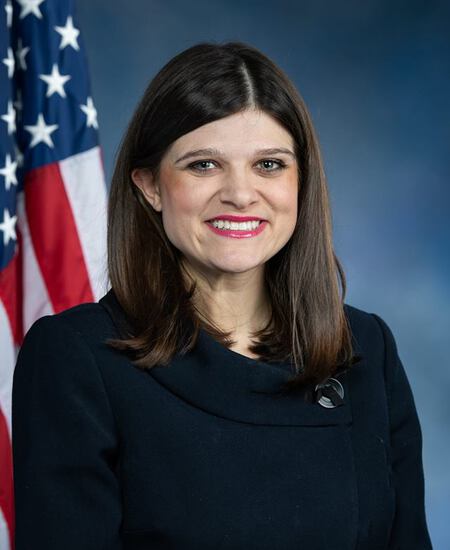
Rep. Haley M. Stevens
Total votes
2,837
all sessions
Attendance
100%
9 missed
Higher than 75% of chamber peers
With party
97%
of cast votes
Near the chamber average
Bipartisan score
1%
crosses aisle rarely
Near the chamber average
Sponsored
1,266
bills & resolutions
Near the chamber average
Committees
5
assignments
1,266 bills and resolutions
Sponsored bills
Total
1,266
Primary
113
Co-sponsor
1,153
This page
1,266
matching current filters
In committee Sep 24, 2026
1 co-sponsor
To designate the facility of the United States Postal Service located at 117 West Lovett Street in Charlotte, Michigan, as the "Francis C. Flaherty Post Office Building".
Maddy summaryThis bill designates the United States Postal Service facility at 117 West Lovett Street in Charlotte, Michigan, as the "Francis C. Flaherty Post Office Building." It directly affects the specific postal location by officially changing its name in federal records and documents. The key provision ensures that all future legal and official references to this building will use the new name. This is a commemorative measure that honors an individual without altering operational policies or funding.
Passed Sep 17, 2026
1 co-sponsor
Supporting the designation of September 20, 2026, as "Pharmacy Workforce Suicide Awareness Day" to raise awareness of, and promote a national discussion about, pharmacy workforce suicide and to reduce the stigma of mental health conditions, and for other purposes.
Maddy summaryThis House resolution supports designating September 20, 2026, as "Pharmacy Workforce Suicide Awareness Day" to highlight mental health challenges among pharmacists and pharmacy technicians. The bill cites high rates of burnout, stress, and suicide risk within the profession as reasons for the designation. It encourages the President to issue a proclamation calling for national awareness activities and honors those who have died by suicide. Additionally, the resolution recognizes the need for further research into barriers to mental health treatment and strategies to prevent suicide in this workforce.
HealthcareSupports HealthcareBill promotes mental health awareness and reduces stigma for pharmacy professionals, directly supporting mental health services within the healthcare sector.
Labor & EmploymentSupports Labor & EmploymentBill promotes mental health awareness and reduces stigma for pharmacy workers, addressing workplace well-being and safety within the labor force.
In committee Sep 16, 2026
1 co-sponsor
Paul Whelan Hostage Compensation and Reintegration Act
Maddy summaryThe Paul Whelan Hostage Compensation and Reintegration Act requires the Secretary of State to provide a one-time financial payment to U.S. citizens or lawful permanent residents who have been unlawfully detained abroad, as well as to the next of kin if the detainee has died. The compensation amount is calculated by multiplying the average daily wage index by the number of days the individual was wrongfully held. Eligibility is generally restricted for those who entered countries with the highest level of travel advisories, though exceptions exist for official government travel, journalists, or cases involving compelling humanitarian circumstances. The bill also caps attorney fees at 5 percent of the award, exempts the payment from taxes and means-tested benefit calculations, and authorizes funding from the Department of Justice Assets Forfeiture Fund to support the program.
In committee Sep 16, 2026
0 co-sponsors
ASAP Act
Maddy summaryThis bill would require Medicare to cover early detection screening tests for Alzheimer's disease and related dementias starting January 1, 2028. It defines eligible tests as FDA-cleared genomic blood tests, blood product analyses, or equivalent medical imaging methods (like protein expression or whole genome sequencing) that detect pre-symptomatic or early-stage conditions. Medicare beneficiaries would receive this coverage without cost-sharing for these specific screenings. The bill amends Medicare coverage rules to explicitly include these tests under Section 1861(nnn) of the Social Security Act.
In committee Sep 16, 2026
1 co-sponsor
Pray Safe Act of 2025
Maddy summaryThe Pray Safe Act of 2025 establishes a federal Clearinghouse within the Department of Homeland Security to provide houses of worship, faith-based organizations, and nonprofit groups at risk of threats with evidence-based safety resources. The Clearinghouse will publish online best practices for security planning, facility safety, and incident response, while listing existing federal and state grant programs to help these organizations implement these measures. It requires annual updates based on user feedback and includes a centralized resource section for contacts like Protective Security Advisors and Fusion Centers. The program expires four years after enactment and does not create new funding but coordinates existing federal and state safety resources.
In committee Sep 15, 2026
1 co-sponsor
Digital Asset Market Clarity Act
Maddy summary# Summary of Digital Commodities and Blockchain Technology Regulatory Framework This comprehensive legislation establishes a new regulatory framework specifically for digital commodities and blockchain technology, creating a balanced approach that protects investors while fostering innovation. ## Key Components 1. **New Regulatory Structure**: - Creates new categories for digital commodity exchanges, brokers, and dealers under the Commodity Futures Trading Commission (CFTC) - Establishes "qualified digital asset custodians" as a new regulatory category - Defines "mature blockchain systems" with special regulatory treatment 2. **Core Requirements**: - Mandates segregation of customer assets and strict custody requirements - Requires robust risk management systems - Sets capital requirements for digital commodity brokers and dealers - Establishes new disclosure and reporting obligations - Defines "blockchain control persons" with special restrictions on selling digital commodities 3. **Innovation-Focused Provisions**: - Creates a "Strategic Hub for Innovation and Financial Technology" (FinHub) at the SEC - Establishes "LabCFTC" as a dedicated innovation lab within the CFTC - Provides exemptions for SEC-registered entities from certain CFTC requirements - Includes provisions for expedited hiring of digital commodities experts 4. **Studies and Research**: - Mandates studies on decentralized finance (DeFi) - Requires a study on non-fungible tokens (NFTs) - Directs a study on financial literacy among digital commodity holders - Requires a study on tokenized securities and derivatives 5. **Exclusions**: - Excludes decentralized finance activities from regulation - Excludes certain blockchain-related activities from regulatory requirements The legislation aims to create a functional regulatory framework that acknowledges the unique benefits and risks of digital commodities while ensuring investor protection, preventing market manipulation, and promoting the responsible development of this emerging technology within the United States. It seeks to prevent the shift of digital commodity development to less regulated countries by establishing a clear, balanced regulatory path.
Passed Sep 15, 2026
1 co-sponsor
Protecting American Industry and Labor from International Trade Crimes Act of 2026
Maddy summaryHR 1869 creates a new DOJ task force within the Criminal Division to investigate and prosecute international trade crimes, such as customs evasion, smuggling, and trade-based money laundering. It requires the DOJ to hire specialized prosecutors, coordinate with agencies like U.S. Customs and Border Protection, and focus on specific violations covered under statutes like 18 U.S.C. §§ 541-546 and 21 U.S.C. § 331. The bill authorizes $20 million in funding for fiscal year 2026 (with 80% dedicated to criminal prosecutions), mandates annual reports to Congress on enforcement activities, and requires the DOJ to develop multi-agency partnerships to address these crimes. This directly affects federal prosecutors, border enforcement agencies, and industries impacted by trade violations.
Passed Sep 14, 2026
1 co-sponsor
Data Science and Literacy Act of 2026
Maddy summaryThe Data Science and Literacy Act of 2026 establishes a competitive grant program administered by the Secretary of Education to support state agencies, local school districts, tribal schools, and higher education institutions in expanding data literacy and statistics education from pre-kindergarten through postsecondary levels. Eligible recipients must use funds for activities such as developing new curricula, providing professional development for teachers, and creating partnerships with industry or community organizations to reduce access gaps for underrepresented students. The bill authorizes $10 million annually for fiscal years 2027 through 2031, requiring grantees to submit biannual reports on student outcomes disaggregated by race, ethnicity, gender, and income status. Additionally, the legislation amends existing federal law to require the collection of demographic and background data on secondary school STEM teachers in each state every five years.
Budget & TaxesSupports Budget & TaxesBill establishes a federal grant program to fund education initiatives, directly increasing government spending for public services.
EducationSupports EducationBill establishes grants to expand data literacy education, fund teacher professional development, and develop new curricula across K-12 and higher education.
TechnologySupports TechnologyThe bill funds data literacy and statistics education, which enhances digital skills and workforce readiness in the technology sector.
In committee Sep 10, 2026
0 co-sponsors
Ask Maddy
·
AI policy assistant
Ask Maddy about Haley M. Stevens
Scope: wisconsin
Hi! I can help you understand Haley M. Stevens's legislative record. What would you like to know?
Try one of these
i
Maddy answers using official bill text and legislative records. Always verify before sharing.
Sources cited inline