Maddy summaryThis resolution recommends that the U.S. House of Representatives find Leon D. Black in contempt of Congress for refusing to comply with two subpoenas issued by the Committee on Oversight and Government Reform on June 26, 2026. The specific failures cited are his refusal to appear for a deposition and his failure to produce requested documents. If adopted, the Speaker of the House would certify these findings to the U.S. Attorney for the District of Columbia, enabling federal criminal prosecution under existing law. Additionally, the resolution directs the Speaker to take all other appropriate actions necessary to enforce the subpoenas.
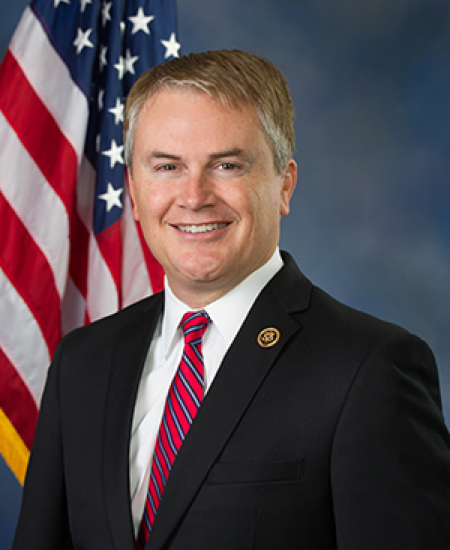
Rep. James Comer
Sponsored bills
Maddy summaryThis bill requires all new passenger vehicles manufactured for sale in the U.S. to include AM radio as standard equipment (not an optional add-on) by 2027-2028, depending on manufacturer size. It mandates that AM radio receivers must be easily accessible to drivers and allows compliance through digital AM broadcast technology. During a transition period, manufacturers must clearly label vehicles without AM radio but cannot charge extra for this feature. The bill also mandates a GAO study on AM radio's role in emergency alerts and includes a 10-year sunset provision for the rule. It preempts state laws regarding AM radio access in vehicles.
Maddy summaryThe Survivor's Voice Protection Act makes nondisclosure clauses unenforceable if they prevent victims of sexual abuse or others from disclosing facts related to such abuse, a rule that applies retroactively to contracts signed before the law is enacted. The bill also requires fiduciaries, such as guardians or trustees, to report suspected grooming behavior to law enforcement within 90 to 180 days of learning about it. Victims who suffer harm due to a fiduciary's failure to report can sue for damages in federal court, and state attorneys general may also bring civil actions on behalf of their residents.
Maddy summaryHR 6332 designates the United States Postal Service facility at 10660 Page Avenue in Fairfax, Virginia, as the "Congressman Gerald E. Connolly Post Office Building." This bill updates all official references in federal documents, maps, and records to use the new name for this specific post office location. It does not create new policies or affect any services; it solely changes the building's official designation to honor Congressman Gerald E. Connolly. The change applies to all federal materials referencing the facility.
This bill directs the Department of the Interior to remove all deed restrictions from approximately 3.62 acres located at 2956 Park Avenue, on the Paducah Memorial Army Reserve Center in Paducah, Kentucky. The restrictions include easements, exceptions, reservations, terms, conditions, and covenants described in the quitclaim deed that was executed on April 27, 2012. The deed conveyed land from Interior to the City of Paducah, Kentucky.
Maddy summaryHR 5267, the American Franchise Act, clarifies when franchisors can be considered joint employers of franchisee employees under federal labor laws. It defines "substantial direct and immediate control" over essential employment terms like wages, benefits, hours, hiring, and discipline - requiring franchisors to actively set these terms to be deemed joint employers. The bill explicitly excludes routine brand standards, training, or minimal safety requirements from constituting such control. This directly affects franchisors and franchisees by limiting joint employer liability to cases where franchisors exert significant, ongoing influence over core employment decisions. The law applies prospectively to new cases after enactment, not past disputes.
Maddy summaryThis bill, known as the D.C. Taxing Authority Review Act, modifies the rules for how new taxes and fees proposed by the District of Columbia government are reviewed by Congress. It requires that any D.C. law imposing or increasing a tax or fee must receive explicit approval from a joint resolution passed by both the House of Representatives and the Senate within 60 days, or else the law will not take effect. Additionally, the bill limits the time for debating these specific approval resolutions to one hour, split evenly between supporters and opponents. These changes directly affect the District of Columbia government's ability to enact new financial measures without prior congressional consent.
Maddy summaryThis bill requires pharmacy benefits managers (PBMs) administering prescription drug benefits for federal employee health plans to reimburse pharmacies at specific rates, including the national average drug cost plus a small percentage or $50, whichever is lower. It prohibits PBMs from favoring their own pharmacies, restricting patient choice, or reducing pharmacy payments after claims are processed. The bill establishes $10,000 civil penalties for violations, with debarment from federal health plans after 10 penalties in 10 years. This directly affects PBMs, in-network pharmacies, and federal health benefit plans covering millions of federal employees and their families. The law aims to ensure fair reimbursement practices and maintain pharmacy choice under the Federal Employees Health Benefits Program.
Maddy summaryHR 5578 expands whistleblower protections for employees and contractors working with the U.S. Department of Defense (DoD) and National Aeronautics and Space Administration (NASA). It broadens the definition of "protected individual" to include state/local governments, tribal organizations, and intelligence community personnel working under federal contracts. Key changes prohibit retaliation for reporting gross mismanagement, waste, safety dangers, or violations of law, ban forced arbitration waivers that would override these rights, and require disciplinary action against officials who request retaliation. This applies specifically to DoD/NASA contractors under Section 4701 and extends similar protections to all federal contractors under Section 4712 of U.S. Code.
Protecting Privacy in Purchases Act This bill prohibits payment card networks from using merchant codes that distinguish firearms retailers from general-merchandise retailers or sporting-goods retailers. The Department of Justice must enforce this bill and report annually on the resulting investigations and cases.