Issue · Technology

Technology

Every technology bill, vote, and legislator stance in Wisconsin, automatically classified by Maddy, our AI policy reader.

Total bills
109
2025-2026 Regular Session
Top supporter
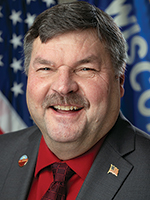
Rob Swearingen
83% support rate
Top opponent
Jodi Habush Sinykin
17% support rate
Ranked legislators
10
5 support · 5 oppose
Key legislators

Who's moving technology in Wisconsin

Legislators moving technology in Wisconsin
Legislator Party Stance Support rate Votes
Rob Swearingen
Rob Swearingen House · District 34
R
Strong +
83% 65
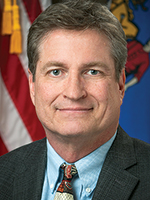
Shannon Zimmerman
Shannon Zimmerman House · District 30
R
Strong +
82% 54
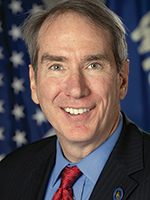
Dave Maxey
Dave Maxey House · District 83
R
Strong +
82% 63
Will Penterman
Will Penterman House · District 38
R
Strong +
82% 61
Scott Allen
Scott Allen House · District 82
R
Strong +
82% 59
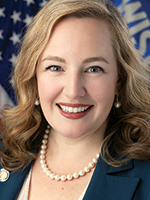
Jodi Habush Sinykin
Jodi Habush Sinykin Senate · District 8
D
Strong −
17% 42
Tim Carpenter
Tim Carpenter Senate · District 3
D
Strong −
17% 42
Kelda Roys
Kelda Roys Senate · District 26
D
Strong −
17% 40
Jamie Wall
Jamie Wall Senate · District 30
D
Strong −
17% 42
Chris Larson
Chris Larson Senate · District 7
D
Strong −
17% 42
Showing 91–100 of 109 bills

All technology bills

failed · Wisconsin · Assembly Mar 23, 2026

AB 171: Relating to: privacy protections for judicial officers.

AB 171 allows Wisconsin judicial officers (such as judges) to request privacy protections for their personal information, including home addresses and secondary residences, from public disclosure. The bill requires government agencies and land records websites to remove such information from public records within 10 business days after receiving a notarized written request from a judicial officer. It defines specific criteria for third parties (like title companies or entities with confidentiality agreements) to access protected records under limited circumstances. This law directly affects judicial officers' privacy by creating a formal process to shield their personal details from public view, while maintaining access for authorized entities under defined conditions.
Sub-Topics Data Privacy
failed · Wisconsin · Assembly Mar 23, 2026

AB 357: Relating to: technical education equipment grants. (FE)

AB 357 proposes a grant program to provide funding for technical education equipment at community colleges and vocational programs. It would directly affect these educational institutions by enabling them to purchase new or updated equipment for training in fields like advanced manufacturing and IT. The bill establishes a competitive grant process administered by the state workforce agency, with funding allocated based on program needs and student enrollment. Currently in committee review after its introduction and public hearing, the bill has received a fiscal estimate but has not yet been enacted.
failed · Wisconsin · Assembly Mar 23, 2026

AB 364: Relating to: a virtual reality technology pilot program for school districts. (FE)

AB 364 establishes a three-year pilot program to test virtual reality (VR) learning technology in three public school districts (one rural, one suburban, and one urban). The program requires a VR platform aligned with state math and science standards for grades 6-12, proven through third-party research to improve Algebra 1 outcomes and use 3D models to teach abstract concepts. The state education department will select districts via competitive bidding, fund at least 16,000 students to use the technology, and provide 3,200 VR headsets, along with teacher training and monthly progress reports to legislators. The pilot aims to evaluate if this VR approach enhances student engagement and learning in STEM fields.
failed · Wisconsin · Senate Mar 23, 2026

SB 142: Relating to: algorithmic software for residential housing, and providing a penalty.

SB 142 bans the use of algorithmic software by landlords to set rental rates or occupancy levels in residential housing. It prohibits selling, licensing, or providing such software (defined as tools using private competitor data on rent/occupancy to inform pricing decisions) to landlords, with exceptions for aggregated rental data publications and affordable housing tools. The law imposes penalties of up to $1,000 per violation per unit, allowing tenants to sue for actual damages or $1,000 per violation, and enables state enforcement through the attorney general. It directly affects landlords, property management companies, and software providers that develop or sell such tools.
failed · Wisconsin · Assembly Mar 23, 2026

AB 33: Relating to: representations depicting nudity and providing a penalty.

AB 33 creates new laws prohibiting the non-consensual creation and distribution of technology-generated intimate images (like deepfakes) using someone's recognizable likeness. It specifically bans posting, sharing, or exhibiting such "synthetic intimate representations" with intent to coerce, harass, or intimidate the person depicted. The bill also prohibits reproducing private intimate images without the depicted person's consent. These provisions directly protect individuals whose likenesses could be used in non-consensual intimate content, targeting harmful uses of AI and digital tools. The law defines "synthetic intimate representation" as technology-generated content using identifiable features to depict intimate scenes, regardless of artificial elements.
passed · Wisconsin · Assembly Mar 23, 2026

AB 683: Relating to: prohibiting critical telecommunications infrastructure from including equipment manufactured by a foreign adversary. (FE)

AB 683 prohibits telecommunications providers from using equipment manufactured by entities designated as "foreign adversaries" in key network infrastructure (like cell towers or fiber lines). It directly affects telecom companies operating in Wisconsin, requiring them to stop purchasing or leasing such equipment and remove existing installations by following federal removal programs. Providers must annually certify compliance and publicly report locations of affected equipment, including replacement plans, while the state commission will publish a public map and annual report. The bill aligns with federal rules banning equipment from specific foreign entities, focusing on network security without specifying political outcomes.
failed · Wisconsin · Senate Mar 23, 2026

SB 240: Relating to: workforce literacy grant program. (FE)

Senate Bill 240 establishes a workforce literacy grant program to be managed by the Department. This program will provide an annual grant to a single eligible nonprofit organization located in the state. To qualify, the organization must provide adult literacy services or support community-based literacy programs in over half of the state's counties. Grant funds can be used for teaching workforce readiness skills, GED preparation, digital literacy, and other literacy programs aimed at strengthening the state's workforce, or for supporting other organizations that directly provide these services to adult learners.
failed · Wisconsin · Senate Mar 23, 2026

SB 619: Relating to: electronic copies of operators’ licenses and identification cards. (FE)

SB 619 allows drivers and ID card holders to obtain electronic copies of their license or ID card from the department. It requires the department to issue these electronic copies for a $10 fee, while permitting drivers to display them on phones or devices during traffic stops. The bill ensures officers can only view the license/ID image, not other phone content, and specifies that the $10 fee applies only to electronic copies (not physical duplicates). This directly affects individuals who choose to use digital versions of their license or ID instead of physical cards. The law creates new fee structures and privacy protections for electronic document display.
failed · Wisconsin · Senate Mar 23, 2026

SB 295: Relating to: the use of artificial intelligence or other machine assisted translation in court proceedings and of telephone or live audiovisual interpretation in criminal trials. (FE)

This bill permits courts to use artificial intelligence translation tools instead of or alongside human interpreters in both civil and criminal court proceedings. It applies to all court settings requiring language assistance, including municipal courts and criminal trials. The key change is that courts no longer need to obtain waivers from parties to use AI translation, which differs from current rules for human interpreters. It directly affects non-English speakers accessing court services and court staff managing interpretation needs.
failed · Wisconsin · Senate Mar 23, 2026

SB 166: Relating to: consumer data protection and providing a penalty. (FE)

SB 166 creates a new legal framework for consumer data protection by defining key terms like "personal data," "consent," "biometric data," and "dark patterns" in Wisconsin law. It directly affects businesses that collect personal data from Wisconsin residents (defined as individuals acting in personal, not commercial, contexts) by establishing standards for how they must handle such data. The bill’s key mechanism is setting clear definitions - such as requiring explicit consent for data processing, banning "dark patterns" that trick users, and excluding deidentified data or public records from coverage - to enable future enforcement. It does not yet impose new restrictions or penalties but provides the foundational definitions needed for implementing data protection rules.
Showing 91 to 100 of 109 bills