

Issue · Housing
Housing
Every housing bill, vote, and legislator stance in Wisconsin, automatically classified by Maddy, our AI policy reader.
Total bills
115
2025-2026 Regular Session
Top supporter
Rob Kreibich
100% support rate
Top opponent
Renuka Mayadev
0% support rate
Ranked legislators
10
5 support · 5 oppose
Key legislators
Who's moving housing in Wisconsin
| Legislator | Party | Stance | Support rate | Votes |
|---|---|---|---|---|

Rob Kreibich
House · District 28
|
R |
Strong +
|
100% | 38 |
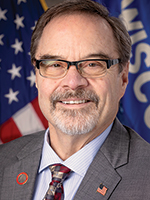
Paul Tittl
House · District 25
|
R |
Strong +
|
100% | 31 |
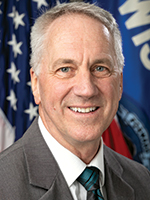
Dan Knodl
House · District 24
|
R |
Strong +
|
100% | 38 |

Lindee Brill
House · District 27
|
R |
Strong +
|
100% | 38 |
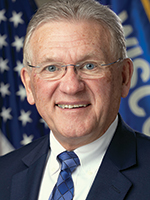
Jerry O'Connor
House · District 60
|
R |
Strong +
|
100% | 38 |

Renuka Mayadev
House · District 77
|
D |
Strong −
|
0% | 38 |
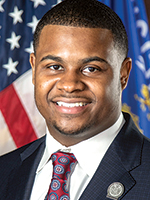
Kalan Haywood
House · District 16
|
D |
Strong −
|
0% | 34 |
Angela Stroud
House · District 73
|
D |
Strong −
|
0% | 36 |

Ben DeSmidt
House · District 65
|
D |
Strong −
|
0% | 38 |

Karen DeSanto
House · District 40
|
D |
Strong −
|
0% | 38 |
Showing 11–20 of 115
bills
All housing bills
SB 1160: Relating to: attorney general enforcement authority for civil rights violations and providing a penalty. (FE)
Topics
✓ Criminal JusticeSupports Criminal JusticeBill strengthens civil rights enforcement by empowering attorney general to investigate and sue for violations, enhancing accountability and protecting individual rights within the justice system.
✓ HousingSupports HousingBill strengthens tenant protections by expanding attorney general authority to investigate and sue for civil rights violations in housing, preventing discrimination.
Sub-Topics
Civil Rights
SB 1107: Relating to: repealing the prohibition against local governments enacting or enforcing an eviction moratorium on a landlord. (FE)
AB 1097: Relating to: authorizing a city, village, town, or county to establish a fair housing department to assist and educate residents and enforce local fair housing ordinances, providing a grant program, and making an appropriation. (FE)
Topics
✓ Budget & TaxesSupports Budget & TaxesBill creates a $10M grant program to fund local fair housing departments, directly increasing state funding for public services and local government capacity.
✓ HousingSupports HousingBill establishes fair housing departments, provides $10M in grants, and enforces anti-discrimination protections, directly advancing housing equity.
Sub-Topics
Appropriations
AB 1133: Relating to: local regulation of landlords and tenants.
AB 1137: Relating to: evicting tenants for failure to pay rent.
AB 1208: Relating to: attorney general enforcement authority for civil rights violations and providing a penalty. (FE)
Topics
✓ Criminal JusticeSupports Criminal JusticeBill expands attorney general authority to enforce civil rights, which protects vulnerable populations and enhances accountability in justice-related areas.
✓ HousingSupports HousingBill expands attorney general authority to enforce civil rights violations in housing, strengthening tenant protections and preventing housing discrimination.
SB 1179: Relating to: a home repair program and making an appropriation. (FE)
Topics
✓ Budget & TaxesSupports Budget & TaxesBill establishes a home repair program with appropriations for grants and loans, directly funding public services and housing assistance.
✓ EnergySupports EnergyBill provides financial assistance for improving energy efficiency in housing, directly supporting energy conservation and efficiency goals.
✓ HousingSupports HousingBill establishes home repair program with grants and loans for affordable housing improvements, directly funding housing assistance and protecting housing quality for low-income residents.
Sub-Topics
Appropriations
Audits & Accountability
Energy Efficiency
Affordable Housing
Tenant Rights
AB 1134: Relating to: information contained in the Consolidated Court Automation Programs Internet site related to dismissed eviction actions. (FE)
Topics
✓ Criminal JusticeSupports Criminal JusticeBill protects civil rights by removing dismissed eviction records from public view, reducing stigma and potential barriers to employment for individuals with dismissed cases.
✓ HousingSupports HousingBill protects tenant rights by removing names from public eviction records after dismissal, reducing stigma and potential discrimination against tenants.
✓ TechnologySupports TechnologyBill protects individuals' privacy by removing names from public eviction records, enhancing data privacy protections for citizens accessing court information online.
AB 1113: Relating to: modifications to the property tax exemption for nonprofit organizations that sell property to low-income persons. (FE)
Topics
✓ Budget & TaxesSupports Budget & TaxesBill modifies property tax exemptions to ensure nonprofits serving low-income households qualify for tax breaks only if they meet strict income criteria, promoting fiscal responsibility and targeted tax relief.
✓ HousingSupports HousingBill strengthens affordable housing by restricting property tax exemptions to nonprofits that offer zero-interest loans or serve low-income households, ensuring continued support for affordable housing development.