

Issue · Environment
Environment
Every environment bill, vote, and legislator stance in Wisconsin, automatically classified by Maddy, our AI policy reader.
Total bills
18
2025-2026 Regular Session
Top supporter
Shannon Zimmerman
89% support rate
Top opponent
Francesca Hong
20% support rate
Ranked legislators
10
5 support · 5 oppose
Key legislators
Who's moving environment in Wisconsin
| Legislator | Party | Stance | Support rate | Votes |
|---|---|---|---|---|
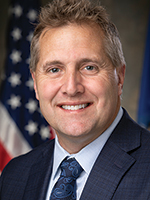
Shannon Zimmerman
House · District 30
|
R |
Strong +
|
89% | 17 |

Mark Spreitzer
Senate · District 15
|
D |
Strong +
|
88% | 18 |

Melissa Ratcliff
Senate · District 16
|
D |
Strong +
|
88% | 18 |

Jodi Habush Sinykin
Senate · District 8
|
D |
Strong +
|
88% | 18 |

Kelda Roys
Senate · District 26
|
D |
Strong +
|
86% | 17 |

Francesca Hong
House · District 76
|
D |
Strong −
|
20% | 19 |

Supreme Moore Omokunde
House · District 17
|
D |
Strong −
|
20% | 19 |

Lori Palmeri
House · District 54
|
D |
Strong −
|
20% | 19 |
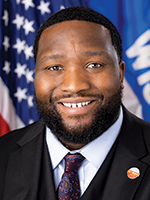
Darrin Madison
House · District 10
|
D |
Strong −
|
20% | 19 |

Sequanna Taylor
House · District 11
|
D |
Strong −
|
20% | 18 |
Showing 11–18 of 18
bills
All environment bills
SB 184: Relating to: governmental restrictions based on the energy source of a motor vehicle or other device.
Topics
✗ EnvironmentOpposes EnvironmentPrevents restrictions on vehicles by energy source, blocking emissions-reducing policies like banning gas vehicles, thus weakening environmental protections.
✓ TransportationSupports TransportationBill prohibits restrictions on vehicles based on energy source (e.g., banning electric/hydrogen cars), promoting sustainable transportation adoption by removing regulatory barriers.
Sub-Topics
Electric Vehicles
AB 130: Relating to: exempting certain persons from PFAS enforcement actions under the spills law. (FE)
Sub-Topics
Drinking Water
AB 83: Relating to: governmental restrictions based on the energy source of a motor vehicle or other device.
Topics
✓ EnergySupports EnergyBill prohibits restrictions on energy-source-based vehicles/devices, explicitly allowing government EV fleet prioritization, removing barriers for renewable energy adoption.
✗ EnvironmentOpposes EnvironmentProhibits government restrictions on fossil fuel vehicles (e.g., bans on gasoline cars), weakening emissions regulations despite allowing EV fleet purchases. Blocks environmental policy implementation.
✓ TransportationSupports TransportationProhibits restrictions on vehicle energy sources, allows EV fleet prioritization, promoting sustainable transportation adoption without direct infrastructure funding.
AB 421: Relating to: prohibiting rights of nature ordinances. (FE)
AB 161: Relating to: governmental restrictions based on the energy source of a motor vehicle or other device.
Topics
✓ EnergySupports EnergyProhibits restrictions on vehicle energy sources (e.g., electric/hydrogen), enabling consumer choice and removing barriers to renewable energy adoption in transportation.
✗ EnvironmentOpposes EnvironmentBill prohibits restrictions on non-electric vehicles, weakening potential emissions-reduction policies by preventing bans on fossil fuel vehicles and allowing continued use of polluting options.
✓ TransportationSupports TransportationProhibits restrictions on vehicle energy sources (e.g., electric/hydrogen), enabling adoption of sustainable transport options and supporting infrastructure for diverse transportation technologies.
SB 289: Relating to: requirements for proposed administrative rules that impose any costs.
Topics
✓ Budget & TaxesSupports Budget & TaxesRequires cost analyses for agency rules, promoting fiscal responsibility and transparency in budget management.
✗ EnvironmentOpposes EnvironmentRequires cost analyses for rules, potentially delaying environmental regulations by pausing rules exceeding $10M in costs over two years, weakening implementation of environmental protections.
SB 665: Relating to: establishing a statewide wolf population goal.
Sub-Topics
Wildlife