Issue · Education

Education (School Choice)

Every education bill, vote, and legislator stance in Wisconsin, automatically classified by Maddy, our AI policy reader.

Total bills
25
2025-2026 Regular Session
Top supporter
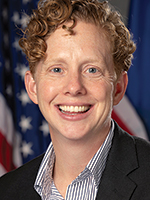
Adam Neylon
100% support rate
Top opponent
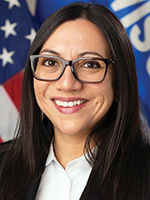
Alex Joers
0% support rate
Ranked legislators
10
5 support · 5 oppose
Key legislators

Who's moving school choice in Wisconsin

Legislators moving school choice in Wisconsin
Legislator Party Stance Support rate Decisive votes
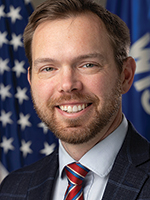
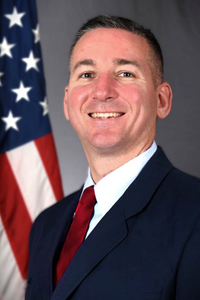
Adam Neylon
Adam Neylon House · District 15
R
Strong +
100% 3
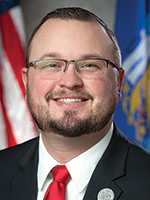
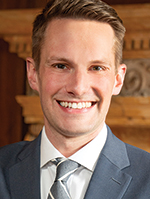
Alex Dallman
Alex Dallman House · District 39
R
Strong +
100% 3
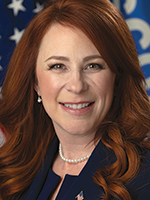
Amanda Nedweski
Amanda Nedweski House · District 32
R
Strong +
100% 3
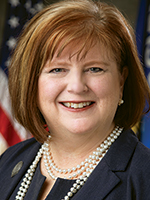
Barbara Dittrich
Barbara Dittrich House · District 99
R
Strong +
100% 3
Ben Franklin
Ben Franklin House · District 88
R
Strong +
100% 3
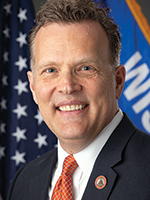
Alex Joers
Alex Joers House · District 81
D
Strong −
0% 3
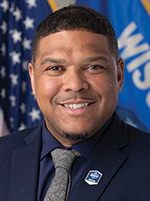
Amaad Rivera-Wagner
Amaad Rivera-Wagner House · District 90
D
Strong −
0% 3
Andrew Hysell
Andrew Hysell House · District 48
D
Strong −
0% 3
Angela Stroud
Angela Stroud House · District 73
D
Strong −
0% 3
Angelina Cruz
Angelina Cruz House · District 62
D
Strong −
0% 3
Showing 1–10 of 25 bills

All education bills

failed · Wisconsin · Assembly Apr 21, 2026

AB 1150: Relating to: implementation of an individualized education program or services plan under the Special Needs Scholarship Program. (FE)

This bill amends Wisconsin's Special Needs Scholarship Program to require private schools to implement individualized education programs or services plans for students with disabilities, as modified by agreement between the school and the parent. It mandates that private schools provide all records related to these program implementations within five days of receiving a request from the resident school board. The changes take effect starting with the 2026-27 school year, ensuring greater transparency and accountability in how private schools serving students with disabilities manage their educational plans.
failed · Wisconsin · Senate Mar 23, 2026

SB 1031: Relating to: creating an undergraduate assistance grant program for students enrolled in private nonprofit postsecondary institutions and making an appropriation. (FE)

SB 1031 creates a state-funded undergraduate grant program for students attending private nonprofit colleges in the state. It directly affects in-state students enrolled full-time at qualifying institutions who meet specific criteria: completing the FAFSA, not qualifying for federal Pell Grants, and having an adjusted gross income under $60,000. The program allocates $2.5 million annually to cover up to 10 semesters of full-time enrollment per student, with grants awarded by the Higher Educational Aids Board. This policy establishes a new financial aid mechanism targeting low-to-moderate income students at private nonprofit colleges, distinct from federal aid programs.
failed · Wisconsin · Assembly Mar 23, 2026

AB 818: Relating to: demonstration charter school operators. (FE)

AB 818 creates a "demonstration public school operator" designation for charter school operators that meet specific requirements. To qualify, operators must document best practices, provide teacher professional development, participate in longitudinal studies, evaluate their educational models, track student progress, partner with community organizations, and collaborate with research entities like the Wisconsin Center for Educational Research. Designated operators receive an additional $6,863 per student starting in the 2026-27 school year, plus annual reporting requirements including financial data, student achievement metrics, and transition outcomes. The designation lasts up to 5 years with possible renewal, contingent on continued compliance with the specified requirements.
Sub-Topics School Choice Teachers
failed · Wisconsin · Senate Mar 23, 2026

SB 818: Relating to: demonstration charter school operators. (FE)

SB 818 creates a "demonstration public school operator" designation for charter school operators in Wisconsin. To qualify, operators must document best practices, provide teacher training, participate in research studies, evaluate their educational models, track student progress, and partner with community organizations. Designated operators receive an additional $6,863 per pupil starting in 2026-27, with annual funding adjustments based on state revenue changes. This designation requires annual reporting on finances, student achievement, enrollment, and school transitions, and is limited to five-year terms renewable once. The bill directly affects charter school operators seeking this status and the students in their schools.
failed · Wisconsin · Assembly Mar 23, 2026

AB 485: Relating to: the pupil application process to attend a private school under a parental choice program and modifying and creating administrative rules related to pupil applications to participate in parental choice programs.

AB 485 simplifies the application process for students continuing in Wisconsin's parental choice programs. It removes the requirement for parents to submit residency documentation for returning students unless their address has changed since the previous school year. The bill modifies administrative rules to streamline verification for schools, applying only to students who attended a participating private school in the prior year. This change takes effect for the 2026-27 school year.
Sub-Topics School Choice
failed · Wisconsin · Senate Mar 23, 2026

SB 30: Relating to: required instruction in civics in the elementary and high school grades, high school graduation requirements, and private school educational program criteria. (FE)

SB 30 requires all public and charter schools to include civics education in their curriculum, mandating at least 0.5 credits of civics instruction within high school social studies courses. The bill specifies that this instruction must cover foundational U.S. documents (Declaration of Independence, Constitution, Bill of Rights), the Federalist Papers, civic participation, and comparisons with other governance systems like communism. Private schools participating in parental choice programs must also include this civics content and annually report compliance to the department. These requirements apply to the 2027-28 school year for curriculum, with graduation impacts beginning for students graduating in 2030-31. The bill establishes new reporting obligations for schools and creates a legislative reporting mechanism for the department.
passed · Wisconsin · Assembly Mar 23, 2026

AB 4: Relating to: required instruction in civics in the elementary and high school grades, high school graduation requirements, and private school educational program criteria. (FE)

AB 4 requires all public school boards, independent charter schools, and private schools in parental choice programs to include civics instruction in their curriculum starting in the 2027-28 school year. The instruction must cover U.S. founding principles, civic participation, government advocacy processes, and comparisons of governance systems (including communism, socialism, and totalitarianism). Schools must annually report compliance to the Department of Public Instruction, and high schools must add a half-credit civics requirement to graduation standards, effective for students graduating in 2030-31. This bill amends existing statutes to establish these requirements for K-12 civics education and reporting.
failed · Wisconsin · Assembly Mar 23, 2026

AB 620: Relating to: teacher and administrator licensure in parental choice programs and in the Special Needs Scholarship Program and granting rule-making authority. (FE)

AB 620 requires teachers and administrators in Wisconsin's parental choice programs and Special Needs Scholarship Program to hold state teaching licenses starting July 1, 2027. Schools may employ educators with at least five years of prior experience (as of July 1, 2027) under a temporary, nonrenewable waiver until July 1, 2032. The law creates a process for these educators to apply for waivers while working toward full licensure, with the state department developing implementing rules. It applies specifically to private schools participating in these state-funded education choice programs.
failed · Wisconsin · Senate Mar 23, 2026

SB 600: Relating to: participating in the federal tax credit program for contributions to scholarship granting organizations.

SB 600 would enable Wisconsin to participate in a federal tax credit program that allows individuals to deduct contributions to scholarship granting organizations (SGOs) from their state taxes. The bill requires the state education department to annually submit a list of qualifying SGOs meeting federal standards and certify Wisconsin's eligibility to the U.S. Treasury. It gives the governor until July 1, 2026, to decide whether to join the program, which would take effect for tax years beginning after December 31, 2026. The bill does not create new tax benefits but establishes the state's administrative process to align with the federal program.
failed · Wisconsin · Senate Mar 23, 2026

SB 526: Relating to: allowing individuals who hold a substitute teaching permit to substitute teach at private schools participating in a parental choice program.

SB 526 allows substitute teachers with a department-issued permit (under Section 118.19(7m)) to teach at private schools participating in a parental choice program. It modifies existing requirements by adding new provisions (118.60(2)(a)6.e. and 119.23(2)(a)6.d.) that exempt these permit-holding substitutes from the standard rule requiring all private school teachers to have a teaching license or bachelor's degree or higher. The bill directly affects substitute teachers holding the specific permit and private schools enrolled in state parental choice programs. This change streamlines substitute staffing for participating schools without altering credential requirements for regular teachers.
Sub-Topics School Choice Teachers
Showing 1 to 10 of 25 bills
1 2 3 Next