Issue · Criminal Justice

Criminal Justice (Corrections)

Every criminal justice bill, vote, and legislator stance in Wisconsin, automatically classified by Maddy, our AI policy reader.

Total bills
57
2025-2026 Regular Session
Top supporter
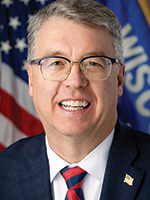
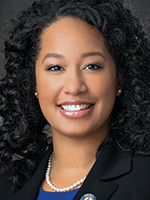
Brad Pfaff
100% support rate
Top opponent
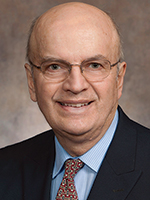
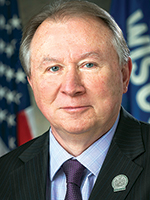
Steve Doyle
0% support rate
Ranked legislators
10
5 support · 5 oppose
Key legislators

Who's moving corrections in Wisconsin

Legislators moving corrections in Wisconsin
Legislator Party Stance Support rate Votes
Brad Pfaff
Brad Pfaff Senate · District 32
D
Strong +
100% 4
Bob Wirch
Bob Wirch Senate · District 22
D
Support
75% 4
Chris Larson
Chris Larson Senate · District 7
D
Support
75% 4
Dianne Hesselbein
Dianne Hesselbein Senate · District 27
D
Support
75% 4
Dora Drake
Dora Drake Senate · District 4
D
Support
75% 4
Steve Doyle
Steve Doyle House · District 94
D
Strong −
0% 6
Paul Tittl
Paul Tittl House · District 25
R
Strong −
0% 3
Jill Billings
Jill Billings House · District 95
D
Strong −
17% 6
Jodi Emerson
Jodi Emerson House · District 91
D
Strong −
17% 6
AJ
André Jacque Senate · District 1
R
Oppose
25% 4
Showing 1–10 of 57 bills

All criminal justice bills

failed · Wisconsin · Assembly Mar 23, 2026

AB 1238: Relating to: allocation of building trust funds to develop preliminary plans and specification for expansion of the mother-young child care program under the Department of Corrections. (FE)

This bill directs the building commission to allocate $1,000,000 from state building trust funds to develop preliminary plans for expanding mother-young child care facilities within the Wisconsin Department of Corrections. The funding is intended to evaluate infrastructure needs and design specifications for a prison nursery program that would allow eligible incarcerated women and their infants to reside together in correctional institutions. The bill focuses on establishing physical spaces and support systems to enable bonding, breastfeeding, and healthy infant development for mothers and children in custody. This measure requires no new operational funding but authorizes planning work to prepare for potential future program expansion. The legislation was introduced in the 2026 Wisconsin Legislature and referred to the Corrections Committee for review.
Sub-Topics Corrections
failed · Wisconsin · Senate Mar 23, 2026

SB 1133: Relating to: the maximum term of extended supervision or probation.

This bill proposes to cap the maximum length of extended supervision or probation at five years for most felony and misdemeanor convictions in Wisconsin. It directly affects judges, prosecutors, and individuals sentenced to probation or extended supervision by limiting how long they can be required to report to a supervising agency. The legislation establishes a minimum supervision period of 25 percent of the prison sentence or five years, whichever is less, and sets a hard five-year ceiling for combined probation terms regardless of how many charges are involved. It also removes previous distinctions based on specific felony classes and ensures that even when probation is extended due to new convictions, the total supervision period cannot exceed five years.
failed · Wisconsin · Senate Mar 23, 2026

SB 1135: Relating to: revocation of probation, parole, or extended supervision and sanctions for violation of a condition or rule or probation, parole, or extended supervision. (FE)

This bill outlines specific circumstances under which parole or extended supervision can be revoked and individuals returned to prison. It directly affects people currently on parole or extended supervision in Wisconsin by defining when their release can be ended. The key provision establishes that officials cannot return a person to prison for any violation unless certain serious conditions are met, such as committing three or more violations that endanger others, violating a no-contact order, failing to register as a sex offender when required, or committing a new crime while on release. Additionally, the bill requires that victims be notified when parole or extended supervision is revoked if the victim can be located.
failed · Wisconsin · Senate Mar 23, 2026

SB 1110: Relating to: allocation of building trust funds to develop preliminary plans and specification for expansion of the mother-young child care program under the Department of Corrections. (FE)

This bill directs the building commission to allocate $1,000,000 from building trust funds to create preliminary plans for expanding mother-young child care facilities within the state women's correctional system. The funding is intended to evaluate infrastructure needs and develop specifications for a prison nursery program that would allow eligible inmates and their children to reside together in correctional institutions. The proposed expansion aims to support infant development and provide comprehensive postpartum care for incarcerated mothers. The legislation also requires the development of plans to enable bonding, breastfeeding, and nurturing between mothers and their children while in custody.
Sub-Topics Corrections
failed · Wisconsin · Senate Mar 23, 2026

SB 1111: Relating to: penalties for certain offenses related to operating a motor vehicle while intoxicated, restrictions related to ignition interlock devices, and providing a penalty. (FE)

This bill proposes stricter penalties for repeat drunk driving offenses by increasing license revocation periods and fines for individuals with two or more qualifying convictions within a 10-year window. It directly affects drivers convicted of operating a motor vehicle while intoxicated, particularly those with prior convictions, suspensions, or revocations that count toward the two-conviction threshold. The legislation establishes specific revocation durations ranging from one to two years, allows for occupational licenses after a waiting period if the driver completes required assessments and safety plans, and sets minimum fines between $350 and $1,100 with mandatory jail time of at least five days. Additionally, the bill includes provisions for tribal court revocations to align with state penalties and outlines conditions under which reduced jail sentences may apply if probation with treatment is successfully completed.
failed · Wisconsin · Assembly Mar 23, 2026

AB 1131: Relating to: penalties for certain offenses related to operating a motor vehicle while intoxicated, restrictions related to ignition interlock devices, and providing a penalty. (FE)

This bill amends Wisconsin statutes to increase penalties for repeat offenders convicted of operating a motor vehicle while intoxicated. It directly affects individuals with two or more prior DWI convictions within a 10-year period, as well as those with a lifetime history of alcohol-related driving offenses. The key changes include mandating longer license revocations ranging from one to two years, adjusting fine amounts, and establishing specific eligibility timelines for obtaining occupational licenses after revocation periods. The legislation also clarifies how prior convictions and suspensions are counted toward triggering these enhanced penalties, while allowing counties to offer reduced minimum jail sentences if offenders successfully complete alcohol and drug treatment programs.
Sub-Topics Corrections
failed · Wisconsin · Assembly Mar 23, 2026

AB 1222: Relating to: creating an office of the ombudsperson for corrections and making an appropriation. (FE)

This bill creates a new Office of the Ombudsperson for Corrections within the Department of Administration to investigate complaints from prisoners, staff, contractors, and their families regarding abuse, unfair treatment, or rights violations in state correctional facilities and community-based correctional services. The ombudsperson, appointed by the governor with Senate approval, will receive complaints at no cost to the complainant after internal processes are exhausted, investigate facility policies and practices, and make recommendations to facility operators, the governor, or the legislature. The office will have authority to subpoena records and witnesses, require facility operators to cooperate with investigations, and publish annual reports with statistics on complaints and recommendations on a public website. The bill also authorizes funding for the new position and establishes the ombudsperson's role within the state's correctional oversight structure.
failed · Wisconsin · Senate Mar 23, 2026

SB 1134: Relating to: criminal sentence adjustment due to sentencing.

This bill modifies Wisconsin's criminal sentencing laws to allow for adjustments when legal changes occur after a person is sentenced. It directly affects inmates currently serving prison time or on extended supervision by enabling courts to reduce their sentences if new laws would have resulted in shorter terms. The key mechanism allows courts to convert prison time to extended supervision or vice versa, with limits to ensure the adjusted sentence does not exceed what the offender could have received under the new laws at the time of sentencing. The bill also includes safeguards to prevent extended supervision from exceeding the maximum term allowed for the offense when the petition is filed.
Sub-Topics Corrections Sentencing
failed · Wisconsin · Assembly Mar 23, 2026

AB 1210: Relating to: reducing maximum imprisonment period for felonies that are classified as Class A to Class H and providing a penalty. (FE)

This bill reduces the maximum prison sentences for certain felony offenses in Wisconsin by reclassifying them from higher classes to Class H felonies, which carry shorter potential imprisonment terms. It directly affects individuals convicted of crimes such as prescription drug violations, counterfeit mark trafficking, antitrust violations, and various administrative offenses by lowering their statutory sentencing limits. The legislation also adjusts fine amounts for these offenses, setting specific maximum penalties for individuals and corporations while maintaining the option for jail time in some cases. Additionally, the bill modifies provisions related to inmates serving bifurcated sentences, allowing them to seek sentence modifications under new criteria. The bill was introduced in March 2026 but failed to pass the Senate.
Sub-Topics Corrections Sentencing
failed · Wisconsin · Assembly Mar 23, 2026

AB 904: Relating to: immunity for certain controlled substances offenses for aiders and aided persons.

AB 904 creates immunity from prosecution and parole/probation revocation for people who seek help during a suspected overdose (aiders) and offers treatment-based alternatives instead of jail for the person experiencing the overdose (aided persons). Specifically, aiders who get help immediately after seeing someone overdose cannot lose parole or face charges for drug possession under certain circumstances. Aided persons can avoid prosecution by completing a treatment program or serving 15 days in jail if treatment isn't available, with prosecutors required to offer deferred prosecution tied to treatment. The bill applies to offenses involving controlled substances, paraphernalia, or masking agents directly related to overdose assistance.
Showing 1 to 10 of 57 bills
1 2 3 6 Next