Issue · Criminal Justice

Criminal Justice (Corrections)

Every criminal justice bill, vote, and legislator stance in Wisconsin, automatically classified by Maddy, our AI policy reader.

Total bills
57
2025-2026 Regular Session
Top supporter
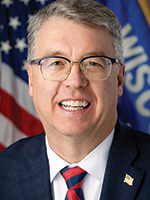
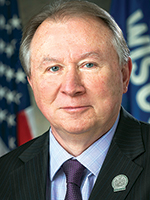
Brad Pfaff
100% support rate
Top opponent
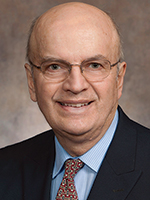
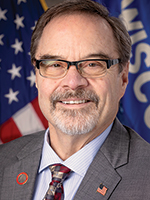
Steve Doyle
0% support rate
Ranked legislators
10
5 support · 5 oppose
Key legislators

Who's moving corrections in Wisconsin

Legislators moving corrections in Wisconsin
Legislator Party Stance Support rate Votes
Brad Pfaff
Brad Pfaff Senate · District 32
D
Strong +
100% 4
Bob Wirch
Bob Wirch Senate · District 22
D
Support
75% 4
Chris Larson
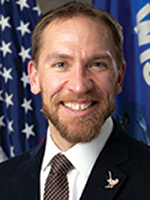
Chris Larson Senate · District 7
D
Support
75% 4
Dianne Hesselbein
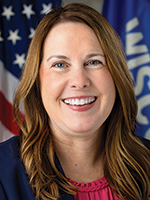
Dianne Hesselbein Senate · District 27
D
Support
75% 4
Dora Drake
Dora Drake Senate · District 4
D
Support
75% 4
Steve Doyle
Steve Doyle House · District 94
D
Strong −
0% 6
Paul Tittl
Paul Tittl House · District 25
R
Strong −
0% 3
Jill Billings
Jill Billings House · District 95
D
Strong −
17% 6
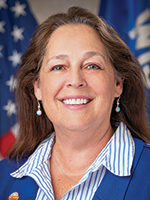
Jodi Emerson
Jodi Emerson House · District 91
D
Strong −
17% 6
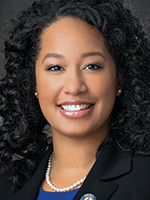
AJ
André Jacque Senate · District 1
R
Oppose
25% 4
Showing 21–30 of 57 bills

All criminal justice bills

failed · Wisconsin · Assembly Mar 23, 2026

AB 723: Relating to: bathing periods for inmates of state correctional institutions and county jails or houses of correction. (FE)

AB 723 establishes minimum bathing requirements for inmates in state correctional facilities and county jails. It mandates that state facilities provide at least four 15-minute bathing periods weekly, including 10 minutes of heated running water, while county jails must meet the same standard. The bill directly affects all inmates in these facilities by setting concrete, measurable hygiene standards. It requires the state department of corrections and county sheriffs to implement these provisions, with no additional exemptions or cost details specified in the current text.
Sub-Topics Corrections
failed · Wisconsin · Assembly Mar 23, 2026

AB 740: Relating to: solitary confinement. (FE)

AB 740 limits solitary confinement to a maximum of 10 days per instance and requires a 60-day waiting period between solitary periods for inmates in state prisons and county jails. It mandates that prison and jail staff provide inmates in solitary with specific items (like books, hygiene products, and paper), access to prenatal care for pregnant individuals, three weekly 25-minute video visitation sessions, and at least 15 hours per week of structured programming - including in-person visits from case managers and department staff (like health or education). The bill directly affects all inmates placed in solitary confinement under current rules, ensuring minimum standards for their well-being during confinement. The legislation is pending in the Corrections Committee after being introduced on December 3, 2025.
Sub-Topics Corrections
failed · Wisconsin · Assembly Mar 23, 2026

AB 736: Relating to: free menstrual products for inmates of state correctional institutions or county jails or houses of correction. (FE)

AB 736 requires state correctional facilities and county jails to provide free, nontoxic menstrual products to all inmates with active menstrual cycles. It mandates facilities to offer at least three verified brands each of tampons (with plastic applicator), pads, and reusable menstrual cups from a published list of nontoxic products. The bill defines "nontoxic" as free from harmful chemicals and requires facilities to sanitize reusable cups as needed. This directly affects incarcerated people who menstruate, ensuring access to essential hygiene products without cost. The law applies to all state prisons, county jails, and houses of correction in the state.
Sub-Topics Corrections
failed · Wisconsin · Assembly Mar 23, 2026

AB 773: Relating to: the treatment of a pregnant or postpartum person in prison or jail. (FE)

AB 773 requires correctional facilities to provide specific care for incarcerated pregnant and postpartum individuals (within 6 weeks of birth). It prohibits unnecessary restraints on these individuals except in extreme safety circumstances, mandating written documentation and staff training. Facilities must offer pregnancy testing, STI/HIV screening, continuing medication, doula/lactation support (if available at no cost), mental health assessments, and breastfeeding supplies. The bill directly affects all pregnant or postpartum people held in state prisons or jails, ensuring access to healthcare and support services during incarceration.
failed · Wisconsin · Senate Mar 23, 2026

SB 726: Relating to: Department of Corrections reporting of complaints in state correctional institutions and making an appropriation. (FE)

SB 726 requires the Department of Corrections to create an interactive website system that updates complaint data from state correctional facilities every 72 hours. The system must show the total number of annual complaints per facility and display all complaint details broken down by type (without personal information), making it searchable by category. The bill appropriates $70,000 for fiscal year 2025-26 and $30,000 for 2026-27 to establish and operate this reporting system. This directly affects state correctional institutions by mandating transparent, real-time public reporting of inmate and staff complaints.
failed · Wisconsin · Senate Mar 23, 2026

SB 742: Relating to: inmate access to transparent windows and making an appropriation. (FE)

SB 742 requires all state correctional institutions and county jails to install transparent windows in inmate cells by October 2030. These windows must be at least 1.5 square feet and provide a clear view (92% visibility) of the outdoors. The bill also mandates that inmates have access to view outdoors through such windows for at least 3 hours daily, unless in lockdown or solitary confinement, with specific alternatives if cell windows are unavailable. The legislation appropriates $3.5 million ($500,000 for 2025-26 and $3 million for 2026-27) to cover window installation costs in state facilities.
failed · Wisconsin · Assembly Mar 23, 2026

AB 728: Relating to: access to prisons and jails for oversight purposes. (FE)

AB 728 creates a new statute (302.47) requiring immediate access (less than 24 hours' notice) for specific oversight personnel to visit correctional facilities. It directly affects state legislators on relevant committees and county employees overseeing jail operations, granting them access to residential areas, cells, dining areas, and prisoner discussions. Facilities may deny immediate access only between 9 p.m. and 6 a.m. (with daytime access within 72 hours) or if the requester has exceeded 12 annual visits. The bill aims to enhance transparency by enabling regular oversight visits without unnecessary delays.
Sub-Topics Corrections
failed · Wisconsin · Assembly Mar 23, 2026

AB 731: Relating to: telecommunications service access by inmates and juveniles and making an appropriation. (FE)

AB 731 requires state and county correctional facilities to provide inmates and juveniles with minimum weekly telecommunications access at no cost, including 180 minutes of phone calls, 60 minutes of video calls, and 100 text messages. It directly affects individuals in state prisons, juvenile correctional facilities, and county jails by mandating these service levels, which must be maintained or improved from existing access levels. The bill establishes funding through specific appropriations ($4.46 million for adult inmates, $517,500 for juveniles) and requires counties to join a state telecommunications contract or report why they don’t, with the state reimbursing counties for costs if they opt out. It also prohibits using telecom services to replace in-person visitation and bans charging inmates for services beyond the minimums.
failed · Wisconsin · Assembly Mar 23, 2026

AB 725: Relating to: reporting of and notifications about restricted movement and solitary confinement in state correctional institutions and county jails and making an appropriation. (FE)

AB 725 requires state prisons and county jails to notify designated family members within 24 hours when an inmate faces restrictions affecting visits or communication (like solitary confinement). It also mandates an online public dashboard updated every 48 hours, showing current restrictions (with reasons and duration), solitary confinement numbers broken down by reason, and total inmate counts. The bill funds these systems with $780,000 for fiscal year 2025-26 and $275,000 for 2026-27, plus temporary staff to implement them. These changes directly affect inmates, their families, and correctional facilities by increasing transparency around restrictive practices.
failed · Wisconsin · Senate Mar 23, 2026

SB 744: Relating to: reporting of and notifications about restricted movement and solitary confinement in state correctional institutions and county jails and making an appropriation. (FE)

SB 744 requires state correctional facilities and county jails to create two new systems: (1) a notification system allowing inmates to designate up to three family members to receive automatic alerts within 24 hours if they face restrictions affecting visits or communication; and (2) a public website reporting system updated every 48 hours, detailing current restrictions, solitary confinement numbers, reasons for solitary confinement, and total inmate populations at all facilities. The bill mandates that sheriffs submit weekly data to the state department to populate the public reporting system, with the system becoming operational by the 7th month after enactment. It appropriates $780,000 for the notification system in fiscal year 2025-26 and $94,200 for staff to support implementation. This directly affects inmates, their families, and the public by increasing transparency around facility restrictions and solitary confinement practices.
Sub-Topics Corrections
Showing 21 to 30 of 57 bills
Previous 1 2 3 4 6 Next