Maddy summaryThe Problem Solvers MAPS Act requires states to draw congressional districts that are contiguous, compact in shape, and nearly equal in population. It prohibits mapmakers from creating boundaries intended to advantage or disadvantage specific candidates, incumbents, or political parties. Additionally, the law mandates that state officials consider preserving existing political subdivisions like counties, cities, and tribal land boundaries when establishing new districts. These rules apply to any congressional district created on or after the date the act is signed into law.
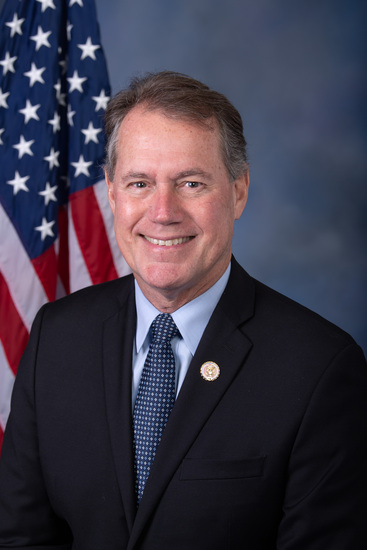
Rep. Ed Case
Sponsored bills
Maddy summaryThe Problem Solvers TRUST Act would prohibit states from changing their U.S. House of Representatives district maps during the ten-year period following a census, unless a court orders new lines to comply with federal or state constitutional requirements. If such a court order is issued, the state must make changes that result in the smallest possible alteration to the existing map. The bill also sets a one-year deadline for filing legal challenges against a redistricting plan after it becomes law. These rules would apply to congressional redistricting occurring after the November 2032 federal elections and would not affect how states draw districts for local or state offices.
Maddy summaryThis bill establishes a formal National Wildlife Refuge System Invasive Species Strike Team Program under the U.S. Fish and Wildlife Service. It requires regional teams trained in early detection and rapid response to prevent, control, and eradicate invasive species harming native wildlife and habitats on or near National Wildlife Refuges, using science-based methods and partnerships with states, tribes, and local entities. The program is funded at $15 million annually from 2026-2030 and mandates annual reports to Congress on progress in managing priority invasive species. It directly affects National Wildlife Refuge lands and adjacent properties by coordinating invasive species management with nearby landowners and agencies.
National Law Enforcement Officers Remembrance, Support and Community Outreach Act. [ sic ] This bill temporarily directs the Department of the Interior to award a grant to the National Law Enforcement Officers Memorial Fund for the expenses associated with operating and enhancing the community outreach, public education, and officer safety and wellness programs of the National Law Enforcement Museum.
Maddy summaryThe Cost Estimates Improvement Act requires the Congressional Budget Office and the Joint Committee on Taxation to include public debt servicing costs in their financial estimates, to the extent practicable. This change directly affects federal budgeting processes by ensuring that the interest payments on national debt are factored into official cost projections for new legislation. The bill amends the Congressional Budget and Impoundment Control Act of 1974 to mandate this specific inclusion in all future estimates prepared by these two bodies.
Maddy summaryHR 5267, the American Franchise Act, clarifies when franchisors can be considered joint employers of franchisee employees under federal labor laws. It defines "substantial direct and immediate control" over essential employment terms like wages, benefits, hours, hiring, and discipline - requiring franchisors to actively set these terms to be deemed joint employers. The bill explicitly excludes routine brand standards, training, or minimal safety requirements from constituting such control. This directly affects franchisors and franchisees by limiting joint employer liability to cases where franchisors exert significant, ongoing influence over core employment decisions. The law applies prospectively to new cases after enactment, not past disputes.
Maddy summaryThe High School Voter Empowerment Act of 2026 requires all public high schools in the United States to be designated as voter registration agencies under federal law. Schools must conduct at least one voter registration drive each academic year, with a specific goal of registering eligible students who are at least 17 years old and enrolled in American Government or Economics classes. To support these efforts, the Department of Education would establish a grant program that reimburses schools for the reasonable costs associated with running these drives. Additionally, state election officials may provide voting machines to schools upon request for use in student council elections.
Maddy summaryThis House resolution reaffirms the partnership between the United States and the Pacific Islands Forum (PIF) to support stability and prosperity in the region. It encourages the scheduling of a high-level summit between U.S. and Pacific Island leaders to discuss shared priorities like maritime security and economic development. The bill also urges continued U.S. engagement with regional institutions while respecting the sovereignty and specific goals outlined in the PIF's 2050 Strategy for the Blue Pacific Continent.
Maddy summaryThis House resolution formally recognizes the contributions of the roughly 1.3 million nonprofit organizations and their more than 12 million employees in the United States. It highlights that these groups serve as trusted community partners, often helping federal programs operate more efficiently while employing a significant portion of the workforce. The bill expresses support for designating August 17, 2026, as National Nonprofit Day to honor this sector's role in feeding, healing, and educating people across the country.
Maddy summaryThe Lindsey O. Graham Sanctioning Russia and Iran Act of 2026 imposes comprehensive economic restrictions on the Russian Federation, including blocking assets of government officials, state-owned financial institutions, and entities supporting the defense sector. The bill prohibits new U.S. investments in Russia, bans the purchase of Russian sovereign debt, and restricts the importation of uranium and energy products from the country. Additionally, it authorizes the imposition of tariffs up to 500 percent on goods imported directly from Russia and up to 100 percent on goods from foreign nations that continue to purchase significant volumes of Russian crude oil or natural gas. The legislation also extends the Iran Sanctions Act through 2031 and includes a five-year sunset provision for the new measures, subject to specific humanitarian and safety exceptions.