Issue · Environment

Environment

Every environment bill, vote, and legislator stance in West Virginia, automatically classified by Maddy, our AI policy reader.

Total bills
111
2026 Regular Session
Top supporter
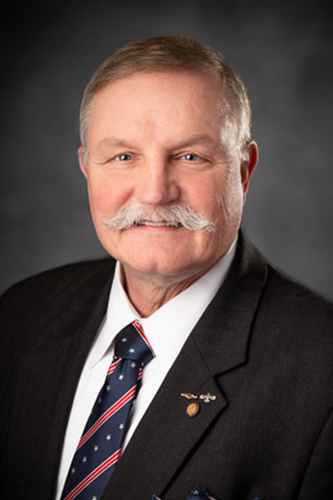
Rick Hillenbrand
100% support rate
Top opponent
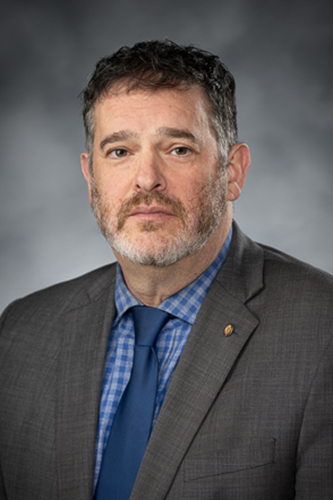
Evan Hansen
33% support rate
Ranked legislators
10
5 support · 5 oppose
Key legislators

Who's moving environment in West Virginia

Legislators moving environment in West Virginia
Legislator Party Stance Support rate Votes
Rick Hillenbrand
Rick Hillenbrand House · District 88
R
Strong +
100% 17
Lori Dittman
Lori Dittman House · District 63
R
Strong +
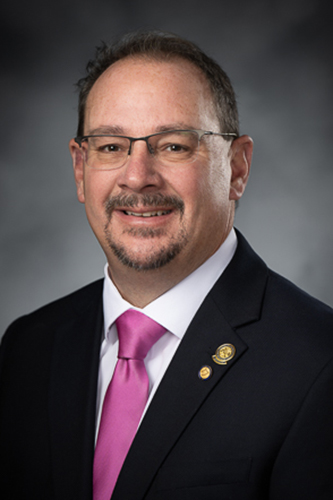
83% 17
Robbie Martin
Robbie Martin House · District 65
R
Strong +
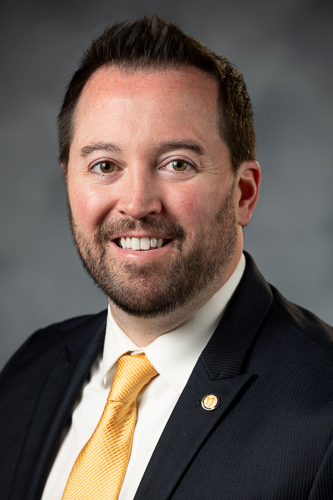
83% 14
Wayne Clark
Wayne Clark House · District 99
R
Strong +
83% 17
Patrick Lucas
Patrick Lucas House · District 24
R
Strong +
83% 17
Evan Hansen
Evan Hansen House · District 79
D
Oppose
33% 17
Shawn Fluharty
Shawn Fluharty House · District 5
D
Oppose
33% 15
Hollis Lewis
Hollis Lewis House · District 57
D
Oppose
33% 17
Laura Kimble
Laura Kimble House · District 71
R
Oppose
33% 17
Mike Pushkin
Mike Pushkin House · District 54
D
Oppose
33% 17
Showing 41–50 of 111 bills

All environment bills

in committee · West Virginia · House of Delegates Feb 4, 2026

HB 5160: Prohibition of geoengineering

HB 5160 prohibits all unauthorized atmospheric modification activities - such as cloud seeding, stratospheric aerosol injection, and directed-energy heating - within or above West Virginia. The law establishes the West Virginia Department of Environmental Protection (DEP) as the lead agency to enforce the ban, deny permits for such activities, and pursue penalties for violations. It applies to all individuals, organizations, and government entities conducting atmospheric modification without state authorization. Violations could trigger state enforcement actions, fines, and cooperative investigations with law enforcement agencies. The bill aims to protect public health, agriculture, and environmental integrity by preventing unregulated atmospheric changes.
in committee · West Virginia · House of Delegates Feb 3, 2026

HB 5069: Establish setback from residential properties for new windmills being constructed throughout the state.

HB 5069 requires new wind energy projects in West Virginia to maintain minimum distances from residences, property lines, and certain infrastructure. Specifically, wind turbines must be placed at least 1.5 times their total height (tower, turbine, blades) from residences and 1.1 times their height from property lines or paved public roads/transmission lines (115kV+). Property owners can opt out of these setbacks by signing a written waiver. The bill applies only to new siting certificate applications after its effective date, directly affecting wind developers and nearby landowners.
Sub-Topics Wind
in committee · West Virginia · Senate Feb 9, 2026

SB 872: Supplemental appropriation to Department of Commerce, fund 0265

This bill adds a $20 million supplemental appropriation to fund 0265 for the Department of Commerce's Division of Natural Resources, specifically for capital outlay, repairs, and equipment. It uses an unappropriated surplus balance from the State Fund, General Revenue, to fund existing capital projects without creating new programs or altering policy. The funding is designated for the fiscal year ending June 30, 2026, and directly affects the Division of Natural Resources' ability to maintain and upgrade infrastructure.
in committee · West Virginia · Senate Feb 16, 2026

SCR 3: Requesting Joint Committee on Government and Finance study funding for Flood Resiliency Fund

This concurrent resolution (SCR 3) requests the Joint Committee on Government and Finance to study how to fund West Virginia's Flood Resiliency Trust Fund. The committee must examine potential funding sources, including state revenue streams (like severance taxes), federal matching programs, lessons from other states, required funding levels, and using excess money from the Income Tax Reserve Fund. The study aims to develop a sustainable strategy to support the fund's goals, such as improving flood data, protecting infrastructure, and advancing risk reduction. The committee must report findings by January 1, 2027, to inform future legislation. This resolution does not allocate funds but directs a study to address current gaps in the fund's long-term financing.
passed · West Virginia · House of Delegates Feb 27, 2026

HR 13: Proposing approval of United States H.R. 5966, Ohio River Restoration Program Act.

House Resolution 13 is a West Virginia legislative resolution endorsing federal legislation (H.R. 5966), which would create the Ohio River Basin Restoration Program. If enacted, the program would fund projects to improve water quality, restore fish habitats, enhance flood resiliency, and expand recreational access across the Ohio River basin. It directly affects West Virginia residents who rely on the river for drinking water (700,000 people), economic activity, and recreation along its 277-mile border. The resolution clarifies the program would be non-regulatory, not creating new permits or legal claims, and aims to deliver clean water and economic benefits to communities in the Ohio River watershed.
in committee · West Virginia · House of Delegates Mar 11, 2026

HB 5281: Supplemental Appropriation to the Department of Commerce-Division of Forestry from the Unappropriated Balance

HB 5281 adds $600,000 to the existing budget for the West Virginia Division of Forestry (under Department of Commerce, Fund 0250) for fiscal year 2026. It uses unspent funds from the previous fiscal year’s General Revenue account to cover current operational expenses, not new programs. This supplemental appropriation directly affects the Division of Forestry’s ability to manage forest resources during 2026 without altering existing laws or creating new requirements. The bill does not change eligibility for services or impose new obligations on citizens.
in committee · West Virginia · Senate Feb 20, 2026

SB 1031: Increasing cost of solid waste assessment fees

SB 1031 would increase the maximum county solid waste assessment fee from $1.00 to $1.50 per ton for waste disposal. This bill directly affects West Virginia counties and regional solid waste authorities, which collect these fees. The key provision amends §7-5-22 of the state code to allow the higher fee rate, with all collected funds required to cover administration costs, refuse cleanup, litter control, and other solid waste programs. The bill does not change current fee structures but raises the allowable maximum rate by 50 cents per ton.
introduced · West Virginia · Senate Feb 21, 2026

SB 1040: Creating WV Energy Freedom Act

SB 1040, the West Virginia Energy Freedom Act, removes the requirement for certain non-utility power generators to obtain a "certificate of public convenience and necessity" before building or operating facilities. It directly affects solar, wind, and other non-utility electric generation projects, requiring them instead to register with the Public Service Commission and comply with environmental, zoning, and grid interconnection rules. The bill streamlines approvals by waiving the certificate process for projects reviewed and approved by the Infrastructure and Jobs Development Council. It also exempts intermittent power sources (like solar and wind) from the certificate requirement, shifting oversight to registration and standard grid connection protocols.
in committee · West Virginia · House of Delegates Jan 15, 2026

HB 4018: Enhancing Flood Resiliency Disbursements

HB 4018 amends West Virginia's Flood Resiliency Trust Fund rules to require that at least 50% of disbursements benefit low-income areas/households and 50% fund nature-based flood solutions (like wetland restoration or floodplain acquisition). It mandates that political subdivisions receiving funds must adopt specific flood mitigation measures, such as updated road standards, flood hazard bylaws, or FEMA-approved local emergency plans. The bill directly affects local governments, state agencies, and residents in flood-prone areas - particularly low-income households and communities with frequent flooding. All disbursements must align with the state’s Flood Resiliency Plan and require explicit approval from the State Resiliency Officer.
in committee · West Virginia · House of Delegates Feb 3, 2026

HB 4460: Relating to balancing urban and rural sewage treatment needs

HB 4460 modifies West Virginia's sewer connection rules to balance urban and rural needs. It exempts properties with properly maintained onsite wastewater systems (verified by a recent inspection) and those more than 200 feet from a sewer line from mandatory connections. In densely populated areas (over 500 people per square mile), connections may still be required if systems are failing or impractical. The bill also mandates that municipalities provide financial assistance - including payment plans or subsidies - for low-income homeowners who must connect, covering both connection fees and necessary plumbing modifications.
Showing 41 to 50 of 111 bills
Previous 1 4 5 6 12 Next