Issue · Environment

Environment

Every environment bill, vote, and legislator stance in West Virginia, automatically classified by Maddy, our AI policy reader.

Total bills
148
2026 Regular Session
Top supporter
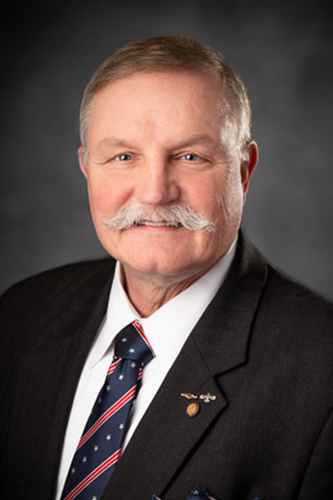
Rick Hillenbrand
100% support rate
Top opponent
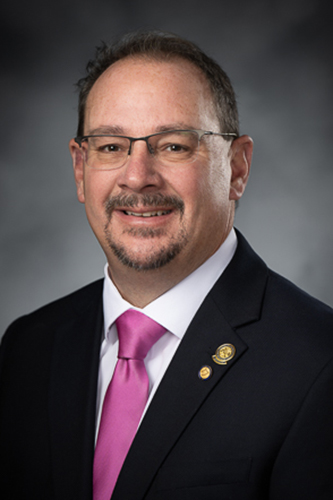
Evan Hansen
33% support rate
Ranked legislators
10
5 support · 5 oppose
Key legislators

Who's moving environment in West Virginia

Legislators moving environment in West Virginia
Legislator Party Stance Support rate Votes
Rick Hillenbrand
Rick Hillenbrand House · District 88
R
Strong +
100% 17
Lori Dittman
Lori Dittman House · District 63
R
Strong +
83% 17
Robbie Martin
Robbie Martin House · District 65
R
Strong +
83% 14
Wayne Clark
Wayne Clark House · District 99
R
Strong +
83% 17
Patrick Lucas
Patrick Lucas House · District 24
R
Strong +
83% 17
Evan Hansen
Evan Hansen House · District 79
D
Oppose
33% 17
Shawn Fluharty
Shawn Fluharty House · District 5
D
Oppose
33% 15
Hollis Lewis
Hollis Lewis House · District 57
D
Oppose
33% 17
Laura Kimble
Laura Kimble House · District 71
R
Oppose
33% 17
Mike Pushkin
Mike Pushkin House · District 54
D
Oppose
33% 17
Showing 41–50 of 148 bills

All environment bills

failed · West Virginia · House of Delegates Mar 5, 2026

HB 5525: To create the “Southern West Virginia Clean Water Fund” to be used in water emergencies or to upgrade infrastructure so residences can get clean water.

HB 5525 creates the "Southern West Virginia Clean Water Fund" to improve drinking water in 13 specific counties (Boone, Fayette, Greenbrier, Lincoln, Logan, McDowell, Mercer, Mingo, Monroe, Raleigh, Summers, Wayne, and Wyoming). The bill requires water utilities to conduct quarterly contaminant testing, replace lead service lines by 2035 (with financial help for low-income households), and implement advanced filtration systems where water quality fails state standards. It appropriates $10 million in state funds for infrastructure upgrades, mandates public reporting of test results within 30 days, and imposes fines (reinvested into the fund) for violations of safe drinking water limits. The law also requires annual infrastructure assessments and updates to contaminant standards every three years based on scientific research.
in committee · West Virginia · Senate Feb 24, 2026

SB 893: Providing tax credits for expenditures and activities related to biochar manufacturing

SB 893 creates a state tax credit equal to 10% of the federal carbon storage credit (under IRS Section 45Q) earned by businesses operating new biochar manufacturing facilities in West Virginia that began operations after July 1, 2025. It directly affects eligible businesses that qualify for the federal credit, allowing them to reduce their state corporation income tax by up to 50% of their tax liability for the year. The credit lasts up to 12 years and requires verification through IRS certification and documentation proving biochar production occurred in the state. Businesses must submit federal tax return copies and evidence of carbon sequestration meeting nationally recognized standards to claim the credit.
Sub-Topics Income Tax Tax Credits
in committee · West Virginia · House of Delegates Feb 4, 2026

HB 5173: To create the West Virginia Rural Littering and Illegal Dumping Prevention Act.

HB 5173 creates the West Virginia Rural Littering and Illegal Dumping Prevention Act, targeting individuals who improperly dispose of litter on public or private property, including near waterways. It establishes tiered penalties based on litter quantity: fines from $100 for small amounts (under 100 lbs) up to $50,000 for large dumps (over 500 lbs), with enhanced fines (50% higher) near protected waters. The bill also allows courts to order community service (cleaning litter for 8-200 hours) instead of or alongside fines, and creates a Rural Illegal Dumping Prevention Fund for cleanup programs. It directly affects anyone who illegally discards litter, imposing specific criminal penalties for repeat offenses and violations near water.
in committee · West Virginia · House of Delegates Feb 2, 2026

HB 5038: Establishing the Affordable Electricity and Economic Growth Act of 2026 to facilitate coke production and steel-making in the state

HB 5038, the Affordable Electricity and Economic Growth Act of 2026, directs West Virginia's Department of Economic Development to identify suitable sites for coal-fired electricity generation and coke production facilities near coal deposits, transmission infrastructure, and steel manufacturing locations. It requires state agencies to streamline regulations and review existing rules to reduce delays for projects using locally mined coal. The bill aims to support economic development by making it easier to build facilities that produce electricity and coke (used in steelmaking) within the state. This directly affects coal producers, steel manufacturers, and state regulatory agencies responsible for permitting and oversight.
Sub-Topics Coal Transmission
in committee · West Virginia · House of Delegates Feb 5, 2026

HR 10: Proposing approval of United States H.R. 5966, Ohio River Restoration Program Act, to bring clean water, enhanced fish and aquatic wildlife, economic benefits, and expanded recreation opportunities to West Virginia.

This resolution (HR 10) proposes approval of federal legislation (H.R. 5966), the Ohio River Restoration Program Act, which would establish a program to improve the Ohio River. The program would fund specific actions like cleaning polluted water, restoring fish habitats, controlling invasive species, and improving public access to the river. West Virginia directly benefits as 28% of the river’s length borders the state, providing drinking water for 700,000 residents and supporting local economies. The resolution itself does not create funding but formally supports the federal bill’s implementation. This is a procedural resolution endorsing the broader federal restoration effort.
in committee · West Virginia · House of Delegates Feb 6, 2026

HB 5318: Supplemental Appropriation to the Department of Commerce - State Parks and Recreation Endowment Fund from Special Revenue.

HB 5318 increases funding for West Virginia's state parks and recreation operations by supplementing existing budget lines. It adds $12,000 to "Current Expenses" (raising the total to $25,000) and $6.43 million to "Other Assets" (raising the total to $6.5 million) within the Department of Commerce's State Parks and Recreation Endowment Fund. This bill uses unappropriated funds from the 2026 fiscal year to cover these increases, directly affecting the Division of Natural Resources' park management. The change is purely procedural, adjusting budget allocations without creating new policies or programs.
introduced · West Virginia · Senate Feb 20, 2026

SB 1022: Removing electrical transformers as exempted aboveground storage tanks

SB 1022 removes electrical transformers from the list of exempted aboveground storage tanks under West Virginia's regulatory framework. This change means transformers - commonly used in electrical systems - will now be subject to the same safety, inspection, and environmental compliance requirements as other aboveground storage tanks. The bill directly affects utility companies, industrial facilities, and property owners that operate or maintain electrical transformers. It modifies the existing definition in §22-30-3 by deleting the exemption previously listed under subsections (L) and (O), requiring transformers to meet all registration, notice, and signage rules under the Aboveground Storage Tank Act.
in committee · West Virginia · House of Delegates Feb 4, 2026

HB 5160: Prohibition of geoengineering

HB 5160 prohibits all unauthorized atmospheric modification activities - such as cloud seeding, stratospheric aerosol injection, and directed-energy heating - within or above West Virginia. The law establishes the West Virginia Department of Environmental Protection (DEP) as the lead agency to enforce the ban, deny permits for such activities, and pursue penalties for violations. It applies to all individuals, organizations, and government entities conducting atmospheric modification without state authorization. Violations could trigger state enforcement actions, fines, and cooperative investigations with law enforcement agencies. The bill aims to protect public health, agriculture, and environmental integrity by preventing unregulated atmospheric changes.
in committee · West Virginia · House of Delegates Feb 2, 2026

HB 5039: Fueling Modern Life

HB 5039, titled "Fueling Modern Life," repeals all existing West Virginia air pollution control statutes (§22-5-1 through §22-5-20) and replaces them with a new policy declaring carbon dioxide (CO₂) a "foundational nutrient" necessary for life, not a pollutant. The bill mandates that West Virginia will not treat CO₂ as a pollutant, reject "net-zero" emission targets, and actively support carbon-based fuels like coal, oil, and natural gas. This directly affects all entities regulated under air pollution laws, including power plants and industrial facilities, by eliminating CO₂ emission requirements. The legislation shifts state policy to prioritize fossil fuel use for economic development while asserting CO₂ levels are beneficial and historically low.
in committee · West Virginia · House of Delegates Feb 3, 2026

HB 5069: Establish setback from residential properties for new windmills being constructed throughout the state.

HB 5069 requires new wind energy projects in West Virginia to maintain minimum distances from residences, property lines, and certain infrastructure. Specifically, wind turbines must be placed at least 1.5 times their total height (tower, turbine, blades) from residences and 1.1 times their height from property lines or paved public roads/transmission lines (115kV+). Property owners can opt out of these setbacks by signing a written waiver. The bill applies only to new siting certificate applications after its effective date, directly affecting wind developers and nearby landowners.
Sub-Topics Wind
Showing 41 to 50 of 148 bills
Previous 1 4 5 6 15 Next