Issue · Education

Education (School Funding)

Every education bill, vote, and legislator stance in West Virginia, automatically classified by Maddy, our AI policy reader.

Total bills
45
2026 Regular Session
Top supporter
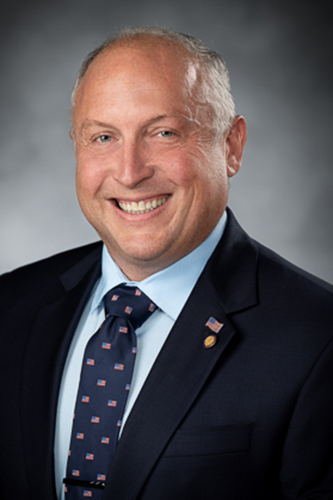
Bill Flanigan
100% support rate
Top opponent
Scot Heckert
0% support rate
Ranked legislators
10
5 support · 5 oppose
Key legislators

Who's moving school funding in West Virginia

Legislators moving school funding in West Virginia
Legislator Party Stance Support rate Votes
Bill Flanigan
Bill Flanigan House · District 4
R
Strong +
100% 4
Erica Moore
Erica Moore House · District 15
R
Strong +
100% 4
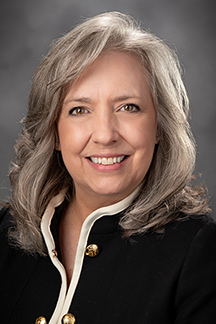
Lori Dittman
Lori Dittman House · District 63
R
Strong +
100% 4
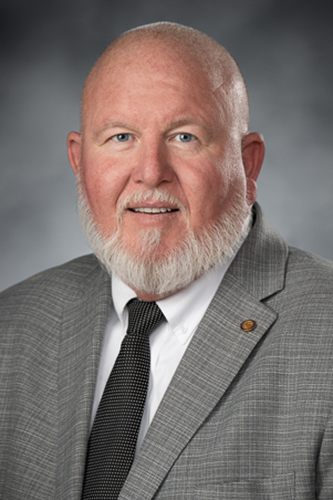
Andy Shamblin
Andy Shamblin House · District 59
R
Support
75% 4
Betsy Kelly
Betsy Kelly House · District 9
R
Support
75% 4
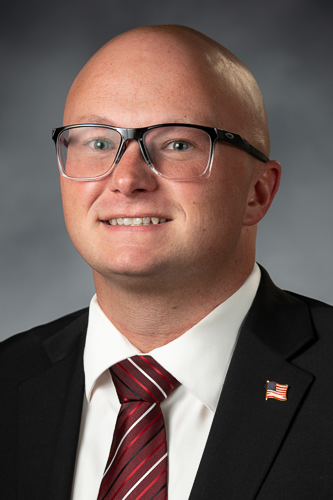
Scot Heckert
Scot Heckert House · District 13
R
Strong −
0% 4
Chris Toney
Chris Toney House · District 43
R
Oppose
25% 4
Chuck Sheedy
Chuck Sheedy House · District 7
R
Oppose
25% 4
Evan Hansen
Evan Hansen House · District 79
D
Oppose
25% 4
Jeff Stephens
Jeff Stephens House · District 6
R
Oppose
25% 4
Showing 11–20 of 45 bills

All education bills

in committee · West Virginia · House of Delegates Feb 9, 2026

HB 5346: Creating the school aid formula study commission

HB 5346 establishes the School Aid Formula Study Commission to evaluate West Virginia's public school funding system and propose recommendations for improvement. The commission, composed of 12 members including school board representatives, education experts, teachers, rural/urban school board members, and community stakeholders, will study funding options and report findings to the Legislature by July 2028. Its work aims to address challenges like declining enrollment, school closures, and reduced funding that have strained public education. The commission's recommendations will guide potential legislative changes to modernize school funding and ensure stable, adequate resources for all public schools.
Sub-Topics School Funding
in committee · West Virginia · Senate Feb 20, 2026

SB 1034: Increasing amount of funding counties receive for HOPE Scholarship enrollments

This bill ensures county school boards receive funding for students who qualify for West Virginia's Hope Scholarship but choose not to use it. Specifically, if a student isn't enrolled in a public school but is eligible for the scholarship (and declines it), the county board gets the same funding they would receive if the student attended a public school. The funding comes from the Hope Scholarship Program Fund and applies to students residing in the county. This change directly affects county school budgets and students who opt out of the scholarship program.
in committee · West Virginia · House of Delegates Feb 5, 2026

HB 5265: Relating to calculating max number of students at alternative and year-round schools

This bill changes how West Virginia calculates enrollment for state funding at alternative and year-round schools. Instead of using standard enrollment figures, it requires using the school's maximum enrollment date multiplied by 1.5 (150%) to determine funding eligibility. This adjustment ensures these schools receive funding based on their highest student count during the year, rather than average enrollment. The change directly affects alternative schools and year-round programs when calculating their state education funding.
Sub-Topics School Funding
in committee · West Virginia · House of Delegates Feb 13, 2026

HB 5499: Relating to school system fiscal and governance early warning, stabilization, and accountability.

HB 5499 creates a system to monitor and address financial and governance issues in West Virginia school districts before they escalate. It requires the state to track specific indicators like over-reliance on temporary funding, declining savings, or repeated audit findings, and place districts meeting thresholds on a public "Watch List" with a requirement to submit a corrective action plan. The bill establishes a new independent Office of School System Performance and Accountability (OSPA) to oversee early intervention, stabilization, and transparency, while mandating detailed documentation before state takeover. This system aims to prevent crises through early transparency, local accountability, and structured support for school districts.
signed · West Virginia · House of Delegates Jun 29, 2026

HB 5438: To modify the foundation allowance to improve instructional programs.

HB 5438 modifies West Virginia's school funding formula to direct additional resources toward instructional improvements and technology. It allocates 10% of the local share increase for instructional programs (with $150,000 minimum per county) and 20% for instructional technology (with $30,000 minimum per county), both calculated based on attendance and enrollment data. County school boards may use up to 50% of instructional funds for hiring educators or technology specialists, subject to state superintendent approval, but cannot increase central office staff beyond four positions. The bill also requires funding for the Third Grade Success Act and allows county boards to use allocated funds for Safe Schools Fund projects. This directly affects all West Virginia county school districts and their budgeting for classroom programs and technology resources.
Sub-Topics School Funding
in committee · West Virginia · Senate Feb 2, 2026

SB 713: Providing 10 percent raise for all public school staff

SB 713 would provide a 10 percent pay raise for all public school staff in West Virginia, including teachers and other school employees. The bill amends state law to update the minimum salary schedule for educators, setting new base pay levels based on experience and education for the 2024-2025 school year and beyond. This change requires state funding to cover the increased costs for public school districts. The bill is currently pending in the Senate Education and Finance committees.
in committee · West Virginia · House of Delegates Feb 11, 2026

HB 5434: Creating a moratorium for two years on school closures and providing for a pause on impending school closures.

HB 5434 creates a two-year moratorium on school closures or consolidations in West Virginia counties, directly affecting county school boards making such decisions. The bill requires county boards to prepare written reasons and impact statements detailing effects on students (including transportation time), finances, enrollment capacity, staff, and communities before proceeding. It mandates public hearings with specific notice requirements and input from school improvement councils, and pauses closures related to optional emergency levy elections. The moratorium allows time for revising school funding formulas while ensuring transparent, data-driven closure decisions.
in committee · West Virginia · Senate Feb 11, 2026

SB 801: Increasing each school district's basic foundation program

SB 801 increases state funding for West Virginia school districts by raising the required ratios of professional educators and support staff per 1,000 students. Specifically, it adjusts the calculation for the "basic foundation program" to require higher ratios (e.g., increasing professional educators from 72.75 to 72.75+ per 1,000 students and support staff from 43.97 to 56.79 per 1,000 students by 2026-2027). The bill directly affects all public school districts, with different ratios based on county density (high, medium, low, sparse). For the 2026-2027 school year only, districts will not face penalties for not meeting the new ratios immediately, providing a transition period for implementation.
in committee · West Virginia · House of Delegates Feb 11, 2026

HB 5435: The purpose of this bill is to increase funding for rural counties in this state by adding a multiplier to the IEP calculation.

HB 5435 modifies West Virginia's school funding formula to increase support for rural counties. It adds a multiplier to the "net enrollment" calculation for counties classified as "sparse-density" (those with fewer than five students per square mile). This adjustment directly increases state funding for school systems in these rural counties when their net enrollment falls below 1,400 students. The change applies to all school funding calculations under the state's public school support system, ensuring rural districts receive additional resources based on population density.
Sub-Topics School Funding Special Education Tags Rural Communities
in committee · West Virginia · Senate Feb 5, 2026

SB 758: Providing extra state aid to school districts for students enrolled in certain schools

SB 758 would provide extra state funding to West Virginia school districts for students enrolled in schools designated as "extremely remote" under the bill. It prohibits county school boards from closing such schools during the fiscal year they receive the additional aid and requires submission of specific documentation and reporting. The bill also allows waivers for certain documentation requirements. These provisions aim to support remote schools by ensuring stable funding and operational continuity.
Sub-Topics School Funding
Showing 11 to 20 of 45 bills
Previous 1 2 3 5 Next