

Iran Sanctions Preservation Act This bill restricts the authority of the President to waive U.S. sanctions on Iran. Specifically, the bill repeals the President's authority to waive sanctions on the purchase of Iranian petroleum or petroleum products or license otherwise sanctionable conduct concerning such purchases. Furthermore, the President may not remove any Iranian person (including a financial institution) from a list of persons, organizations, and entities that have U.S. sanctions levied against them without certifying to Congress that the person has not engaged in particular conduct, such as supporting terrorism or Iran's nuclear weapons program. In addition, the bill prohibits the removal of the Central Bank of Iran from this list unless there is a Senate-approved treaty between the United States and Iran that addresses Iran's nuclear proliferation, ballistic missile program, and support for terrorism. The President must also maintain Iran's designation as a jurisdiction of money laundering concern until certifying to Congress that Iran is not engaged in illicit financial activities, nuclear proliferation activities, or ballistic missile development. The provisions of this bill terminate on the date the Senate approves a treaty between the United States and Iran that addresses Iran's nuclear proliferation, ballistic missile program, and support for terrorism.
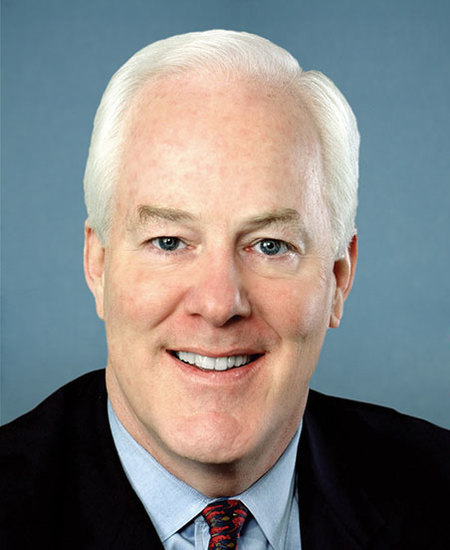
Sponsored bills
Behavioral Health Crisis Services Expansion Act This bill establishes requirements, expands health insurance coverage, and directs other activities to support the provision of behavioral health crisis services along a continuum of care. Specifically, the Department of Health and Human Services (HHS) must establish standards for a behavioral health crisis continuum of care that health care providers and communities may use in responding to individuals experiencing a behavioral health crisis. This continuum of care must include 24-7 crisis hotlines, emergency treatment, stabilization services, and other specified components. In addition, the bill expands health insurance coverage for behavioral health crisis services. It also expands the Community Mental Health Services Block Grant to assist states and territories with developing the infrastructure to provide crisis response services. Furthermore, HHS, in consultation with the Department of Justice, must convene an expert panel to make recommendations concerning training for emergency services dispatchers and crisis call center personnel to respond appropriately to individuals experiencing a behavioral health crisis.
Preventing Antisemitic Hate Crimes Act This bill requires a designated officer or employee of the Department of Justice (DOJ) to facilitate the expedited review of anti-Semitic hate crimes and reports of anti-Semitic hate crimes. Further, the bill requires DOJ to issue guidance for state, local, and tribal law enforcement agencies on expanding public education campaigns to raise awareness of anti-Semitic hate crimes. Finally, the bill increases the statutory maximum prison term for an individual who is convicted of a federal hate crime offense after a prior conviction for a hate crime offense under federal law or a hate crime felony under state law.
Contracts and Obligations Modernization for Efficient Terms of Service Act or the COMETS Act This bill authorizes the National Aeronautics and Space Administration to procure supplies and services for commercial activities at its centers.
This resolution offers the condolences of the Senate regarding the death of Senator David Henry Gambrell and honors his life and legacy.
Fixing Infrastructure Damaged by Disasters Act This bill expands the allowable uses of funds available to states for repairing federal-aid highways and other roadways damaged by natural disasters and catastrophic failures. At the request of the governor and with approval of the Department of Transportation, a state may use funds for emergency maintenance projects (including those considered heavy or routine maintenance) that are necessary due to a natural disaster or catastrophic failure. Additionally, the bill increases the percent of funds a state may use for projects to protect public safety or to maintain or protect roadways from a disaster or catastrophic failure. The bill also includes within the scope of natural disasters blizzards, ice storms, and wildfires.
Surveillance and free speech Protection Enhancement in Export controls for Censorship and Human rights Act of 2021 or the SPEECH Act of 2021 This bill requires the Department of Commerce to review items that are subject to export controls for reasons related to crime control and detection and determine whether additional export controls are needed to protect human rights. Currently, in support of U.S. foreign policy to promote the observance of human rights around the world, a license is required to export and reexport certain crime control and detection equipment.
Telehealth Improvement for Kids' Essential Services Act or the TIKES Act This bill requires several agencies to promote and evaluate the use of telehealth under Medicaid and the Children's Health Insurance Program (CHIP). Specifically, the bill requires (1) the Centers for Medicare & Medicaid Services to issue guidance to states on ways to increase access to telehealth; (2) the Medicaid and CHIP Payment and Access Commission to study the impact of telehealth on health care access, utilization, costs, and outcomes; and (3) the Government Accountability Office to evaluate federal interagency collaboration with respect to the provision of telehealth services to individuals under the age of 18.
Conrad State 30 and Physician Access Reauthorization Act This bill modifies the Conrad 30 Waiver program, which incentivizes qualified foreign physicians to serve in underserved communities. It also extends statutory authority for the program for three years from this bill's enactment. Aliens coming to the United States under a J-1 nonimmigrant visa to receive medical training typically must leave the country and reside for two years abroad before being eligible to apply for an immigrant visa or permanent residence. The Conrad program waives this requirement for individuals who meet certain qualifications, including serving for a number of years at a health care facility in an underserved area. The bill increases the number of waivers that a state may obtain each fiscal year from 30 to 35 if a certain number of waivers were used the previous year, and provides for further adjustments depending on demand. An alien physician may be employed at an academic medical center to meet the Conrad program's employment requirements if the alien's work is in the public interest, even if the medical center is not in an underserved area. Employment contracts for alien physicians under the Conrad program shall contain certain information, such as the maximum number of on-call hours per week the physician shall have to work. Certain alien physicians (along with the physician's spouse and children) shall be exempt from the direct annual numerical limits on immigration, including those physicians that have met certain requirements related to visas for physicians to serve in underserved areas.
This resolution congratulates the students, families, teachers, administrators, and staff of public charter schools across the United States for (1) making ongoing contributions to public education, (2) making impressive strides in closing the academic achievement gap in U.S. schools, and (3) improving and strengthening the public school system. The resolution supports the ideals and goals of the 22nd annual National Charter Schools Week.