

Maddy summaryThis bill directs the U.S. government to actively support Taiwan's membership in the International Monetary Fund (IMF) and its meaningful participation in other international financial institutions. If Taiwan applies for IMF membership, the U.S. Governor at the IMF must use the U.S. vote to support that application, ensure Taiwan's participation in economic reviews, and facilitate access to technical assistance. The bill requires annual reports from the Treasury Secretary on U.S. efforts to advance Taiwan's engagement in these organizations for seven years. It aligns with longstanding U.S. policy supporting Taiwan's participation in international bodies where statehood is not required, without altering Taiwan's current non-member status.
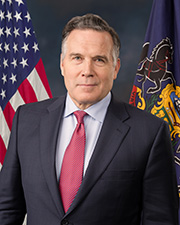
Sen. David McCormick
Sponsored bills
Maddy summaryThis bill requires the U.S. State Department to create and submit a detailed strategy for security assistance to Mexico within 180 days of enactment. The strategy must outline specific plans to dismantle drug trafficking networks (including fentanyl smuggling), strengthen Mexico’s border security and military capacity, and improve Mexico’s civilian justice system to combat corruption and impunity. The report must include implementation details, performance metrics, and annual briefings to Congress on progress. It directly affects U.S. foreign policy implementation and Congressional oversight of security aid to Mexico.
Maddy summaryThis bill authorizes the President to extend U.S. legal immunities (such as diplomatic protections) to three international organizations: ASEAN (Association of Southeast Asian Nations), CERN (European Organization for Nuclear Research), and the Pacific Islands Forum (PIF). It amends the International Organizations Immunities Act to allow these extensions on terms determined by the President, mirroring how the U.S. grants such protections to other international bodies it participates with. The bill directly affects these organizations by potentially granting them legal status and protections during their activities in the United States. It does not create new programs or funding but adjusts existing legal authority for diplomatic relations.
Maddy summaryS 2092, the REFOCUS DODEA Act, requires all Department of Defense Education Activity (DODEA) schools to prohibit student smartphone use during school hours. The bill mandates that students store smartphones in lockers or approved containers for the entire school day, with limited exceptions for medical emergencies or high-priority needs. This directly affects students attending DODEA schools, which serve children of military personnel. The law requires the Secretary of Defense to issue these regulations within 30 days of enactment.
Maddy summaryThis bill prohibits U.S. investors from purchasing, selling, or holding securities (including derivatives and investment vehicles) issued by Chinese entities designated as "covered entities" due to ties to China's military, human rights violations, or forced labor. It directly affects U.S. persons (citizens, residents, and U.S.-based entities) who hold or invest in securities of listed companies. Within 90 days of enactment, the President must create and publish a single list of covered entities, requiring U.S. investors to divest from these securities within 180 days of listing. Penalties include civil fines up to $250,000 or double the transaction value, and criminal charges for willful violations.
Maddy summaryThis bill requires the U.S. Department of Energy to move the Office of Fossil Energy and Carbon Management from Washington, DC, to Pittsburgh, Pennsylvania, by December 31, 2026. It directly affects the office’s employees and its operational location. The bill mandates a report to Congress one year after relocation detailing employee attrition, its causes, and impacts on workplace negotiations. The legislation focuses solely on the physical relocation and reporting requirements, with no new policy provisions for energy or carbon management.
Maddy summaryS 1969, the AFIDA Improvements Act of 2025, updates rules for foreign ownership of U.S. agricultural land. It requires foreign individuals or entities owning at least 1% of agricultural land (directly or through multiple entities) to report ownership details to the USDA, directly affecting foreign landowners. Key mechanisms include creating new enforcement duties for the Farm Production and Conservation Business Center (FPAC-BC) to verify reports and ensure compliance, and mandating USDA to coordinate with the Committee on Foreign Investment (CFIUS) on shared data. The bill also requires updating the USDA's Foreign Investment Disclosure handbook based on a 2024 GAO report and analyzing an electronic reporting system for faster data collection.
Maddy summaryS 1970, the MACV-SOG Congressional Gold Medal Act, authorizes a single Congressional Gold Medal to honor the service members of the Military Assistance Command Vietnam-Studies and Observations Group (MACV-SOG) who served during the Vietnam War from 1964 to 1972. The medal, to be presented by congressional leaders, recognizes MACV-SOG’s covert operations in Vietnam, Laos, and Cambodia, including reconnaissance, sabotage, and rescue missions, and acknowledges the unit’s high sacrifice (over 1,500 personnel missing or killed). After presentation, the medal will be displayed at the Smithsonian Institution, with duplicate bronze medals available for sale to cover production costs. This bill is purely commemorative and does not create new policy or affect any current laws.
Maddy summaryThis bill requires the U.S. Senate to approve any World Health Organization (WHO) pandemic preparedness agreement as a treaty, rather than allowing it to take effect through executive action. It directly affects the U.S. government’s ability to enter into international agreements on pandemic prevention, preparedness, and response with the WHO. The bill explicitly deems any such agreement "a treaty" requiring Senate advice and consent under the U.S. Constitution (two-thirds approval). It responds to the WHO’s recent adoption of a pandemic agreement draft at the 78th World Health Assembly in May 2025, aiming to ensure Senate oversight for all future pandemic-related international commitments.
Maddy summaryS 1974 (the ABC-ED Act of 2025) requires hospitals to track real-time emergency department bed capacity and boarding rates using modernized public health data systems, with grant funding to support this. It also creates a Medicare pilot program testing improved emergency care for older adults (through staffing, infrastructure, and geriatric protocols) and for psychiatric crisis patients (via dedicated units and faster transfers to post-acute facilities). The bill mandates a study by the Comptroller General to evaluate best practices for these data systems and their impact on emergency department wait times, boarding rates, and EMS offload times. The study must be completed within one year of enactment and reported to Congress. This bill directly affects hospitals, emergency departments, and post-acute care facilities (like skilled nursing homes) through new data requirements and pilot program participation.