Maddy summaryThis Senate resolution (SRES 502) authorizes former Senate employee Daniel Schwager to provide testimony in the criminal case *United States v. Antonio* (Case No. 21-497) pending in the District of Columbia federal court. It specifically permits Schwager to testify about matters related to his official Senate duties, excluding any topics where Senate privilege would apply. The resolution also directs the Senate Legal Counsel to represent Schwager and other current or former Senate employees regarding evidence requests tied to their official responsibilities. This is a procedural resolution focused on Senate privilege and employee representation, not a policy change.
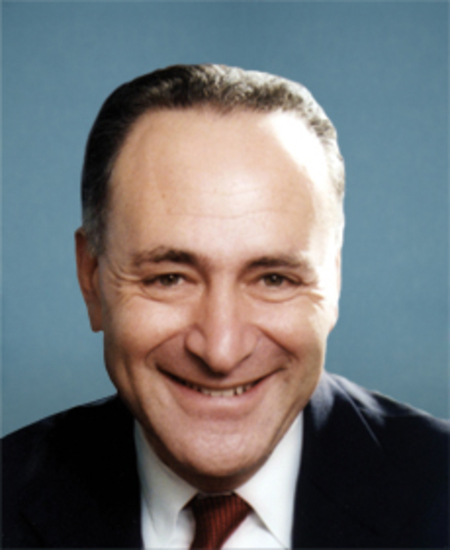
Sen. Charles E. Schumer
Sponsored bills
Maddy summarySRES 501 is a Senate resolution authorizing testimony from three employees of Senator Ted Cruz's office (Amy English, Grant Murray, and Anthony Rodregous) in the federal case *United States v. Nformangum* (Cr. No. 22-367). It permits them to provide relevant testimony in the Southern District of Texas court case, excluding matters protected by Senate privileges. The resolution also directs the Senate Legal Counsel to represent these employees and any current/former staff of Senator Cruz’s office regarding evidence requests in the case. This is a procedural measure to uphold Senate privileges while complying with judicial demands.
Maddy summaryThis bill makes it illegal to use automated tools ("bots") to bypass website purchase limits or inventory controls, and to sell products obtained through such violations. It directly affects individuals and businesses using bots to circumvent online purchase restrictions (e.g., for limited-edition products like sneakers or concert tickets). Key provisions prohibit both the circumvention of security measures and the resale of goods acquired via those violations, with enforcement by the FTC and state attorneys general. The law aims to prevent bots from hoarding scarce items, promoting fairer access for regular consumers.
Maddy summaryThe Kids Online Safety Act requires social media platforms and other online services used by minors to implement safety features protecting children under 17. It mandates default privacy controls, limits addictive features like automatic media playback, restricts advertising of harmful products (tobacco, gambling, alcohol) to minors, and requires annual transparency reports about online risks. Platforms with over 10 million monthly U.S. users must provide parental tools, conduct independent audits, and make de-identified data available for research on online harms. The bill focuses on preventing mental health disorders, bullying, sexual exploitation, and addictive behaviors through platform design changes.
Maddy summaryThis is a ceremonial Senate resolution (SRES 492) honoring the late First Lady Rosalynn Carter. It expresses the Senate's condolences for her passing and recognizes her lifetime of humanitarian work, including her advocacy for mental health care, founding of caregiver support programs, and service with The Carter Center. The resolution does not create new laws or policies; it is purely a commemorative statement. It was introduced by a bipartisan group of senators and adopted by the Senate on December 7, 2023.
Maddy summaryThe SAFER Banking Act provides legal protections for banks and financial institutions that serve state-legal marijuana businesses and related service providers. It creates a "safe harbor" preventing federal banking regulators from penalizing institutions for offering services to these businesses, even though marijuana remains illegal under federal law. The bill also allows income from state-legal marijuana businesses to be considered "legal income" for mortgage qualification purposes and establishes guidance for suspicious activity reporting related to these businesses. Similar protections are extended to hemp-related businesses and service providers, without requiring banks to serve these businesses.
Maddy summarySRES 459 is a ceremonial Senate resolution recognizing November 2023 as National Native American Heritage Month and the Friday after Thanksgiving as Native American Heritage Day, as specified in the 2009 Native American Heritage Day Act. It does not create new laws or funding but formally acknowledges Native Americans' contributions to U.S. history, culture, and society through "appropriate programs and activities." The resolution highlights historical context, including Native American cultural preservation, military service, and influences on U.S. governance, without imposing obligations on any entity. It directly affects the general public by encouraging observance during November 2023. This is a symbolic gesture, not a policy change.
Maddy summaryThis bill (S 3283, Fair Warning Act of 2023) amends the Worker Adjustment and Retraining Notification Act to require employers with 50+ employees or $2 million+ annual payroll to provide 90 days' written notice before site closings or mass layoffs. It expands notification requirements to include affected employees, local governments, state dislocated worker units, and the Secretary of Labor, while adding exceptions for natural disasters, terrorist attacks, and public health emergencies. The bill creates a public database tracking notice information and clarifies employer liability for failing to provide required notice, including potential back pay and liquidated damages. Temporary layoffs must include short-time compensation programs, and employers must provide information about available benefits and services to affected employees. This legislation directly affects businesses meeting the size criteria and their employees facing potential job loss.
Maddy summaryThe Puerto Rico Status Act (S 3231) establishes a process for Puerto Rico to determine its political status through a plebiscite on November 2, 2025, offering residents three options: independence, sovereignty in free association with the United States, or statehood. If no option receives a majority in the initial vote, a runoff election will be held on March 8, 2026. The bill outlines detailed transition mechanisms for each potential status, including constitutional conventions, changes to citizenship and immigration laws, and continued federal benefits during a transition period. It requires bilingual voter education materials, establishes oversight for the voting process, and specifies how federal laws would change under each status option. The bill directly affects Puerto Rico's residents, the U.S. federal government, and Puerto Rico's government as it would transition to a new political status.
Maddy summarySRES 426 is a Senate resolution designating November 4, 2023 (the first Saturday of November), as "National Bison Day." It directly recognizes the cultural, historical, and economic significance of bison to Native American tribes, rural communities, and the U.S. ecosystem. The resolution encourages the American public to observe the day with ceremonies and activities, but it does not create new laws, funding, or obligations. This is a symbolic gesture acknowledging bison's role as the national mammal and its importance to tribal heritage and conservation efforts.