Maddy summaryThis bill creates a federal grant program to help rural water and wastewater systems prepare for and respond to disasters. It authorizes $20 million annually (2025-2029) for grants to qualified nonprofit organizations with disaster response experience, enabling them to provide onsite support, develop emergency plans, improve system resilience, and conduct assessments. The program specifically targets disadvantaged communities lacking resources for water system safety and covers activities like emergency repairs, vulnerability assessments, and coordination with agencies like FEMA. Eligible nonprofits must have licensed personnel or relevant expertise and cannot duplicate other federal funding.
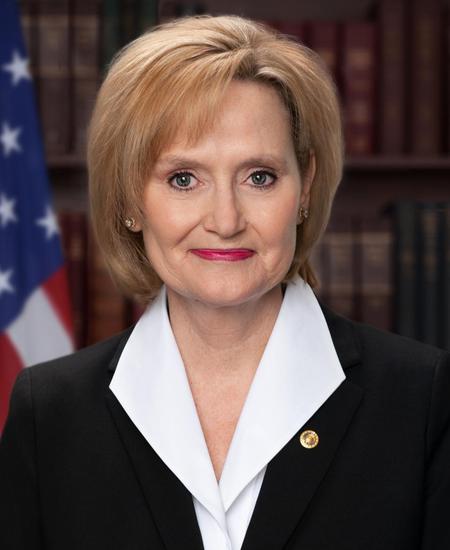
Sen. Cindy Hyde-Smith
Sponsored bills
Maddy summaryThis bill, the Major Richard Star Act (S 1032), allows veterans with combat-related disabilities to receive both their military retired pay and Veterans Affairs disability compensation simultaneously. It amends U.S. Code sections to remove the automatic reduction in retired pay that previously forced these veterans to choose between the two payments. The key change ensures veterans with combat-related disabilities qualify for full retired pay without offset against their VA disability benefits, effective for payments starting after the bill's enactment date. This directly affects veterans receiving military retired pay under Chapter 61 who also qualify for VA disability compensation for combat-related injuries.
Maddy summaryThis bill amends federal law to clarify the legal definition of "firearm silencer" and "firearm muffler" under Title 18. It defines these devices as any component designed to reduce firearm noise that attaches to a firearm, including the outer tube or primary housing of such devices. The law directly affects manufacturers, dealers, and owners of silencers by establishing a specific regulatory definition for these products. This definition change, rather than creating new restrictions, ensures consistent application of existing firearm laws to silencer components.
Maddy summaryThe Home-Based Telemental Health Care Act of 2025 would authorize federal grants to expand mental health and substance use services for rural underserved populations and workers in farming, fishing, or forestry occupations. Grant recipients must deliver care via telehealth directly in patients' homes or comfortable settings, measure its effectiveness compared to in-person care, and improve infrastructure like broadband access and patient devices. The program requires annual reports on outcomes after three years and every two years, with up to $10 million allocated yearly from 2025 through 2029. This initiative aims to address geographic and occupational barriers to mental health care access.
Maddy summaryThe FOCA Act (S 1064) requires federal agencies to ensure open competition on construction projects by prohibiting them from mandating or banning contractors from entering into labor agreements (like union contracts) or discriminating against contractors based on such agreements. It directly affects federal contractors, subcontractors, and agencies awarding construction contracts or grants for projects involving federal funds. Key provisions ban specific bid specifications or project documents from requiring labor affiliations, apply to all contracts after enactment, and mandate updates to federal procurement rules within 60 days. The bill aims to reduce taxpayer costs, expand opportunities for small businesses, and maintain federal neutrality in labor relations for construction projects.
Maddy summaryThis bill prohibits federal funds from covering gender transition procedures in any federal health program, including Medicaid, military health care, and federal employee benefits. It broadly defines "gender transition procedures" to include hormone treatments, surgeries (like hysterectomies or breast implants), and cosmetic procedures, while excluding treatment for disorders of sex development, medical emergencies, or precocious puberty. The bill also modifies the Affordable Care Act to block federal premium tax credits and cost-sharing subsidies for health plans covering these procedures, though it allows states or individuals to pay for separate coverage using non-federal funds. It directly affects federal health programs, Medicaid, and ACA marketplace plans by restricting federal funding for gender transition care.
Maddy summaryThis bill prohibits federal agencies from funding, supporting, or conducting research using human fetal tissue obtained from induced abortions. It allows federal research on tissue from miscarriages or stillbirths (defined as loss before 20 weeks or at 20+ weeks, respectively) and permits development of new cell lines not derived from abortion tissue. The bill amends the Public Health Service Act to restrict permissible tissue sources to miscarriage/stillbirth and revises definitions accordingly. It also repeals a prior provision allowing research on abortion-derived tissue and adds new restrictions on soliciting or accepting such tissue.
Maddy summaryThis bill changes federal gun laws to directly benefit spouses of active-duty military members stationed overseas. It amends laws to explicitly allow spouses to receive firearms or ammunition from their service-member spouses at overseas duty stations (previously only the service member could). It also updates residency rules so spouses are treated as residents of the state where their service member is stationed for firearm law purposes, rather than their home state. These changes simplify legal firearm access for military families living abroad and take effect 180 days after the bill becomes law.
Maddy summaryThis bill amends federal gun law to clarify what constitutes a "State of residence" for gun purchasers traveling across state lines. It defines "State of residence" to include a person's actual home state, a military member's duty station state (or commute home), or a mailbox state for those without a physical residence. The bill requires background checks to include either a physical address or a mailbox address on transfer forms. This directly affects gun buyers traveling between states, particularly military personnel and individuals without fixed homes, by allowing them to use their "state of residence" address for background checks instead of the state they're visiting. The change modifies how federal background checks verify a purchaser's residence.
Veterans 2nd Amendment Protection Act of 2025 This bill prohibits the Department of Veterans Affairs (VA) from transmitting certain information to the National Instant Criminal Background Check System (NICS) utilized by licensed importers or dealers of firearms. Specifically, the bill prohibits the VA from transmitting personally identifying information of a veteran or a beneficiary to the NICS solely on the basis that such veteran or beneficiary has an appointed fiduciary to manage their benefits, unless there is an order or finding of a judicial authority that such veteran or beneficiary is a danger to themselves or others.