

In committee Sep 24, 2026
1 co-sponsor
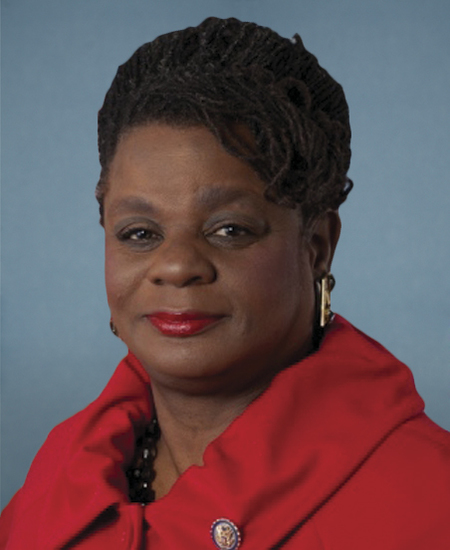
Rep. Gwen Moore
Total votes
2,837
all sessions
Attendance
96%
107 missed
Near the chamber average
With party
97%
of cast votes
Near the chamber average
Bipartisan score
2%
crosses aisle rarely
Near the chamber average
Sponsored
1,875
bills & resolutions
Higher than 85% of chamber peers
Committees
5
assignments
1,875 bills and resolutions
Sponsored bills
Total
1,875
Primary
93
Co-sponsor
1,782
This page
1,875
matching current filters
Food for Thought Act of 2026
Maddy summaryThe Food for Thought Act of 2026 establishes a competitive grant program administered by the Department of Agriculture to provide free meals and snacks to low-income college students at eligible institutions, including community colleges, historically Black colleges and universities, and other minority-serving schools. To qualify, an institution must have at least 20 percent of its undergraduate students eligible for Federal Pell Grants, and grants are awarded for a maximum duration of two years with funds restricted to meal preparation, outreach, and limited equipment purchases. Recipients are required to prioritize students who receive Pell Grants or report food insecurity, while also evaluating institutional policies that may create barriers to enrollment and referring students to other federal benefit programs like SNAP. The bill authorizes appropriations for fiscal years 2027 through 2032 and mandates that the Secretary of Agriculture submit reports to Congress on the program's impact on student retention and completion rates.
In committee Sep 16, 2026
1 co-sponsor
Medically Tailored Home-Delivered Meals Program Pilot Act
Maddy summaryThis bill creates a 6-year Medicare pilot program providing medically tailored home-delivered meals and nutrition counseling to specific high-risk Medicare patients after hospital discharge. It targets individuals with diet-impacted conditions (like diabetes or heart failure) who live at home, have limited mobility, and are at high risk of hospital readmission. Selected hospitals must meet quality standards, screen patients using approved tools, and deliver at least two meals daily meeting nutritional needs while respecting cultural/religious dietary requirements, all without patient cost-sharing. The program requires hospitals to submit data for the Secretary to evaluate health outcomes, readmission rates, and cost savings compared to non-participants. Funding comes from the Medicare Hospital Insurance Trust Fund, offset by reductions to other hospital payments to maintain budget neutrality.
Budget & TaxesSupports Budget & TaxesBill creates federal funding for Medicare pilot program targeting high-risk patients, advancing essential healthcare spending through government appropriation.
HealthcareSupports HealthcareCreates Medicare-funded pilot for medically tailored meals to reduce readmissions, expanding coverage for diet-impacted conditions like diabetes.
In committee Sep 16, 2026
1 co-sponsor
Proposing an amendment to the Constitution of the United States to prohibit the use of slavery and involuntary servitude as a punishment for a crime.
Maddy summaryH.J. Res. 216 proposes a constitutional amendment to eliminate the exception in the Thirteenth Amendment that currently permits slavery and involuntary servitude as punishment for a crime. The resolution would amend the Constitution to explicitly state that neither slavery nor involuntary servitude may be imposed on anyone as a penalty for criminal conduct. This change would directly affect incarcerated individuals by prohibiting forced labor practices within the criminal justice system, while clarifying that voluntary work programs and community service alternatives remain permissible.
Criminal JusticeSupports Criminal JusticeProposes constitutional amendment to ban involuntary servitude as punishment, directly advancing criminal justice reform and protecting inmate rights.
Labor & EmploymentSupports Labor & EmploymentThe bill prohibits involuntary servitude and forced labor for prisoners, directly strengthening protections against exploitative labor practices.
In committee Sep 15, 2026
1 co-sponsor
Designating September 2026 as "National Voting Rights Month".
Maddy summaryThis House resolution designates September 2026 as National Voting Rights Month to highlight the historical and ongoing challenges faced by various groups in exercising their right to vote. It encourages Congress to pass legislation that strengthens voting protections, specifically endorsing the John R. Lewis Voting Rights Advancement Act of 2025 while opposing bills that could restrict voter eligibility. The resolution also recommends that public schools develop curricula on voting history and current suppression tactics, and it invites funding for public service announcements to promote voter registration and participation.
In committee Sep 15, 2026
1 co-sponsor
Survivors’ Rights Restitution Act of 2026
Maddy summaryThe Survivors' Rights Restitution Act of 2026 establishes a federal compensation program administered by the Attorney General for victims of sexual assault, abuse, trafficking, or exploitation involving Jeffrey Epstein or Ghislaine Maxwell, as well as victims whose rights were violated by the federal government. Petitions are filed with the United States Court of Federal Claims and assigned to special adjudicators who must be mental health professionals or experts in victim services, civil rights law, or claims administration. The process is designed to be informal and less adversarial than standard litigation, with decisions required within 120 days and a minimum compensation award of $123,000. Compensation is funded by a dedicated Treasury account that accepts forfeited assets and voluntary contributions, and payments are exempt from federal income tax and means-tested benefit calculations.
Budget & TaxesSupports Budget & TaxesThe bill establishes a federal compensation program, directly impacting government spending and fiscal management to fund restitution for victims.
Criminal JusticeSupports Criminal JusticeThe bill establishes a federal compensation program for victims of sexual assault and other crimes, addressing victim rights and restitution within the criminal justice system.
HealthcareSupports HealthcareThe bill establishes a compensation program for victims of sexual assault and exploitation and requires adjudicators to be mental health professionals or victim services experts, indicating support for mental health and victim support within healt...
In committee Sep 15, 2026
1 co-sponsor
WIC for Kids Act
Maddy summaryThe WIC for Kids Act expands eligibility for the Special Supplemental Nutrition Program for Women, Infants, and Children (WIC) to include children in households receiving Head Start services, food assistance on Indian reservations, or nutrition block grants in Puerto Rico, American Samoa, and the Northern Mariana Islands. The bill extends the standard certification period for WIC-eligible children from one year to two years and allows state agencies to align recertification dates for all eligible family members within a household. Additionally, it requires states to automatically certify infants born to participating mothers without requiring a new application and grants automatic eligibility to children in kinship care arrangements.
EducationSupports EducationThe bill expands WIC eligibility to children in Head Start, which is an early childhood education program. This indirectly supports educational access for young children.
HealthcareSupports HealthcareThe bill expands eligibility for the WIC program, which provides nutrition assistance, directly supporting public health and access to healthcare-related benefits for children.
In committee Sep 15, 2026
1 co-sponsor
To designate the facility of the United States Postal Service located at 306 South Main Street in Waupaca, Wisconsin, as the "Master Sergeant Melvin O. Handrich Post Office Building".
Maddy summaryHR 5831 designates the U.S. Postal Service facility at 306 South Main Street in Waupaca, Wisconsin, as the "Master Sergeant Melvin O. Handrich Post Office Building." The bill updates all official federal references - such as laws, maps, and documents - to use this new name for the building. It does not create new policies or affect services, but formally changes the facility's official designation. The bill directly impacts how the building is identified in all federal communications and records.
Passed Sep 14, 2026
1 co-sponsor
To designate the facility of the United States Postal Service located at 890 East 152nd Street in Cleveland, Ohio, as the "Technical Sergeant Alma Gladys Minter Post Office Building".
Maddy summaryThis bill (HR 4635) designates the U.S. Postal Service facility at 890 East 152nd Street in Cleveland, Ohio, as the "Technical Sergeant Alma Gladys Minter Post Office Building." It updates all official references to the location to use this new name, with no policy changes or direct impact on residents or services beyond the ceremonial renaming.
Passed Sep 14, 2026
1 co-sponsor
Doug LaMalfa Federal Disaster Tax Relief Certainty Act
Maddy summaryThis bill modifies tax rules to provide relief for individuals affected by major disasters. It allows taxpayers to deduct disaster-related losses (like damaged homes or personal property) more easily by creating a new "disaster loss deduction" that combines certain casualty losses and adjusts for income limits. It also excludes wildfire relief payments (such as compensation for lost wages or home damage not covered by insurance) from taxable income for people in federally declared wildfire areas, effective 2026 through 2030. These changes apply to losses incurred in taxable years starting after 2024, specifically for disasters declared between 2025 and 2027.
Signed into law Sep 11, 2026
1 co-sponsor
Ask Maddy
·
AI policy assistant
Ask Maddy about Gwen Moore
Scope: washington
Hi! I can help you understand Gwen Moore's legislative record. What would you like to know?
Try one of these
i
Maddy answers using official bill text and legislative records. Always verify before sharing.
Sources cited inline