Maddy summaryThis bill suspends payment limits for agricultural subsidies for the 2025 crop year, removing caps on payments to farmers. It also establishes a new option for farmers to receive 50% of their expected 2025 crop payments as an advance by December 1, 2025, if they opt in. The remaining balance is paid later after the marketing year ends, with farmers required to repay any overpayment if the final amount exceeds the advance. The bill directly affects farmers growing covered commodities (like corn, soybeans) who choose to participate in the advance payment program.
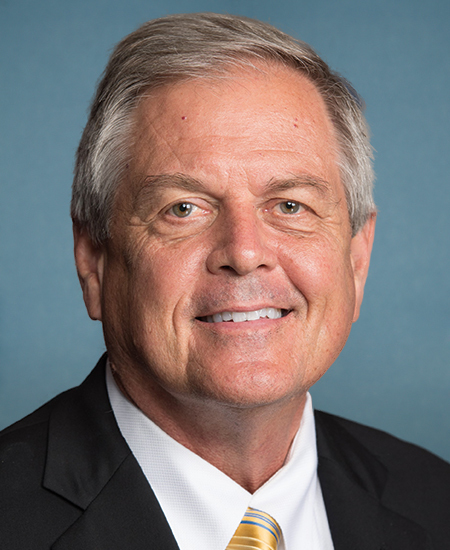
Rep. Ralph Norman
Sponsored bills
Maddy summaryHR 6019 repeals a requirement that Senate offices must be notified when legal requests seek Senate data. Specifically, it removes Section 213 of the 2026 appropriations act, which mandated that Senate offices be informed about legal processes requesting disclosure of Senate data. This change directly affects Senate offices by eliminating a procedural notification step for legal requests involving their data. The bill makes no other policy changes, solely removing this specific administrative requirement.
Maddy summaryHRES 888 is a proposed resolution to formally censure and condemn Delegate Stacey Plaskett for coordinating with Jeffrey Epstein, a convicted sex offender, during a February 2019 congressional hearing. The resolution claims Plaskett received real-time text messages from Epstein with instructions on her questioning during the hearing. If passed, the resolution would remove Plaskett from the House Permanent Select Committee on Intelligence and direct the Committee on Ethics to investigate her ties to Epstein. This action directly affects Plaskett, the Delegate from the U.S. Virgin Islands, and addresses alleged misconduct during official congressional proceedings.
Maddy summaryHRES 891 is a ceremonial House resolution supporting the designation of National Rural Health Day, observed annually on the third Thursday of November (November 20, 2025, this year). It recognizes rural health care providers and the challenges rural communities face in accessing care, citing issues like hospital closures and workforce shortages. The resolution does not create new policies, funding, or requirements; it solely expresses the House's support for the day's goals and commitment to improving rural health accessibility. This is a non-binding acknowledgment, not a legislative action with concrete policy changes.
Maddy summaryHR 6101, the CBO Oversight Act, requires the Congressional Budget Office (CBO) to provide testimony at two annual hearings before the House and Senate Budget Committees, at the request of each committee's chair. These hearings must occur by year-end and can address any topics the committees choose, including reviewing the accuracy of the CBO's previous year's budget forecasts and projections. The bill directly affects the CBO and the Budget Committees by adding a formalized requirement for regular oversight discussions. This procedural change does not alter the CBO's analytical work but mandates structured opportunities for Congress to question its baseline budget estimates.
Maddy summaryHRES 866 is a non-binding House resolution condemning the systematic persecution of Christians in Nigeria by groups like Boko Haram and Fulani militants, and criticizing Nigeria's government for failing to protect Christian communities or acknowledge the violence. It calls on the U.S. government to support President Trump in using diplomatic, economic, and security tools to pressure Nigeria to end impunity for attacks, protect Christians, return displaced persons, and repeal blasphemy laws. The resolution specifically demands action against religiously motivated violence, including the release of those imprisoned for their faith, and urges coordination with international partners for humanitarian aid. It does not create new laws but expresses congressional support for U.S. policy actions targeting Nigeria's religious freedom violations.
Maddy summaryThis bill ensures that critical firearm-related government operations continue during federal shutdowns. It designates background checks (via the FBI's National Instant Criminal Background Check System), Bureau of Alcohol, Tobacco, Firearms and Explosives enforcement, and firearm export licensing (handled by Commerce and State Departments) as essential services that must remain operational. These functions would be treated as "excepted" under federal law, meaning their employees would continue working even if other government services halt. The bill affects how background checks and firearm export licenses are processed during shutdowns but does not change gun ownership laws or eligibility.
Maddy summaryThis resolution proposes impeaching Judge Deborah Boardman of the U.S. District Court for the District of Maryland, alleging she violated judicial standards by sentencing Nicholas John Roske - a man who attempted to assassinate Supreme Court Justice Brett Kavanaugh - to eight years (instead of the 30-year recommendation) - based on Roske’s transgender identity. The resolution claims Judge Boardman’s decision, which cited Roske as a "transgender woman" in sentencing, undermined the law and impartiality required of federal judges. It argues this conduct constitutes "high crimes and misdemeanors" by violating the constitutional standard for judicial "good behavior." The resolution is now referred to the House Judiciary Committee for further review.
Maddy summaryThis bill would deny visas and immigration benefits to individuals who adhere to Sharia law, directly affecting immigrants and visa applicants. It allows officials to revoke existing immigration benefits, deport people found adhering to Sharia, and penalize false statements about Sharia adherence. Decisions under this law would be final and unreviewable by courts. The policy changes immigration eligibility based solely on adherence to Sharia law, with no judicial oversight.
Maddy summaryThis bill amends the National Instant Criminal Background Check System (NICS) process to strengthen due process for individuals denied firearm purchases. It requires courts to hold hearings on challenges within 30 days, places the burden on the government to prove ineligibility by "clear and convincing evidence," and mandates courts to award attorney fees to successful challengers. The bill also requires the FBI to submit annual reports to Congress detailing NICS challenge volumes, reversal rates, and processing times. These provisions directly affect people wrongly flagged in the NICS database who seek to correct their records. The law focuses on procedural fairness, not altering firearm eligibility criteria.