Maddy summaryThis bill, the "Ending Improper Payments to Deceased People Act," requires the Social Security Administration to share death records with the federal Do Not Pay system, which prevents government agencies from sending payments to deceased individuals. It mandates this coordination through a cooperative arrangement between agencies, meeting specific legal requirements to ensure data sharing. The change aims to stop improper payments that sometimes occur due to delays in updating death records across federal systems. The new requirements must be implemented by December 28, 2026.
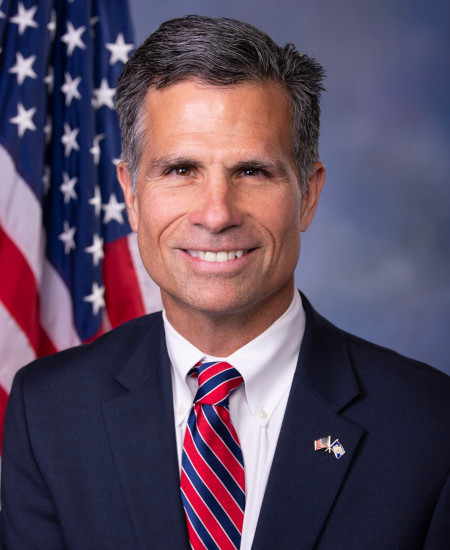
Rep. Daniel Meuser
Sponsored bills
Maddy summaryThe Reliable Power Act requires the Electric Reliability Organization (ERO) to conduct annual assessments of the U.S. power grid's ability to maintain reliable electricity supply, including analyzing generation resources, transmission needs, and risks of shortages during extreme weather. If the ERO identifies a risk of insufficient generation, it notifies the Federal Energy Regulatory Commission (FERC), which then alerts federal agencies like the Environmental Protection Agency (EPA) and Department of Energy (DOE) developing regulations affecting power generation. These agencies must submit proposed regulations for FERC review before finalizing them, and FERC can recommend changes to prevent reliability risks, with agencies required to respond to FERC’s comments. The bill directly affects federal agencies creating energy-related rules and aims to prevent power shortages by integrating grid reliability into the rulemaking process.
Essential Caregivers Act of 2025 This bill prohibits certain health care facilities from limiting the access of essential caregivers to residents of those facilities, including during designated emergency periods. Specifically, the bill generally prohibits Medicare skilled nursing facilities, Medicaid nursing facilities, Medicaid intermediate care facilities, and associated inpatient rehabilitation facilities from restricting the access of essential caregivers to residents of the facilities, including during emergency periods in which visitation rights are otherwise restricted. During emergency periods, facilities may restrict access for an initial period of up to seven days and for one additional maximum seven-day period (if the additional period is approved by the state health department). Facilities may restrict access for a total of 7 days (or 14 days with the approval of the state health department) during an emergency period. Essential caregivers must agree to comply with any safety protocols set by the facility, which may be no more stringent for caregivers compared to those for staff. Caregivers who fail to comply with these requirements may be denied access, subject to an appeals process.
Maddy summaryHR 6718, the Professional Student Degree Act, amends the Higher Education Act to clarify the definition of a "professional degree" for federal education purposes. It replaces the previous definition with a new section listing specific degrees that meet the criteria, including Pharmacy (Pharm.D.), Law (J.D.), Medicine (M.D.), Dentistry (D.D.S.), Veterinary Medicine (D.V.M.), and others like Nursing (D.N.P.) and Business Administration (M.B.A.). This definition requires degrees to signify both completion of academic requirements for professional practice (often requiring licensure) and skills beyond a bachelor's level. The bill directly affects students pursuing these designated degrees by formally recognizing them under federal education law, without creating new programs or changing funding.
Maddy summaryThis bill allows groups of small businesses or self-employed individuals to form a single health plan that treats all members as one employer for coverage purposes. It directly affects small business associations and self-employed people who can join such groups to access pooled health coverage, provided they meet specific requirements (e.g., 51+ total employees, 2+ years in existence, no health-based discrimination). Key mechanisms include permitting modified community rating for premiums (based on pooled claims) while prohibiting health status-related discrimination in enrollment, premiums, or pre-existing condition coverage. The plan remains subject to federal ERISA rules, and self-employed members must meet defined criteria to participate as both employers and employees.
Miracle on Ice Congressional Gold Medal Act This act provides for the award of Congressional Gold Medals to the members of the 1980 U.S. Olympic men's ice hockey team in recognition of the team's achievement at the 1980 Winter Olympic Games.
Maddy summaryHR 1461 designates the U.S. Postal Service facility at 521 Thorn Street in Sewickley, Pennsylvania, as the "Mary Elizabeth 'Bettie' Cole Post Office Building." The bill updates all official references to this specific post office location to reflect the new name. This is a ceremonial naming resolution honoring Mary Elizabeth "Bettie" Cole, with no new policies, funding, or operational changes to the postal facility.
Maddy summaryThis bill would allow states to waive certain Affordable Care Act requirements for health insurance starting in 2026, provided they maintain a high-risk insurance pool. Residents in participating states would receive funds directly into "Trump Health Freedom Accounts" instead of traditional premium tax credits, which could be used to purchase health insurance with restrictions on coverage for gender transition procedures and abortion services. The bill also modifies tax credits for small employers in participating states and requires better price transparency and outcomes reporting from healthcare providers. It would directly affect residents and small businesses in states that choose to participate in the waiver program.
Maddy summaryThis bill directs the American Battle Monuments Commission to correct historical errors by identifying Jewish World War I and II veterans buried overseas under incorrect Christian markers (Latin crosses) and replacing them with appropriate markers. It establishes a 10-year program to contact families of affected veterans, with the Commission funding the effort at $500,000 annually through nonprofit contracts. The program specifically targets veterans buried in foreign U.S. military cemeteries with markers indicating non-Jewish faith, addressing a documented mistake affecting approximately 900 Jewish servicemembers. This directly affects Jewish veterans' families by honoring their heritage and correcting past burial inaccuracies.
Maddy summaryThis bill amends the Natural Gas Act to give the Federal Energy Regulatory Commission (FERC) exclusive authority to approve U.S. LNG export terminal projects, requiring FERC to deem such exports consistent with the public interest. It directly affects natural gas companies seeking to build or expand export facilities and streamlines FERC's review process by removing prior requirements for interagency coordination. The bill clarifies that FERC's decisions won't override existing sanctions laws, including restrictions on trade with countries designated as state sponsors of terrorism under current law. This change aims to accelerate domestic LNG export projects while maintaining legal safeguards for national security and foreign policy.