Maddy summaryThis bill authorizes the U.S. Mint to produce commemorative $5 gold and $1 silver coins marking the 25th anniversary of the September 11, 2001, terrorist attacks. The coins must feature designs honoring victims and first responders (including the inscription "Never Forget") and will be sold only during 2027-2028. All surcharges ($35 per gold coin, $10 per silver coin) collected from sales will fund the National September 11 Memorial and Museum at the World Trade Center, with no net cost to the federal government. The coins are legal tender but primarily intended for collectors, not circulation.
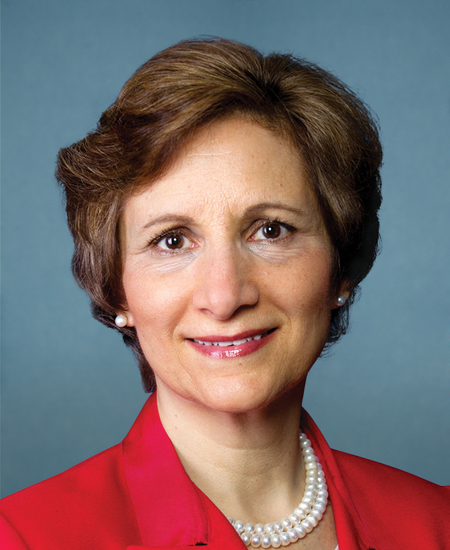
Rep. Suzanne Bonamici
Sponsored bills
Maddy summaryThe Smithsonian American Women’s History Museum Act authorizes the creation of a new Smithsonian museum dedicated to women’s history, to be located within the National Mall Reserve in Washington, D.C. If the site is managed by another federal agency, the bill requires that agency to transfer the land after notifying Congress and relevant committees. The museum must ensure exhibits and programs accurately represent diverse women’s experiences by consulting a broad range of experts and community voices. The Smithsonian will submit biennial reports to Congress detailing how the museum meets these representation standards.
Maddy summaryThis concurrent resolution directs the President to withdraw U.S. military forces from active hostilities with Iran. The measure relies on the War Powers Resolution, requiring the President to end combat operations unless the forces are needed to defend the United States or its allies from an immediate attack. Any continued use of troops in such defensive scenarios must still follow specific reporting and notification rules, and full military engagement is only permitted if Congress explicitly authorizes it through a formal declaration of war or a specific authorization for force.
Maddy summaryThe Federal Death Penalty Prohibition Act bans the imposition of the death penalty for any federal crime committed after the law takes effect. It also requires that individuals currently sentenced to death under federal law be resentenced to a different punishment. This legislation directly affects the federal criminal justice system by eliminating capital punishment as a sentencing option.
Maddy summaryThe Early Childhood Workforce Advancement Act of 2026 creates a competitive grant program to help partnerships establish or expand training programs for early childhood education careers. These grants are awarded to groups that include colleges, child care providers, and community organizations, with a focus on areas that have shortages of childcare workers. The funding can be used to develop educational materials, support student recruitment and retention, improve teacher training, and offer financial assistance like scholarships or stipends to students. Priority is given to applicants serving rural and urban communities and those providing care for infants, toddlers, and children with disabilities. Recipients must submit annual reports and undergo independent evaluations to ensure the programs effectively improve education outcomes.
Maddy summaryThe CHIERS Act of 2026 authorizes federal grants to help individuals with substance use disorders reach treatment and supportive services by covering transportation costs. Eligible recipients include nonprofit organizations, government agencies, and health centers that will use the funds to provide rides, purchase vehicles, or pay for taxi services for these individuals. The program specifically targets people experiencing homelessness or living in low-income areas where travel barriers limit access to care, while explicitly excluding involuntary treatment transport and law enforcement use. To ensure effectiveness, grant recipients must submit detailed plans and performance reports focused on reducing missed appointments, and the funding is designed to supplement rather than replace existing local resources.
Maddy summaryThis bill reauthorizes federal funding for water power research and development (including hydropower and marine energy) through 2030, increasing annual funding to $300 million - $200 million for marine energy and $100 million for hydropower - up from prior levels. It adds new requirements such as advancing U.S. manufacturing of marine energy components through university-industry partnerships, improving hydropower licensing by compiling environmental data, and integrating cybersecurity into research. The bill also mandates workforce development programs to train future professionals and requires annual congressional briefings on program progress. These changes directly affect the Department of Energy, research institutions, and industries working on water power technologies.
Maddy summaryHR 6834 (STORE Act of 2025) increases annual funding for the Emergency Food Assistance Program (EFAP) from $15 million to $25 million (2026-2030) and expands grant eligibility to include state agencies and tribal, low-income, and remote community organizations. It allows grants to support mobile/home food delivery, refrigerated truck purchases, and cold storage infrastructure for food banks and pantries. The bill also requires the USDA to produce a national report within two years assessing refrigeration storage shortages and costs for emergency food organizations. These changes directly affect state agencies administering EFAP and food distribution networks serving communities with food insecurity.
Dental Care for Veterans Act This bill expands eligibility for veterans for dental care provided by the Department of Veterans Affairs (VA). Specifically, the bill makes all veterans who are enrolled in the VA health care system eligible for VA-provided dental services. Currently, only veterans who have a service-connected dental issue or meet other narrow criteria are eligible for certain dental services. The bill phases in eligibility over four years based upon existing eligibility, degree of service-connected disability or other disability, prisoner of war status, award of a Purple Heart, financial need, or VA health care eligibility.
Maddy summaryThe Loan Forgiveness for Educators Act of 2026 expands existing federal student loan relief programs to offer full debt cancellation for teachers and early childhood educators who work in high-need schools or specific early childhood programs for five years. Under the bill, eligible educators can receive 100 percent forgiveness of their outstanding loans after completing five years of service, which may be consecutive or nonconsecutive, while also qualifying for monthly loan payments to be made by the government during their employment. The legislation defines "high need schools" as those with at least 30 percent of students from low-income families and includes various early childhood settings, while also extending benefits to parents who borrow PLUS loans for their qualifying children or who are educators themselves. To support implementation, the law requires the Department of Education to publish a list of eligible schools and programs, allows for self-certification in some early childhood roles, and ensures that educators who leave their positions early or are promoted within the same organization do not lose their eligibility for forgiveness.