Maddy summaryThis bill requires companies that list securities in the United States to disclose whether their supply chains involve goods produced using forced labor in China's Xinjiang region. To comply, issuers must obtain independent audits from third-party auditors and publicly report detailed information about their sourcing, including specific facility names, revenue generated from affected products, and steps taken to avoid human rights abuses. The legislation defines forced labor broadly to include work under state-sponsored programs targeting specific ethnic groups in Xinjiang and mandates that these disclosure rules remain in effect for eight years unless the President certifies that such abuses have ended.
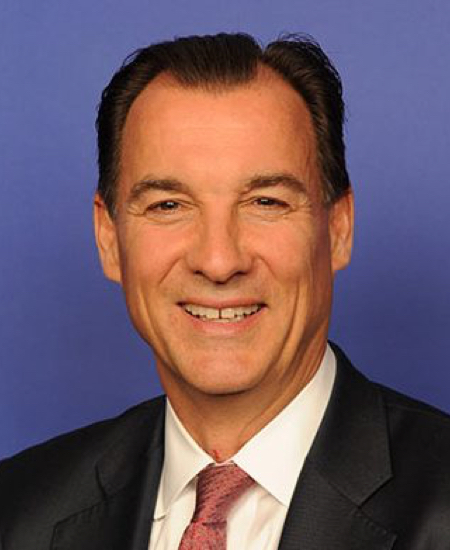
Rep. Thomas R. Suozzi
Sponsored bills
Maddy summaryThis bill directs the President to withdraw U.S. military forces from hostilities against Iran within 30 days of February 28, 2026 (the date troops were deployed), unless Congress authorizes continued action through a formal declaration of war or specific statute. It explicitly permits defensive actions, maintains non-combat troop presence in the region, and clarifies that intelligence-sharing activities related to Iran remain unaffected. The resolution does not authorize military force but aligns with the War Powers Resolution's requirement for congressional oversight of military deployments. It directly affects the President and military commanders responsible for implementing the withdrawal.
Maddy summaryHR 4109, the Recycling and Composting Accountability Act, requires the Environmental Protection Agency (EPA) to collect and report detailed data on recycling and composting infrastructure across the U.S. The bill mandates reports on composting facilities, materials recovery centers (which process recyclable materials like plastic, paper, and metal), contamination rates, and barriers to expanding these programs. It also directs the EPA to develop standardized recycling rates, track end-market sales of recycled materials, and assess how much recyclable material is diverted from reuse. These reports will be submitted to Congress and used by states, local governments, and tribes to improve recycling access, reduce waste, and inform future policy decisions.
Maddy summaryThe Supporting Newborn Parents Act of 2026 creates a new tax credit of $2,000 for each child born to a taxpayer during the tax year. To receive this credit, parents must have earned income, with the maximum amount limited to 20% of their earnings, and the benefit phases out as family income rises. The bill allows parents to request an advance payment of the credit shortly after a child's birth by providing their information when applying for a Social Security number. Additionally, the legislation requires the Treasury to establish an online portal to help parents understand how to make elections regarding advance payments and estimated income figures.
Maddy summaryThis bill establishes a compensation fund to provide financial support to law enforcement officers who actively defended the U.S. Capitol on January 6, 2021, and suffered injuries, emotional distress, or death as a result. The program is administered by a Special Master appointed by the Attorney General, who will review individual claims for economic and non-economic losses while ignoring any questions of negligence. Eligible officers can receive specific payments for their injuries or the death of a colleague, with a guaranteed minimum of $4.975 million for death claims, plus an additional equal distribution to all qualifying officers regardless of injury status. The legislation also includes provisions to reduce payouts by any other compensation the claimant has already received and grants the federal government the right to recover funds if they are later paid out in related legal settlements.
This resolution calls upon the President to prioritize the humanitarian release of five specified individuals (Pastor Jin Mingri, Pastor Gao Quanfu and his wife Pang Yu, Dr. Gulshan Abbas, and Jimmy Lai) and others unjustly detained by China during future engagements with China's President Xi Jinping. The resolution also (1) urges the President to seek verifiable proof of life, access to independent legal counsel, family communication, and medical care for these detainees; and (2) reaffirms the U.S. commitment to defending political and religious freedom and advocating for the release of those unjustly detained for exercising such fundamental freedoms.
This resolution expresses support for police officers and other law enforcement personnel. The resolution further recognizes law enforcement officers across the United States in the pursuit of preserving safe and secure communities; the need to ensure that such officers have the equipment, training, and resources necessary to protect their health and safety while they are protecting the public; and the law enforcement community for acts of sacrifice and heroism. The resolution expresses condolences and appreciation to the loved ones of each law enforcement officer who has made the ultimate sacrifice in the line of duty.
Maddy summaryHRES 64 is a non-binding House resolution affirming the U.S.-South Korea alliance. It highlights historical ties (dating to 1882), economic partnerships (including 2023 trade data), and security cooperation (like the 1953 Mutual Defense Treaty), while celebrating Korean American contributions to U.S. society. The resolution formally supports strengthening security, economic, and cultural ties between the two nations and notes the 2025 anniversary of Korean liberation. It does not create new laws or funding, but serves as a symbolic statement of congressional support for the alliance.
Maddy summaryThe Connected Vehicle Security Act of 2026 restricts the importation, sale, and manufacture of vehicles and related technology from specific countries, including China, Russia, Iran, and North Korea, to address national security concerns. The law defines prohibited items as connected vehicles, their software, and hardware components and sets different effective dates, with vehicle bans starting in 2027 and hardware restrictions beginning in 2030. A government official can grant exceptions for specific items after reviewing security risks and notifying Congress, while the agency must publish annual reports on enforcement actions and compliance.
Maddy summaryThe Campus Lifeline Act of 2026 amends federal health laws to expand mental health support for students and youth. It directs support for student groups on college campuses, such as athletic teams and mental health clubs, to educate peers and intervene when warning signs of mental health or substance use disorders appear. The legislation also requires states and institutions of higher education to list the 988 suicide prevention hotline on newly issued identification cards. Furthermore, it mandates that federal agencies coordinate with the Department of Education and Transportation to create public awareness plans for the 988 hotline.