Maddy summaryThis bill requires the U.S. Fish and Wildlife Service to publish proposed land protection plans in the Federal Register at least 60 days before finalizing them, giving the public a formal opportunity to submit comments. It applies to all land protection plans for National Wildlife Refuge System units, except for small expansions under 50 acres or 15% of a refuge’s total acreage. The law establishes a standardized process for public input on federal land management decisions, directly affecting how the agency engages with communities and stakeholders during planning.
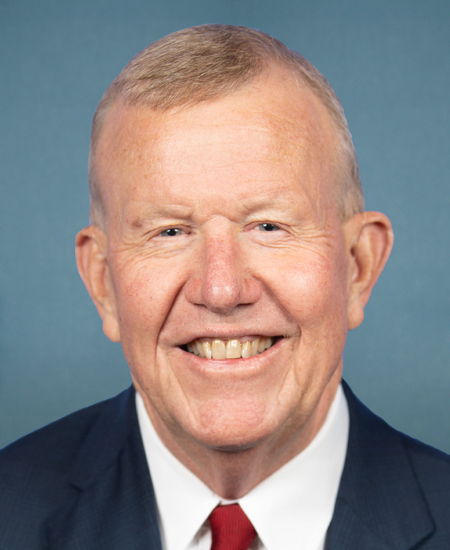
Rep. Mike Ezell
Sponsored bills
Maddy summaryThis bill prevents state or local governments from banning or restricting energy connections (like installation, modification, or access) based on the type or source of energy, such as electricity, natural gas, or renewable fuels. It directly affects consumers choosing energy providers and energy companies seeking to offer services. The key provision prohibits local laws, regulations, or policies that limit energy services sold in interstate commerce, covering all energy types listed in the bill’s definitions. It does not create new programs but limits regulatory authority at the state or local level. The law aims to ensure open access to diverse energy sources without source-based restrictions.
Maddy summaryThe Make Elections Great Again Act (HR 7300) would require voters to present photo identification to cast ballots in person or by mail for federal elections, with limited exceptions for religious objections or military voters. It would establish new requirements for proving U.S. citizenship during voter registration, including documentary proof of citizenship and proof of state residency. The bill would change mail-in ballot procedures by requiring voters to request mail-in ballots (rather than universal mail-in voting), implementing barcode tracking for mail-in ballots, and setting strict deadlines for ballot receipt. These provisions would apply to all states for federal elections held in 2027 or later, affecting how voters register, vote in person, and submit mail-in ballots for federal office elections.
Maddy summaryThis bill exempts certain less-than-lethal projectile devices from federal sales taxes and National Firearms Act restrictions. It directly affects manufacturers, importers, and producers of these devices, which are defined as non-lethal tools (like rubber bullets or beanbag rounds) designed not to cause serious injury and unable to be easily converted to use standard firearm ammunition. Key mechanisms include a 90-day classification process for manufacturers seeking exemption, an annual public list of approved devices, and annual congressional reports on devices excluded from the exemption. The policy change applies to devices meeting specific safety criteria, such as projectile velocity limits and design features preventing misuse as conventional weapons.
Maddy summaryThis bill creates a tax credit for businesses selling products made with U.S.-grown cotton. The credit equals 24% of the cotton's market value if processed only in the U.S. or in countries with U.S. trade deals, or 18% for other processing locations. To qualify, cotton must be digitally traced from U.S. farms to finished products and certified by the USDA as meeting origin requirements. It directly affects clothing and textile manufacturers selling qualifying products in the U.S. market.
This bill designates a portion of Interstate Route 680 in Omaha, Nebraska, as the Hal Daub Freeway. Harold John Daub Jr. served in the House of Representatives from 1981-1989 and as the mayor of Omaha, Nebraska, from 1995-2001.
Maddy summaryHR 7114, the "No Bounties on Badges Act," would amend federal law to allow the Attorney General to offer rewards for information leading to the arrest or conviction of individuals who harm, kill, or conspire to harm or kill U.S. federal law enforcement officers. The bill creates a new provision authorizing monetary rewards for tips that result in arrests, convictions, or prevention of attacks against officers, including in foreign countries. This policy change directly affects federal law enforcement officers by expanding reward mechanisms for information about threats against them, and it grants the Attorney General new authority under Title 18. The bill does not prohibit bounties but instead establishes a formal reward program for information related to violence against officers.
Next Generation 9–1–1 Act This bill establishes a grant program to support implementation of next generation 9-1-1 (NG9-1-1) systems by state, territorial, and tribal governments and requires other related activities. NG9-1-1 means a secure, interoperable, Internet Protocol-based (IP-based) system for receiving 9-1-1 requests for emergency assistance. (IP-based 9-1-1 systems have capabilities that legacy telephone systems do not, including enhanced location-finding and the ability to receive text and multimedia messages.) Under the bill, the National Telecommunications and Information Administration (NTIA) must provide grants to state, territorial, and tribal governments (and entities established by those governments) to support the implementation and maintenance of NG9-1-1 systems. Grant funds may also be used for public outreach on NG9-1-1, implementation of cybersecurity measures, and, subject to certain limits, training and administrative costs. Entities applying for grants must submit a plan for NG9-1-1 coordination and implementation that ensures interoperability and reliability, incorporates cybersecurity tools, and meets other requirements related to technology and procurement. Applicants must also certify that they have established, or will establish within a specified time frame, a sustainable funding mechanism to support NG9-1-1 and effective cybersecurity resources. The NTIA must advise applicants on the preparation of implementation plans and provide technical assistance to grant recipients. Further, the NTIA must establish (1) an advisory board to provide recommendations with respect to the grant program and other topics related to NG9-1-1; and (2) a cybersecurity center to coordinate with state, local, and regional governments on the sharing of cybersecurity information related to NG9-1-1.
Maddy summaryHR 7074 requires the Secretary of the Interior to join the Committee on Foreign Investment in the United States (CFIUS) when reviewing transactions involving land or resources near federal lands managed by agencies like the Bureau of Land Management, National Park Service, or Bureau of Indian Affairs. It specifically targets acquisitions by foreign entities from China, North Korea, Russia, or Iran, mandating CFIUS to assess whether such transactions - reported by the Interior Secretary - constitute a "covered transaction" requiring review. The bill creates a new process for evaluating these land deals, with the review ending for a specific country once it’s removed from the U.S. list of "foreign adversaries." This directly affects foreign buyers from those four nations seeking to acquire land adjacent to federally protected areas.
Maddy summaryThis symbolic House resolution expresses U.S. congressional support for Iranian protesters demanding democracy and human rights. It condemns the Iranian regime's violent suppression of protests, including killings, mass arrests, and internet restrictions, while urging the regime to release political prisoners and restore communication access. The resolution reaffirms the Iranian people's right to self-determination through free elections and echoes a 2023 resolution (HCR 7) that similarly praised protesters. As a non-binding expression of support, it does not impose new policies or alter U.S. government actions.