Maddy summaryHRES 733 is a symbolic resolution designating the week of September 20-27, 2025, as "National Estuaries Week." It expresses congressional support for raising public awareness about the economic and ecological importance of coastal estuaries, which support millions of jobs, generate significant economic output, and provide critical services like flood protection and habitat for fish and wildlife. The resolution acknowledges estuaries' role in sustaining employment, economic growth, and environmental health without creating new policies or funding. It directly affects the public, government officials, and conservation organizations by highlighting estuaries' value through a designated awareness week.
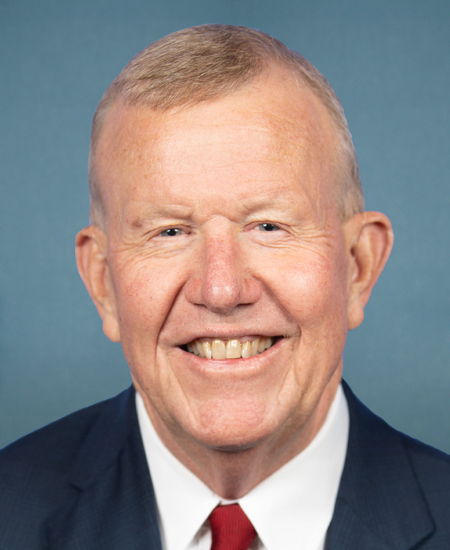
Rep. Mike Ezell
Sponsored bills
Maddy summaryHR 5401, the Pay Our Troops Act of 2026, ensures military personnel, civilian Defense workers, and supporting contractors receive pay during government funding gaps in fiscal year 2026. It appropriates emergency funds for active-duty service members, reserves, and their supporting personnel (including Coast Guard staff under DHS) if regular appropriations aren't enacted by the end of the fiscal year. The bill provides necessary pay and allowances during any period when full-year funding is unavailable, covering both active service and support roles. Funding expires when regular appropriations are passed, a funding resolution is enacted, or January 1, 2027, whichever comes first. This is a procedural measure to prevent pay delays for military and support staff during fiscal year 2026 funding lapses.
Maddy summaryThe Fairness and Accountability of Appeals Act of 2025 requires the Administrator to reimburse applicants for attorney fees when they win an appeal or arbitration regarding disaster assistance decisions under the Stafford Act. It directly affects individuals or organizations appealing denials of federal disaster aid who secure a favorable outcome. The key provision mandates that the government cover legal costs related to successful appeals or arbitration, reducing financial barriers to challenging decisions. This policy change updates the current process by adding explicit fee reimbursement for applicants who prevail in disputes over disaster relief eligibility.
Maddy summaryHRES 695 is a commemorative resolution honoring Charlie Kirk, a conservative speaker and Turning Point USA leader, following his assassination on September 10, 2025, in Orem, Utah. The resolution condemns the attack, offers condolences to his family, and recognizes first responders. It reaffirms the First Amendment right to peaceful assembly and emphasizes that violence cannot silence democratic participation. This non-binding resolution does not create new laws or policies but serves as a symbolic tribute to Kirk's memory and the principles of democratic engagement.
Maddy summaryThe Cyber PIVOTT Act creates a program to build a skilled cyber workforce by providing full tuition scholarships to students in two-year cyber or cyber-relevant associate's degree programs at participating community colleges and technical schools. The program requires scholarship recipients to complete a two-year service obligation in a cyber role for federal, state, local, tribal, or territorial government, with exceptions for military service. It includes mandatory skills-based exercises, internships with government agencies or critical infrastructure sectors, and a database of cyber training resources mapped to job roles. The program aims to enroll 250 students in its first year, doubling annually until reaching 1,000 students per year, with a long-term goal of 10,000 students annually within ten years.
Maddy summaryHR 2808, the Homebuyers Privacy Protection Act, restricts how consumer reporting agencies share credit reports during mortgage applications. It prevents agencies from sending these reports to third parties unless the request is tied to a firm credit offer and the recipient has either the homebuyer’s explicit written consent or is directly involved in the mortgage (like the lender, loan servicer, or the homebuyer’s bank holding an active account). This directly affects homebuyers applying for residential mortgages by limiting unsolicited sharing of their credit information. The law amends the Fair Credit Reporting Act to strengthen privacy protections around mortgage-related credit data.
Maddy summary# Summary of Proposed FEMA Reform Legislation (FEMA Act of 2025) This comprehensive legislative document proposes significant reforms to the Robert T. Stafford Disaster Relief and Emergency Assistance Act, with four main sections addressing: ## 1. Disaster Assistance Reforms - **Expanded eligibility** for assistance, including clarifying that absence of a fixed address doesn't disqualify individuals from sheltering assistance - **Improved rental assistance** with consideration of local post-disaster rent increases - **Direct assistance** for those unable to use financial assistance, with no requirement to show other assistance can cover costs (except insurance) - **Enhanced notices** for applicants, including documentation of denial decisions - **Clarification of displacement assistance** eligibility, stating insurance shouldn't be considered a duplication of benefits ## 2. Mitigation Program Enhancements - **Preapproved project mitigation plans** requiring states to develop plans with peer review processes - **Improved allocation of funds** with formulas prioritizing vulnerable communities, high-risk areas, and rural/economically distressed communities - **Resilient buildings** requirements for housing retrofits using the latest building codes - **Streamlined application processes** for hazard mitigation funds across multiple programs - **Study on mitigation benefits** to evaluate cost savings and effectiveness ## 3. Transparency and Accountability Measures - **Public dashboards** for both individual assistance (431) and public assistance (432) showing application status, approvals, denials, and funding - **Transparency requirements** for disaster declarations with detailed justifications for approvals/denials - **GAO studies** on numerous topics including: - Identity theft in disaster assistance (409) - Insurance utilization for public assistance facilities (410) - Wildfire management plans (411) - Effectiveness of alerting systems (412) - Cost savings of repair/rebuilding reforms (415) - **Prohibition on political discrimination** in assistance distribution ## 4. Workforce and Operational Improvements - **Study on workforce retention** in noncontiguous communities - **Pilot program** for preliminary damage assessments in remote communities - **Fast-moving disasters working group** to develop best practices for rapid response The legislation focuses on improving efficiency, transparency, and effectiveness of disaster relief programs while prioritizing vulnerable populations and communities with higher risk of disasters. It also emphasizes data-driven decision making through required studies and reports to continuously improve disaster management policies.
Maddy summaryHR 4018 aims to accelerate U.S. access to critical minerals (like nickel, cobalt, and rare earths) found in seabed resources on the continental shelf. It requires federal agencies to expedite permits for exploration and commercial recovery under the Deep Seabed Hard Mineral Resources Act and the Outer Continental Shelf Lands Act within 60 days of enactment. The bill also mandates a seabed mapping plan, identifies critical minerals for defense/energy use, and directs engagement with allies to support U.S. companies in developing these resources. This directly affects U.S. mining companies seeking seabed mineral rights and federal agencies managing offshore resource development.
Maddy summaryHRES 664 is a non-binding resolution observing the 20th anniversary of Hurricanes Katrina and Rita's 2005 Gulf Coast devastation. It recognizes the progress made in rebuilding affected communities across Louisiana, Mississippi, Alabama, Florida, Texas, and Georgia, citing statistics on population recovery and tourism growth. The resolution expresses support for victims, commends recovery efforts, and reaffirms commitment to the Gulf Coast region. It does not create new laws, allocate funding, or change policy - its sole purpose is commemorative recognition.
Maddy summaryThis bill establishes "cottage family homes" as a new foster care placement option under federal law. It defines these homes to require trauma-informed care, prohibit seclusion/restraints (except brief physical restraint for safety), ensure children can participate in normal activities, and maintain family connections. The bill removes time limits on foster care payments for children in these homes and gives states flexibility to classify them as foster family homes if they serve children's best interests. It directly affects foster children placed in cottage homes and the agencies operating them.