Maddy summaryThis bill ensures continued pay for specific Department of Homeland Security (DHS) personnel and Coast Guard members during government shutdowns in fiscal years 2026-2027. It directly affects DHS law enforcement officers (including those in job series like 0083, 1801, and 1811), DHS administrative and payroll staff, and Coast Guard personnel. The bill authorizes emergency funding from the Treasury to cover their pay and allowances when regular appropriations are not in place. This funding expires on January 1, 2027, or earlier if Congress passes a new appropriations bill covering these costs.
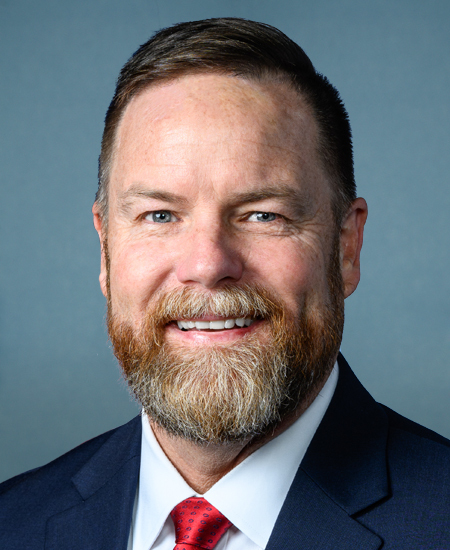
Rep. Aaron Bean
Sponsored bills
Maddy summaryHR 5401, the Pay Our Troops Act of 2026, ensures military personnel, civilian Defense workers, and supporting contractors receive pay during government funding gaps in fiscal year 2026. It appropriates emergency funds for active-duty service members, reserves, and their supporting personnel (including Coast Guard staff under DHS) if regular appropriations aren't enacted by the end of the fiscal year. The bill provides necessary pay and allowances during any period when full-year funding is unavailable, covering both active service and support roles. Funding expires when regular appropriations are passed, a funding resolution is enacted, or January 1, 2027, whichever comes first. This is a procedural measure to prevent pay delays for military and support staff during fiscal year 2026 funding lapses.
Maddy summaryThe RESULTS Act (HR 5269) changes how Medicare calculates payment rates for clinical diagnostic laboratory tests. It requires Medicare to collect data on private payor rates for widely available non-Advanced Diagnostic Laboratory Tests (non-ADLTs) from a qualifying independent claims data entity (a national nonprofit organization meeting specific criteria) rather than relying on data reported directly by laboratories. For tests where data is unavailable, the bill establishes default payment rates based on previous years' rates adjusted for inflation. The law also requires Medicare to publicly explain payment rates with supporting data, affecting Medicare beneficiaries, clinical laboratories, and private payors that provide services covered by Medicare.
Maddy summary# Summary of Proposed FEMA Reform Legislation (FEMA Act of 2025) This comprehensive legislative document proposes significant reforms to the Robert T. Stafford Disaster Relief and Emergency Assistance Act, with four main sections addressing: ## 1. Disaster Assistance Reforms - **Expanded eligibility** for assistance, including clarifying that absence of a fixed address doesn't disqualify individuals from sheltering assistance - **Improved rental assistance** with consideration of local post-disaster rent increases - **Direct assistance** for those unable to use financial assistance, with no requirement to show other assistance can cover costs (except insurance) - **Enhanced notices** for applicants, including documentation of denial decisions - **Clarification of displacement assistance** eligibility, stating insurance shouldn't be considered a duplication of benefits ## 2. Mitigation Program Enhancements - **Preapproved project mitigation plans** requiring states to develop plans with peer review processes - **Improved allocation of funds** with formulas prioritizing vulnerable communities, high-risk areas, and rural/economically distressed communities - **Resilient buildings** requirements for housing retrofits using the latest building codes - **Streamlined application processes** for hazard mitigation funds across multiple programs - **Study on mitigation benefits** to evaluate cost savings and effectiveness ## 3. Transparency and Accountability Measures - **Public dashboards** for both individual assistance (431) and public assistance (432) showing application status, approvals, denials, and funding - **Transparency requirements** for disaster declarations with detailed justifications for approvals/denials - **GAO studies** on numerous topics including: - Identity theft in disaster assistance (409) - Insurance utilization for public assistance facilities (410) - Wildfire management plans (411) - Effectiveness of alerting systems (412) - Cost savings of repair/rebuilding reforms (415) - **Prohibition on political discrimination** in assistance distribution ## 4. Workforce and Operational Improvements - **Study on workforce retention** in noncontiguous communities - **Pilot program** for preliminary damage assessments in remote communities - **Fast-moving disasters working group** to develop best practices for rapid response The legislation focuses on improving efficiency, transparency, and effectiveness of disaster relief programs while prioritizing vulnerable populations and communities with higher risk of disasters. It also emphasizes data-driven decision making through required studies and reports to continuously improve disaster management policies.
Maddy summaryHR 5031, the *Preserving Patient Access to Long-Term Care Pharmacies Act*, requires Medicare Part D plans and Medicare Advantage plans with drug coverage (MA-PD) to pay long-term care pharmacies an additional supply fee for each specified prescription dispensed to eligible beneficiaries during 2026 ($30) and 2027 (adjusted for inflation). This fee must be paid alongside existing reimbursements for drug costs and dispensing, with a $10,000 penalty for non-payment. The bill also directs the GAO to study long-term care pharmacy payment sustainability under Medicare, analyzing historical payments for brand/generic drugs and dispensing fees. It aims to ensure uninterrupted pharmacy access for Medicare beneficiaries in long-term care settings, particularly in rural areas.
Maddy summaryHR 4974, the DETECT Act of 2025, is a procedural bill requiring the Comptroller General to submit a report within 180 days of enactment to the House Ways and Means and Senate Finance committees. The report must assess the potential of artificial intelligence to help the Internal Revenue Service detect tax fraud. This bill does not create new policy or directly affect any group; it mandates a study on AI's role in tax enforcement. The focus is solely on gathering information, not implementing new measures.
Maddy summaryThis bill establishes "cottage family homes" as a new foster care placement option under federal law. It defines these homes to require trauma-informed care, prohibit seclusion/restraints (except brief physical restraint for safety), ensure children can participate in normal activities, and maintain family connections. The bill removes time limits on foster care payments for children in these homes and gives states flexibility to classify them as foster family homes if they serve children's best interests. It directly affects foster children placed in cottage homes and the agencies operating them.
Maddy summaryHRES 614 is a non-binding resolution honoring Dr. Edwin J. Feulner, former President of the Heritage Foundation and Executive Director of the Republican Study Committee, following his death on July 18, 2025. The resolution commemorates his founding of the Heritage Foundation in 1973, his 36-year leadership as its president, and his role in establishing the Republican Study Committee. It specifically calls for the House to mourn his passing, honor his legacy, and recommend he receive the Presidential Medal of Freedom posthumously. This resolution does not create new law or affect any policies, as it is purely commemorative.
Maddy summaryThis bill strengthens protections for police dogs and horses used in law enforcement by increasing penalties for harming them, including up to 15 years in prison for using deadly weapons. It requires the Transportation Secretary to create emergency medical guidelines for treating injured police animals and establish regulations allowing their transport to veterinary facilities without waiting for human patients. The rules ensure emergency medical personnel can provide care to police dogs during transport or at the scene of an incident. These changes apply to dogs and horses serving federal, state, or local law enforcement agencies in roles like crime detection, disaster response, or military operations.
Rescissions Act of 2025 This act rescinds specified unobligated funds that were provided to the Department of State, the U.S. Agency for International Development (USAID), various independent and related agencies, and the Corporation for Public Broadcasting. The rescissions were proposed by the President under procedures included in the Congressional Budget and Impoundment Control Act of 1974. Under current law, the President may propose rescissions to Congress using specified procedures, and the rescissions must be enacted into law to take effect. Specifically, the act rescinds funds that were provided to the State Department or the President for Contributions to International Organizations; Contributions for International Peacekeeping Activities; Global Health Programs (excluding funds for programs addressing HIV/AIDS, tuberculosis, malaria, nutrition, or maternal and child health); Migration and Refugee Assistance; the Complex Crises Fund; the Democracy Fund; the Economic Support Fund (excluding funds for assistance to Jordan, Egypt, or the Countering PRC Influence Fund); Contributions to the Clean Technology Fund; International Organization and Programs; Development Assistance (excluding funds for Feed the Future Innovation Labs, the Countering PRC Influence Fund, or commodity-based food aid); Assistance for Europe, Eurasia, and Central Asia; International Disaster Assistance (excluding funds for commodity-based food aid); and Transition Initiatives. The act also rescinds funds that were provided for USAID Operating Expenses, the Inter-American Foundation, the U.S. African Development Foundation, the U.S. Institute of Peace, and the Corporation for Public Broadcasting.