Issue · Labor & Employment

Labor & Employment (Labor Standards)

Every labor & employment bill, vote, and legislator stance in Virginia, automatically classified by Maddy, our AI policy reader.

Total bills
35
2026 Regular Session
Top supporter
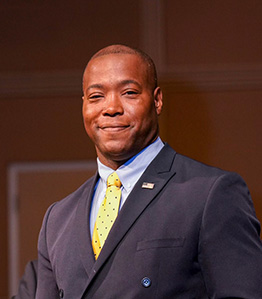
Alfonso Lopez
100% support rate
Top opponent
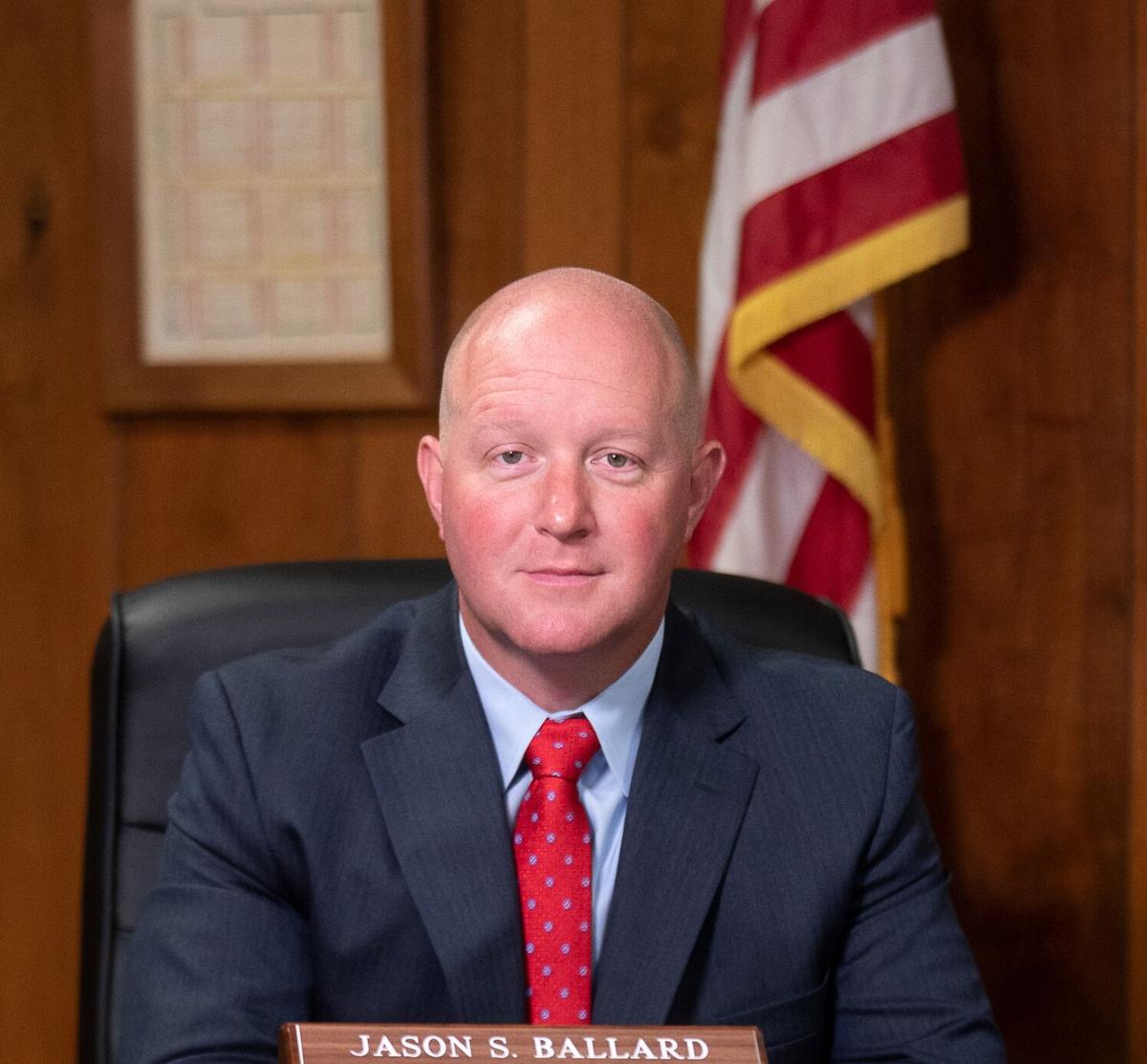
Jason Ballard
0% support rate
Ranked legislators
10
5 support · 5 oppose
Key legislators

Who's moving labor standards in Virginia

Legislators moving labor standards in Virginia
Legislator Party Stance Support rate Votes
Alfonso Lopez
Alfonso Lopez House · District 3
D
Strong +
100% 71
Dan Helmer
Dan Helmer House · District 10
D
Strong +
100% 69
Kelly Fowler
Kelly Fowler House · District 96
D
Strong +
100% 67
Aaron Rouse
Aaron Rouse Senate · District 22
D
Strong +
100% 64
Jeion Ward
Jeion Ward House · District 87
D
Strong +
100% 62
Jason Ballard
Jason Ballard House · District 42
R
Strong −
0% 72
Mark Obenshain
Mark Obenshain Senate · District 2
R
Strong −
0% 63
Ryan McDougle
Ryan McDougle Senate · District 26
R
Strong −
0% 63
Terry Kilgore
Terry Kilgore House · District 45
R
Strong −
0% 59
Wren Williams
Wren Williams House · District 47
R
Strong −
0% 55
Showing 1–10 of 35 bills

All labor & employment bills

in committee · Virginia · House of Delegates Feb 10, 2026

HB 1003: Transportation network companies; establishes minimum compensation rates, civil penalty.

Transportation network companies; minimum compensation; civil penalty. Establishes minimum compensation rates for TNC partners. The bill also prohibits gratuities from passengers from being included in TNC partner compensation calculations, authorizes TNC partners to collect gratuity in cash or electronically, and prohibits transportation network companies from limiting the amount that can be paid as gratuity through such companies' digital platforms. The bill requires the Department of Motor Vehicles (DMV) to establish a process for reporting violations and to investigate claims. The bill authorizes enforcement by civil action or by civil penalties assessed by the DMV Commissioner.
in committee · Virginia · House of Delegates Feb 18, 2026

HB 948: Virginia Minimum Wage Act; enforcement, penalties.

Virginia Minimum Wage Act; enforcement; penalties. Provides that an employer that violates provisions relating to minimum wage is liable to the employee for the applicable remedies, damages, penalties, and other relief available in a proceeding brought pursuant to the civil action provisions currently available for the nonpayment of wages. Such provisions currently available provide that an employee may bring an action in a court of competent jurisdiction to recover payment of the wages, and the court is required to award the wages owed, an additional equal amount as liquidated damages, plus prejudgment interest thereon, and reasonable attorney fees and costs. Under current law, if the court finds that the employer knowingly failed to pay wages to an employee, the court is required to award the employee an amount equal to triple the amount of wages due and reasonable attorney fees and costs. The bill provides that criminal and civil penalties currently applicable to the nonpayment of wages shall apply to an employer that violates the Virginia Minimum Wage Act.
signed · Virginia · House of Delegates Apr 13, 2026

HB 554: State officers and employees; state agencies to establish alternative work schedules.

State officers and employees; state agencies to establish alternative work schedules; reporting requirement. Adds to the annual reporting requirements of each state agency the requirement to include what percentage of changes to the number of employees participating in telecommuting and alternative work is a result of changes in workforce size, a reclassification of positions, or an expansion of telecommuting and alternative work opportunities and the number of employees approved and denied telecommuting and alternative work eligibility. The bill also requires the Department of Human Resource Management to review and publish on its website the statewide telecommuting and alternative work schedule policy every two years.
passed · Virginia · House of Delegates Mar 9, 2026

HB 944: Workplace violence; policy required for certain employers, civil penalty, delayed effective date.

Workplace violence policy required for certain employers; civil penalty. Requires any employer of 100 or more employees to develop, implement, and maintain a workplace violence policy no later than January 1, 2027. The bill includes requirements for such a policy, such as procedures and methods for employee reporting of incidents and post-incident investigations. Employers subject to the bill are required to maintain documentation of workplace violence incidents for not less than five years. An employer that violates the provisions of the bill shall be subject to a civil penalty of not more than $1,000 per violation. The bill prohibits retaliation from an employer on the basis of reporting a workplace violence incident and provides that any employee who makes a report of workplace violence shall be immune from civil liability. The bill has a delayed effective date of January 1, 2027.
in committee · Virginia · Senate Feb 2, 2026

SB 372: Employment; expands provisions for paid sick leave, civil penalties.

Employment; paid sick leave; civil penalties. Expands provisions of the Code that currently require one hour of paid sick leave for every 30 hours worked for home health workers to cover all employees of private employers and state and local governments. The bill requires that employees who are employed and compensated on a fee-for-service basis accrue paid sick leave in accordance with regulations adopted by the Commissioner of Labor and Industry. The bill provides that employees transferred to a separate division or location remain entitled to previously accrued paid sick leave and that employees retain their accrued sick leave under any successor employer. The bill allows employers to provide a more generous paid sick leave policy than prescribed by its provisions and specifies that employees, in addition to using paid sick leave for their physical or mental illness or to care for a family member, may use paid sick leave to seek or obtain certain services or to relocate or secure an existing home due to domestic abuse, sexual assault, or stalking. The bill provides that certain health care workers who work no more than 30 hours per month may waive the right to accrue and use paid sick leave. The bill also provides that employers are not required to provide paid sick leave to certain health care workers who are employed on a pro re nata, or as-needed, basis, regardless of the number of hours worked. The bill requires the Commissioner to promulgate regulations regarding employee notification and employer recordkeeping requirements. The bill authorizes the Commissioner, in the case of a knowing violation, to subject an employer to a civil penalty not to exceed $150 for the first violation, $300 for the second violation, and $500 for each successive violation. The Commissioner may institute proceedings on behalf of an employee to enforce compliance with the provisions of this bill. Additionally, the bill authorizes an aggrieved employee to bring a civil action against the employer in which he may recover double the amount of any unpaid sick leave and the amount of any actual damages suffered as the result of the employer's violation. The bill has a delayed effective date of July 1, 2027.
signed · Virginia · House of Delegates Apr 8, 2026

HB 338: Building Service employees; authority of local governments, definition.

Authority of local governments; service employees. Permits a locality to provide for certain requirements concerning successor service employers, defined in the bill, by local ordinance or resolution. For example, such local ordinance or resolution may require that successor service employers retain incumbent service employees during a transition period of 90 days. Under the bill, service employees are those who perform work in connection with the care or maintenance of property, services at an airport, or food preparation services at schools. The bill provides that an employer that violates the provisions of a local ordinance or resolution enacted pursuant to the bill may be subject to a civil action and monetary damages. This bill is identical to SB 430.
Sub-Topics Labor Standards
vetoed · Virginia · House of Delegates Apr 13, 2026

HB 636: Prospective employer; prohibited from seeking wage or salary history of prospective employees.

Prohibiting employer seeking wage or salary history of prospective employees; wage or salary range transparency; cause of action. Prohibits a prospective employer from (i) seeking the wage or salary history of a prospective employee; (ii) relying on the wage or salary history of a prospective employee in considering the prospective employee for employment; (iii) relying on the wage or salary history of a prospective employee in determining the wages or salary the prospective employee is to be paid upon hire; (iv) refusing to interview, hire, employ, or promote or otherwise retaliating against a prospective or current employee for not providing wage or salary history or requesting a wage or salary range; (v) failing or refusing to disclose in each public and internal posting for each job, promotion, transfer, or other employment opportunity the wage, salary, or wage or salary range; and (vi) failing to set a wage or salary range in good faith. The bill establishes a cause of action for an aggrieved prospective employee or employee and provides that an employer that violates such prohibitions is liable to the aggrieved prospective employee or employee for statutory damages between $1,000 and $10,000 or actual damages, whichever is greater, reasonable attorney fees and costs, and any other legal and equitable relief as may be appropriate. This bill incorporates HB 1164 and is identical to SB 215.
in committee · Virginia · Senate Feb 12, 2026

SB 667: Public service company; prevailing wage rate, apprenticeship requirements, penalties.

Prevailing wage rate; apprenticeship requirements; RPS-eligible source work; penalties. Requires each public service company, including its contractors and subcontractors, or third-party developer to ensure payment at the prevailing wage rate set by the Department of Labor and Industry for any mechanic, laborer, or worker employed, retained, or otherwise hired to perform construction, maintenance, or repair work for certain electricity generating sources. The bill requires each public service company to (i) ensure that 15 percent of the total labor hours of such work is performed by a qualified apprentice and (ii) employ at least one qualified apprentice if four or more individuals are employed to perform such work. Under the bill, a public service company that fails to meet the requirements of its provisions is required to make penalty payments to the Commissioner of Labor and Industry.
in committee · Virginia · Senate Feb 2, 2026

SB 370: Prevailing wage rate for public works contracts; civil penalties.

Prevailing wage rate for public works contracts; civil penalties. Provides that the prevailing wage rate required to be paid under certain contracts for public works shall not be less than the applicable prevailing wage rate determined by the U.S. Secretary of Labor under federal law. The bill subjects any contractor or subcontractor who fails to pay the prevailing wage rate for public works contracts as required by existing law to a civil penalty of $500 for each day on which such underpayment occurs and disqualifies such contractor or subcontractor from bidding on public contracts until three years after the final date on which such underpayment occurs. The bill revises the requirements for a contractor or subcontractor to submit certain payroll information to the Department of Labor and Industry and creates certain civil penalties for first and second or subsequent failures to meet such requirements.
signed · Virginia · House of Delegates Apr 6, 2026

HB 1333: Paid firefighters; hours of work.

Hours of work for paid firefighters. Provides that the Department of Fire Programs shall encourage employers to implement work schedules that do not require any paid firefighter's normally scheduled shifts to exceed 42 hours per workweek.
Sub-Topics Labor Standards Tags Public Safety
Showing 1 to 10 of 35 bills
1 2 3 4 Next