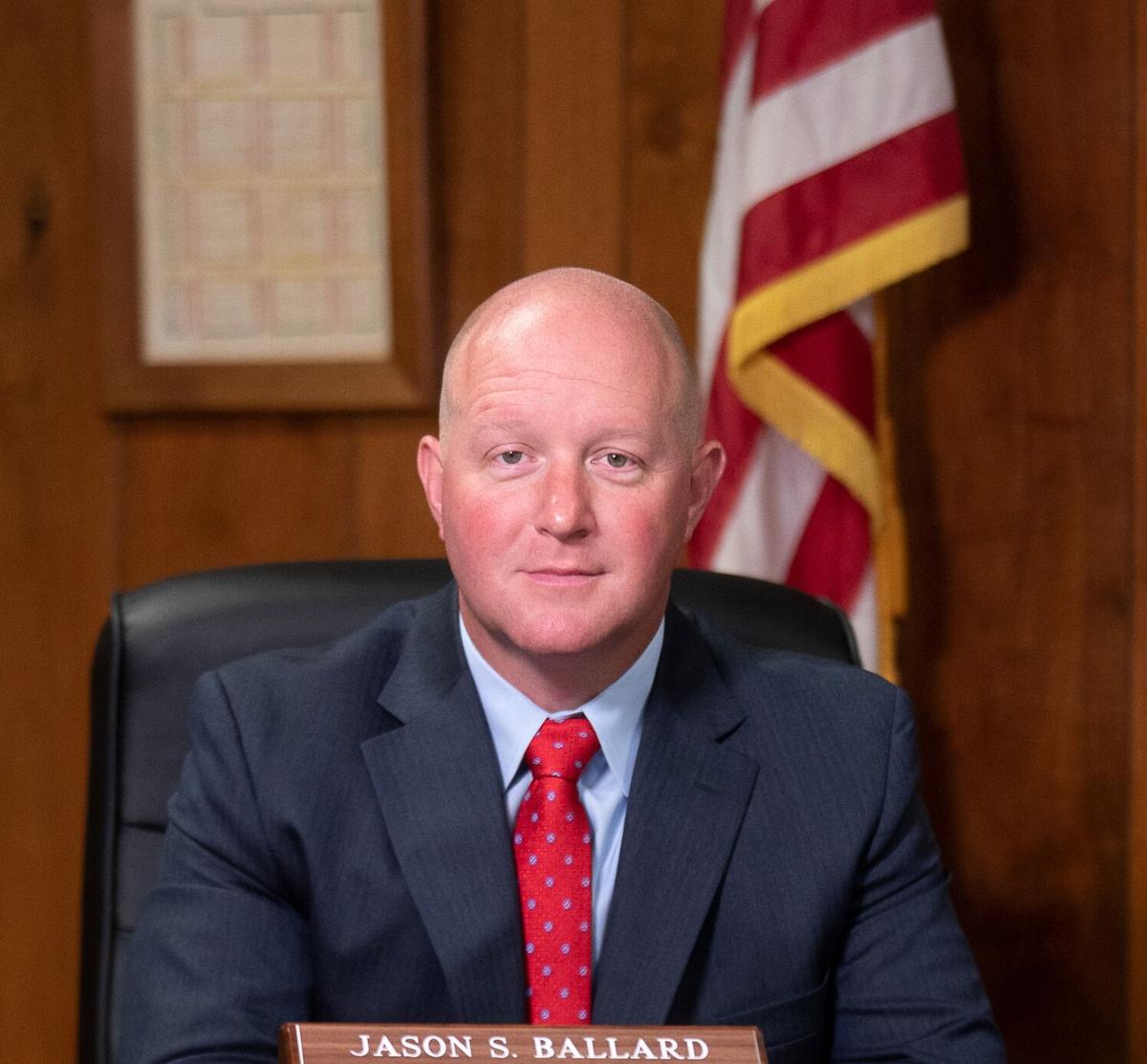
Medical cannabis; administration to terminally ill patients; report. Directs the Department of Health to promulgate regulations specifying that hospital staff may store, dispense, and administer cannabis oil when a patient has valid certification and exempts such staff from criminal penalties for possession of cannabis oil. The bill directs the Department of Health to convene a work group to discuss the implementation process for providing cannabis products to patients in medical care facilities and report on its discussion to the Chairs of the House Committee on Health and Human Services and the Senate Committee on Education and Health by November 1, 2026. This bill incorporates HB 486. This bill is identical to SB 332.
Licensed substance abuse treatment practitioners; licensure by endorsement; licensure without examination. Directs the Board of Counseling to establish a pathway to licensure by endorsement as a licensed substance abuse treatment practitioner for applicants who have held certification as a certified substance abuse counselor for at least 10 years without a history of disciplinary action, have completed at least five years of documented supervised experience, hold at least a master's degree in an appropriate field of counseling, and hold a Master Addiction Counselor credential issued by NAADAC, the Association for Addiction Professionals. The bill provides that such pathway to licensure by endorsement does not require examination.
Seizure, forfeiture, and destruction of property used in connection with the exploitation and solicitation of children. Provides that all audio and visual equipment, electronic equipment, devices, and other personal property used in connection with the possession, production, distribution, publication, sale, possession with intent to distribute, or making of child pornography, or in connection with the solicitation of a person less than 18 years of age, in violation of current law, shall be subject to lawful seizure by a law-enforcement officer and forfeited to the Commonwealth by order of the court trying the case. The bill also (i) requires the court to order the destruction of all such equipment, devices, and other personal property, (ii) requires certain information to be provided by the law-enforcement agency responsible for the destruction, (iii) prohibits destruction of such items to be used in a criminal prosecution until all rights of appeal have been exhausted, and (iv) requires the law-enforcement agency to provide notice, by first-class mail, to the accused or other interested party, if known, and his attorney at least seven days prior to the destruction of the time and place the destruction will occur.
Possession or transportation of firearms, firearms ammunition, stun weapons, or explosives or carrying of concealed weapons by persons convicted of a misdemeanor hate crime prohibited; penalty. Prohibits any person who, on or after July 1, 2026, commits assault or assault and battery against a person he intentionally selected because of his race, religious conviction, gender, disability, gender identity, sexual orientation, color, or ethnic or national origin and is subsequently adjudicated delinquent or convicted of such offense from knowingly and intentionally possessing or transporting any firearm or ammunition for a firearm, any stun weapon, or any explosive material or carrying a concealed weapon, a violation of which is a Class 1 misdemeanor.
Virginia Opioid Use Reduction and Jail-Based Substance Use Disorder Treatment and Transition Fund; grant procedures. Requires the grant procedure to govern funds awarded to local and regional jails for the planning or operation of substance use disorder treatment services and transition services for persons with substance use disorder who are incarcerated in local and regional jails to include requirements that (i) any grant awarded shall be made for up to three years and (ii) an applicant for a grant submit a plan demonstrating how such applicant will become independently financially viable within the time period for which the grant is awarded. This bill is a recommendation of the Joint Commission on Health Care and is identical to HB 455.
An Act to amend and reenact §§ 3.2-4113, 4.1-1604, 18.2-36.3, 18.2-250, 18.2-251, 18.2-251.03 through 18.2-251.1:3, 18.2-308.1:5, 19.2-327.15, 32.1-45.4, and 54.1-3466 of the Code of Virginia and to amend the Code of Virginia by adding a section numbered 18.2-250.01, relating to possession of residue of a controlled substance; penalties; exceptions.
Use of confidential informants in drug-related investigations. Directs the Department of Criminal Justice Services to establish a model policy for the use of confidential informants in drug-related investigations and to include in such model policy that (i) no individual currently on probation or pretrial may serve as a confidential informant without notice to his probation, pretrial services, or parole officer; (ii) no individual who has, within the last six months, been found to have violated the terms of his probation or parole shall serve as a confidential informant whose testimony may be necessary in the prosecution of a criminal matter in the courts of the Commonwealth; (iii) law-enforcement personnel shall obtain approval from the appropriate local attorney for the Commonwealth prior to working with a confidential informant; and (iv) such confidential informant shall not unlawfully use or possess any controlled substances.
Substantial risk orders; eligible petitioners; substantial risk factors and considerations; court jurisdiction; constructive possession of firearms; penalty. Expands the list of persons eligible to file a petition for an emergency substantial risk order. The bill provides various factors that a judge or magistrate shall consider for the purpose of determining whether to issue an emergency substantial risk order or a substantial risk order. The bill expands court jurisdiction over substantial risk orders from circuit courts to juvenile and domestic relations district courts and general district courts and requires petitions against minors to be filed in juvenile and domestic relations district courts. The bill requires a copy of the order to be served on the parent or guardian of the minor at any address where the minor resides or the local board of social services in the case where the minor is the subject of a dependency or court-approved out-of-home placement. The bill also provides the process for which firearms not owned by the subject of a petition are returned to the lawful owner of such firearms. The bill provides that any emergency substantial risk order or substantial risk order issued remains in full force and effect pending any appeal. Lastly, the bill provides that any person that makes a materially false statement or representation to a court during the petitioning process is guilty of a Class 1 misdemeanor. This bill is identical to HB 901.
Release of accused on secured or unsecured bond. Removes the conditions requiring that any person arrested for a felony who (i) has previously been convicted of a felony, (ii) is presently on bond for an unrelated arrest in any jurisdiction, or (iii) is on probation or parole be released only upon a secure bond. Additionally, the bill adds to the factors a judicial officer shall consider in making a bail determination (a) the person's current bond status for an unrelated arrest in any jurisdiction and (b) whether the person is on probation or parole.
Seizure, forfeiture, and destruction of property used in connection with the exploitation and solicitation of children. Requires the court to order the destruction of all audio and visual equipment, electronic equipment, devices, and other personal property used in connection with the possession, production, distribution, publication, sale, possession with intent to distribute, or making of child pornography, or in connection with the solicitation of a person less than 18 years of age, in violation of current law. The bill also (i) requires certain information to be provided by the law-enforcement agency responsible for the destruction, (ii) prohibits destruction of such items to be used in a criminal prosecution until all rights of appeal have been exhausted, and (iii) requires the law-enforcement agency to provide notice, by first-class mail, to the accused or other interested party, if known, and his attorney at least seven days prior to the destruction of the time and place the destruction will occur.