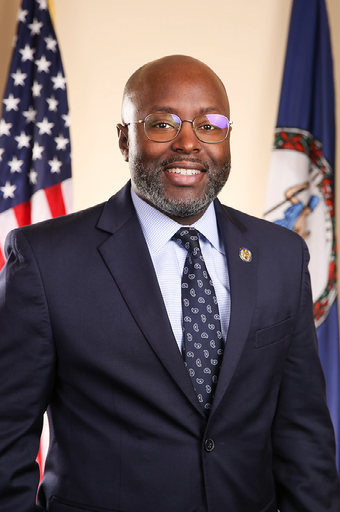
Key legislators
Who's moving criminal justice in Virginia
Showing 61–66 of 66
bills
All criminal justice bills
Offenses relating to gift cards; penalties. Adds the offenses of gift card theft, gift card forgery, gift card fraud, and criminally receiving goods and services fraudulently obtained to the existing provisions of law related to credit cards. This bill is identical to HB 662.
Clerk fees; secure remote access to nonconfidential court records by certain attorneys. Provides that no clerk shall charge a fee to an attorney for secure remote access to nonconfidential court records when such attorney is certified by the Virginia Indigent Defense Commission in the jurisdiction served by such clerk, provided that such attorney is currently appointed to represent a defendant in such jurisdiction and agrees to continue accepting appointments in such jurisdiction. The bill also provides that if, after receiving secure remote access for nonconfidential court records, such attorney (i) is found to have abused such privilege of such secure remote access; (ii) is removed from the Virginia Indigent Defense Commission's court-appointed attorney list; or (iii) ceases to accept appointments for representation from the granting court, the clerk may terminate the agreement granting such secure remote access. As introduced, this bill was a recommendation of the Virginia Indigent Defense Commission. This bill is identical to SB 82.
Admissibility of statements by individuals with developmental or intellectual disabilities in certain cases. Prohibits admission of any evidence from an individual with developmental disabilities or intellectual disabilities, as defined in relevant law, in certain criminal prosecutions unless the court finds by a preponderance of the evidence that such individual's decision to speak to law enforcement was not caused by and did not have a direct and substantial relationship to such individual's disability. The bill requires notice be given to the attorney for the Commonwealth if a defendant intends to introduce expert testimony regarding his disability. The bill prohibits any statements made by a defendant during an examination by an expert witness from being used against him except for impeachment or perjury. The provisions of the bill do not become effective unless reenacted by a subsequent regular or special session of the General Assembly.
Parole; investigation prior to release; input from the attorney for the Commonwealth. Requires the Parole Board to notify the attorney for the Commonwealth in each jurisdiction in which an offense occurred for which a prisoner is incarcerated as part of the required investigation to determine if such prisoner will be released on parole. The bill further provides that the attorney for the Commonwealth may submit his input to the Board regarding the impact the release of the prisoner will have on the jurisdiction. The bill requires that any such input received shall be considered by the Board but shall not infringe on the Board's authority to exercise its decision-making authority.
Constitutional amendment (voter referendum); qualifications of voters; right to vote; persons not entitled to vote. Provides for a referendum at the November 3, 2026, general election to approve or reject an amendment that would provide for the fundamental right to vote in the Commonwealth, revise the qualifications of voters so that a person convicted of a felony is not entitled to vote during his period of incarceration but is automatically invested with the right to vote upon release from incarceration, and update the existing prohibition on voting by persons found to be mentally incompetent to instead apply to persons who have been found to lack the capacity to understand the act of voting. This bill is identical to SB 6.
Constitutional amendment (voter referendum); qualifications of voters; right to vote; persons not entitled to vote. Provides for a referendum at the November 3, 2026, general election to approve or reject an amendment that would provide for the fundamental right to vote in the Commonwealth, revise the qualifications of voters so that a person convicted of a felony is not entitled to vote during his period of incarceration but is automatically invested with the right to vote upon release from incarceration, and update the existing prohibition on voting by persons found to be mentally incompetent to instead apply to persons who have been found to lack the capacity to understand the act of voting. This bill is identical to HB 963.