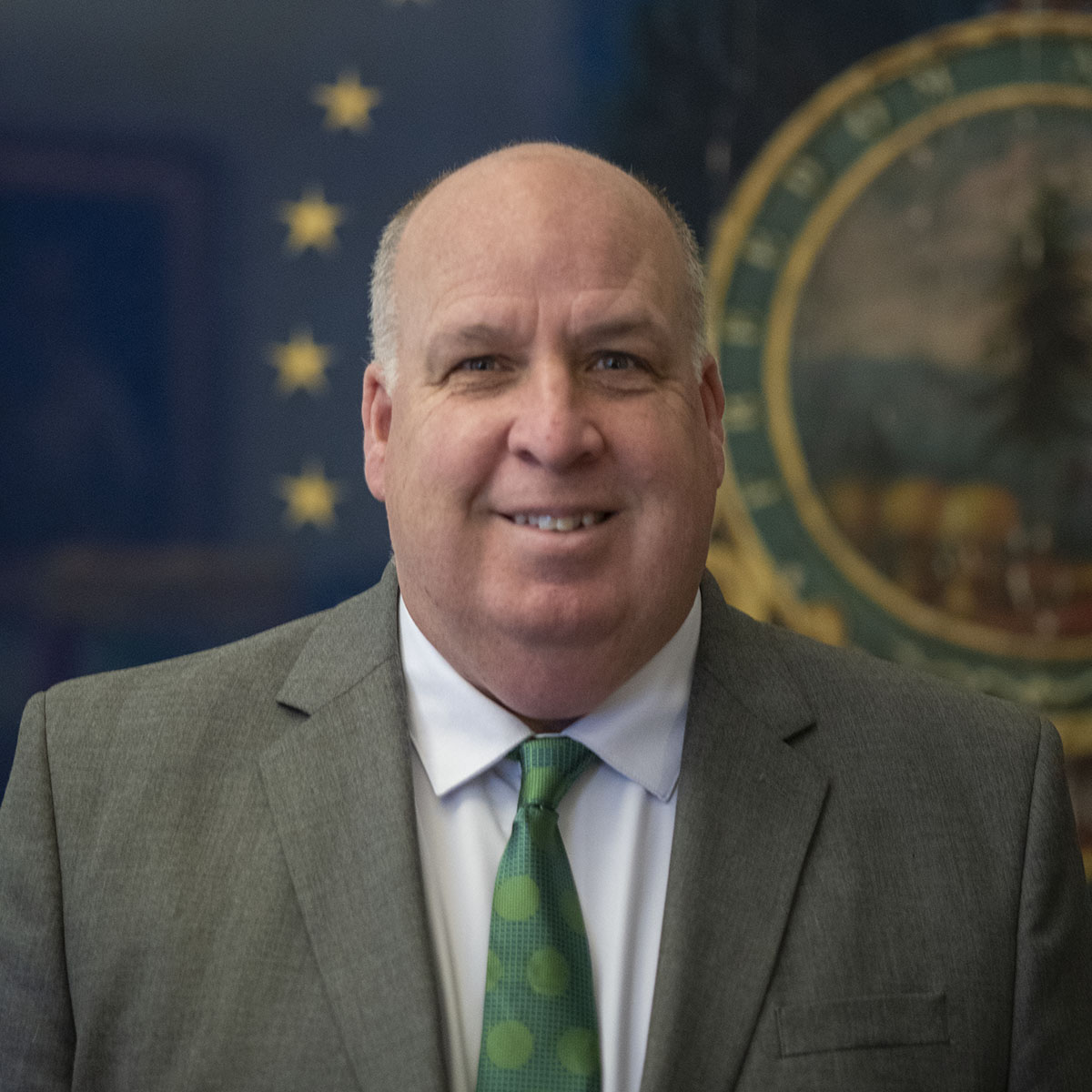
Maddy summaryHCR 196 is a ceremonial resolution honoring U.S. Army Major General Gregory Knight, Vermont's Adjutant and Inspector General, for his 43-year military and public service career. It formally commends his service - including deployments to Iraq, academic achievements, leadership in the Vermont National Guard, and his seven-year tenure as the state's top military officer - and directs the Secretary of State to send a copy of the resolution to him and the Vermont National Guard. This resolution does not create new laws or affect policy; it is a symbolic gesture of recognition. The bill was offered by all members of both the House and Senate.
Sen. Scott Beck
Sponsored bills
Maddy summaryThis House Concurrent Resolution designates February 11, 2026, as "Disability Advocacy Day" at the Vermont State House. It recognizes the work of disability rights groups like the Vermont Coalition for Disability Rights (VCDR) and highlights ongoing challenges such as educational disparities and barriers in employment, housing, and transportation faced by Vermonters with disabilities. The resolution does not create new laws or funding but formally acknowledges these issues and the contributions of people with disabilities. It directs the Secretary of State to send a copy to VCDR.
Maddy summaryVermont's Senate resolution SR 21 condemns the fatal shootings of two U.S. citizens (Renée Good and Alex Pretti) by federal agents during ICE's Operation Metro Surge in Minnesota. It demands the President immediately suspend the operation, reset immigration enforcement to target only serious criminals, and prioritize constitutional rights. The resolution urges Vermont's congressional delegation to oppose further ICE funding unless reforms include ending militarized tactics, restoring due process, and creating fair pathways to legal status. It also affirms constitutional protections against unreasonable searches and lethal force without legal accountability. The resolution is a non-binding call for federal action, not a law.
Maddy summaryVermont's S.310 requires businesses offering subscriptions with indefinite renewal terms to send consumers an annual notification about their right to cancel. This applies to services like streaming or software subscriptions (excluding financial institutions and insurance) and mandates clear notices stating renewal dates, automatic renewal terms, and simple cancellation methods (phone, email, or online). Businesses must provide this notice 30-60 days before renewal dates and ensure cancellation is easy without extra steps. The law takes effect July 1, 2026.
Maddy summaryThis bill (S 308) removes income-based limits for excluding U.S. military retirement and survivor benefit income from Vermont income tax. Currently, Vermont taxpayers with federal adjusted gross income (AGI) over $125,000 see partial or no exclusion, but this bill would fully exclude all such military retirement income regardless of income level. It affects Vermont residents receiving military retirement pay, changing the tax treatment from a tiered system to a flat exclusion. The change applies retroactively to tax years beginning January 1, 2026.
Maddy summaryS.312 changes Vermont's machinery and equipment investment tax credit from nonrefundable to refundable, allowing qualifying businesses to receive a cash refund if the credit exceeds their tax liability (up to $500,000 annually). It removes previous limits that capped annual credit use at 80% of tax liability and $1 million per year, and extends the credit's expiration from 2030 to 2034. The bill directly affects Vermont businesses making qualifying capital investments in machinery/equipment, as certified by the Vermont Economic Progress Council. To qualify, businesses must report annual job counts, investment levels, and credit usage through the Council and Tax Commissioner.
Maddy summaryThis bill revises Vermont's three-acre stormwater discharge permit program. It requires the Agency of Natural Resources (ANR) to verify each parcel's impervious surface area through on-site visits (not just GIS data) and rank parcels by their impact on water quality. Parcels in the top 10% for water quality impact will need permits, while others will follow a new priority schedule based on severity. The bill also clarifies that failing to obtain a permit when required does not create a legal "cloud on title" affecting property sales or financing. ANR must hold public hearings in each county to explain these changes.
Maddy summaryThis bill creates a 7-member committee to study the feasibility of building a new nuclear power plant in Vermont. The committee, including representatives from the state utility commission, electric companies, and bipartisan legislators, will examine past nuclear plant closures, legal barriers, and stakeholder input by December 2026. It will produce a report with recommendations for potential legislative action, but the bill itself does not authorize construction or funding. The study is strictly procedural, focusing on gathering information rather than making policy changes.
Maddy summaryThis bill shifts certain juvenile cases to criminal court, requiring that offenses like firearm use, drug trafficking, or aggravated stalking committed by youth aged 14-22 begin in the Criminal Division instead of the Family Division. It restricts judges from suspending or deferring sentences for repeat offenders (e.g., those with prior escape convictions or three+ felony convictions), mandating written findings if such sentences are granted. The bill also changes how recidivism is calculated, establishes a classification system for repeat violent offenders, and creates a forensic facility for certain criminal justice-involved individuals. These changes primarily affect juvenile offenders aged 14-22 and repeat offenders with specific prior convictions, altering court jurisdiction and sentencing options.
Maddy summaryS.267 modifies Vermont's land use laws to streamline housing development. It repeals a rule requiring permits for road construction under certain conditions (e.g., roads over 800 feet long), while extending exemptions for housing projects until 2030. Specifically, it exempts accessory dwelling units (like in-law apartments) in single-family homes and small housing projects (75 units or fewer) in designated downtown, neighborhood, or growth areas with adequate infrastructure - until July 1, 2030. These changes primarily affect developers, homeowners, and municipalities by reducing permitting barriers for housing in targeted zones. The bill does not alter zoning requirements but simplifies processes for projects meeting specific criteria.