Maddy summarySRES 576 is a Senate resolution commending the U.S. military operation in Venezuela (codenamed Operation Absolute Resolve) that captured Nicolás Maduro and his wife on January 3, 2026. The resolution states the operation removed Maduro from power without U.S. casualties, transported him to face federal charges (including narco-terrorism), and provided a path to democratic transition in Venezuela led by opposition figures. As a symbolic resolution, it has no legal effect and does not impose new policies or change existing laws. The resolution was introduced by multiple Senators and referred to the Foreign Relations Committee.
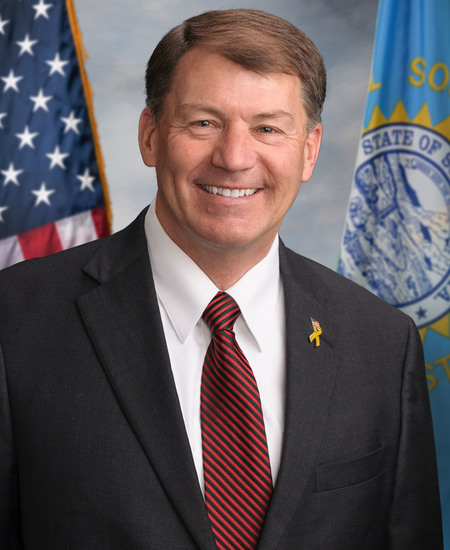
Sen. Mike Rounds
Sponsored bills
Maddy summaryThis bill amends the Financial Stability Oversight Council's (FSOC) process for addressing threats posed by nonbank financial companies. It requires the FSOC to first determine, in consultation with the company and its primary regulator, that alternative actions (like new safeguards or company plans) are impractical or insufficient before voting on a formal determination. The key change adds a new step (paragraph (3)) to Section 113 of the 2010 Financial Stability Act, directly affecting how the FSOC evaluates risks to U.S. financial stability. This applies specifically to U.S. nonbank financial companies under FSOC review.
Maddy summaryThis bill (S 3520) invalidates a specific Forest Service rule issued on November 25, 2024, which addressed criminal prohibitions related to law enforcement activities. The rule (89 Fed. Reg. 92808) is declared "without force or effect," and the Secretary of Agriculture is prohibited from implementing, enforcing, or administering this rule or any substantially similar rule. The bill directly affects the Forest Service's authority to enforce that particular rule. It is a procedural measure with no new policy provisions, solely reversing an existing regulation.
Maddy summaryThe ARCA Act of 2025 reorganizes the Department of Veterans Affairs' acquisition processes by creating a new Office of Acquisition and Innovation led by an Assistant Secretary for Acquisition and Innovation. It establishes new requirements for managing major acquisition programs (those with estimated life-cycle costs of $250 million or more), including detailed program baselines, independent verification and validation, and approval requirements before advancing to new acquisition phases. The bill also creates a Director of Cost Assessment and Program Evaluation to provide independent analysis on acquisition costs and performance. It gives the VA new authority to enter into "other transactions" with nontraditional contractors to support innovation in veterans' health care. These changes aim to improve the efficiency, accountability, and cost-effectiveness of the VA's acquisition of property, systems, technology, and services.
Maddy summaryThis bill requires the Department of Veterans Affairs (VA) to expand its VetSuccess on Campus program to have at least one location in every U.S. state. It mandates that each state must have at least one VA counselor dedicated to supporting veterans at participating colleges and universities, regardless of the number of veteran students. The VA must prioritize schools with the largest veteran student populations when placing new program locations. This directly affects veterans using education benefits at colleges and the VA counselors assigned to support them.
Maddy summaryThe BADGES for Native Communities Act (S 390) aims to improve coordination and data sharing around missing persons, unclaimed remains, and death investigations involving Native communities. It creates Tribal facilitators to coordinate reporting to the National Missing and Unidentified Persons System, establishes a grant program for tribes and states to develop response centers, and requires reports on law enforcement staffing needs in Indian country. The bill also creates a demonstration program for background checks of Bureau of Indian Affairs law enforcement officers and mandates a GAO study on evidence collection procedures. These provisions directly affect Native American tribes, Tribal organizations, Bureau of Indian Affairs law enforcement, and federal agencies working in Indian country. The legislation seeks to address systemic gaps in data collection and law enforcement response to cases involving Native communities.
Maddy summaryThis bill removes waiting periods for disability and Medicare benefits for people diagnosed with metastatic breast cancer. Specifically, it amends the Social Security Act to add "metastatic breast cancer" to the list of conditions that immediately qualify individuals for disability insurance benefits (eliminating a standard 24-month waiting period) and for Medicare coverage (removing a 24-month waiting period for Medicare Part A). The changes apply only to new applications or benefit periods starting after the bill becomes law. It directly affects patients with metastatic breast cancer seeking timely access to income support and healthcare coverage.
Maddy summaryThe SAFE STEPS for Veterans Act of 2025 establishes a new Office of Falls Prevention within the Veterans Health Administration to coordinate and improve falls prevention efforts for veterans. The Office will develop standards for falls prevention care, monitor implementation across VA facilities, and provide technical assistance to medical centers and home programs. The bill requires annual falls risk assessments by licensed therapists for veterans in nursing homes, mandates biennial staff training on safe patient handling, and creates a pilot program for home modifications to prevent falls. It also directs research on medication management as a fall risk factor and requires a report on current falls prevention initiatives within the VA. This legislation primarily affects veterans at risk of falls, particularly older veterans and those with mobility challenges.
Maddy summaryThis bill would require the Securities and Exchange Commission (SEC) to update rules defining "qualifying investments" for venture capital funds. Specifically, it would expand what counts as a qualifying investment to include equity securities from portfolio companies (whether bought directly or in secondary markets) and investments in other venture capital funds. The bill also imposes a 49% cap on how much capital a fund can hold in other venture funds or secondary acquisitions after any asset purchase. These changes directly affect venture capital funds and their portfolio companies by altering how funds qualify under SEC regulations. The policy shifts focus to broadening investment definitions while adding specific capital allocation limits.
Maddy summaryThe Back the Blue Act of 2025 creates new federal criminal offenses for killing or assaulting law enforcement officers, judges, and certain public safety personnel (including firefighters and first responders) while they are on duty or because of their official status. It increases penalties for these crimes, including minimum 10-year prison terms for killing officers and longer sentences for assaults causing serious injury, with the death penalty possible for killings. The bill also adds a "flight to avoid prosecution" provision for those fleeing to evade charges for killing officers, expands law enforcement officers' rights to carry firearms in certain circumstances, and limits federal habeas corpus relief for individuals convicted of killing law enforcement officers. This legislation directly affects law enforcement officers, judges, and public safety personnel, as well as individuals who commit violence against them.