

Maddy summaryThis bill redesignates the existing National Parks and Public Land Legacy Restoration Fund as the America's Legacy Restoration Fund to address deferred maintenance on federal lands. It directs revenue from recreation fees and a portion of energy development income into the fund, which must be used primarily for repairing critical infrastructure like roads, trails, and buildings managed by agencies such as the National Park Service and the Forest Service. The legislation establishes strict rules requiring that most funds go toward non-transportation projects, mandates transparency through public dashboards tracking project status, and sets aside a small percentage for matching private donations. Additionally, the bill increases entrance fees for foreign visitors to ensure they contribute to the fund, while prohibiting the use of these specific funds for land acquisition or employee bonuses.
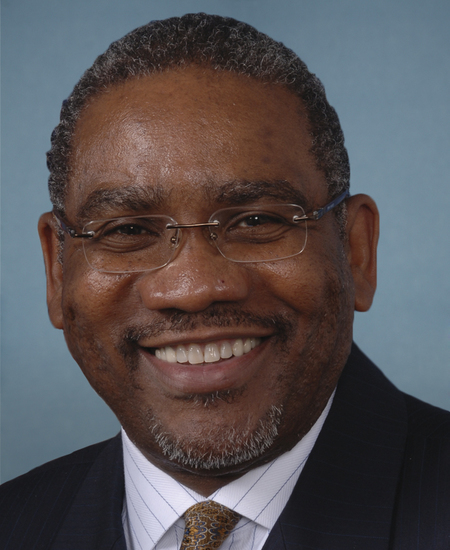
Rep. Gregory W. Meeks
Sponsored bills
Maddy summaryThis bill directs the President to withdraw United States military forces from any hostilities involving Iran. It invokes a specific provision of the War Powers Resolution, allowing Congress to order such a removal. The directive includes an exception, permitting forces to remain if necessary to defend the U.S. or an ally from an imminent attack, but only if the President follows certain reporting procedures and without new explicit congressional authorization for military force against Iran. This action would directly affect the President's authority regarding military deployment and the U.S. Armed Forces currently operating in the region.
Maddy summaryThis resolution expresses support for designating June 2026 as Black Music Month to honor the historical and cultural significance of Black contributions to American music. It acknowledges the wide-ranging influence of Black music across various genres and its central role in the nation's history, including the civil rights movement. The bill calls on the public to celebrate this month by promoting diversity, performing Black music, and spreading awareness of its legacy.
Maddy summaryThis resolution honors the life, military service, and congressional career of the late Representative Charles Bernard Rangel, specifically recognizing his contributions to the alliance between the United States and South Korea. The measure formally acknowledges his bravery during the Korean War, noting his Purple Heart and Bronze Star Medal awards for leading soldiers out of an encirclement, and highlights his decades of work strengthening U.S.-South Korea ties through trade policy and veteran advocacy. Additionally, the text expresses gratitude for a similar resolution passed by the South Korean National Assembly and reaffirms the House's commitment to honoring Korean War veterans and the enduring bilateral relationship.
Maddy summaryThis bill authorizes U.S. sanctions against foreign individuals, entities, and vessels involved in illegal, unreported, and unregulated fishing (IUU fishing), particularly targeting China as the primary perpetrator. It requires freezing assets and denying visas to those who own, captain, or operate vessels engaged in IUU fishing, while mandating annual reports on sanctions implementation. Exceptions include humanitarian aid, national security activities, and compliance with international agreements. The policy aims to protect global fisheries, coastal communities, and marine ecosystems from harmful fishing practices.
Maddy summaryHR 3429 establishes a formal US-Japan-ROK Inter-Parliamentary Dialogue to deepen trilateral cooperation. It creates a US delegation of up to 8 Congress members (2 each from House/Senate leadership, with committee requirements) to meet annually with Japanese and South Korean legislators. The bill mandates annual reports to the Foreign Affairs and Foreign Relations committees and requires the delegation to rotate leadership between House and Senate every two years. This legislation directly affects US congressional members appointed to the delegation and provides a structured mechanism for ongoing policy coordination among the three nations.
Maddy summaryHRES 518 is a procedural resolution that sets the rules for the House of Representatives to consider H.R. 2913, a bill authorizing U.S. support for Ukraine. It waives all objections to the bill’s consideration, limits debate to one hour equally divided between committee leaders, and requires the House to transmit the bill to the Senate within one week of passage. This resolution does not change the content of the Ukraine support bill but streamlines its legislative process.
Maddy summaryThe Community Flood Resilience Act allows states and communities to use up to 15 percent of their federal flood mitigation grants for five years to pay for private, community-based flood insurance. This type of insurance automatically provides payouts when specific flood metrics are met, offering faster financial relief without requiring detailed damage assessments. The bill also requires the Federal Emergency Management Agency to promote these policies and mandates that communities educate residents about the differences between this new coverage and traditional flood insurance. Additionally, the law requires regular reports to Congress on how these programs affect insurance enrollment and the speed of claim payments.
Maddy summaryThis concurrent resolution directs the President to remove U.S. Armed Forces from any hostilities within or against Cuba that lack explicit congressional authorization. The bill invokes the War Powers Resolution to require the executive branch to cease military actions unless Congress has passed a formal declaration of war or a specific authorization for the use of military force. It directly affects the President's ability to conduct military operations in Cuba without legislative approval. This measure seeks to enforce the constitutional principle that Congress must authorize war before the United States engages in armed conflict.
Maddy summaryThis resolution formally recognizes the negative effects of menstrual stigma on women, girls, and other menstruating people and expresses support for designating May as National Menstrual Health Awareness Month. It highlights the importance of normalizing menstruation, improving access to products and sanitation facilities, and expanding education and clinical research on menstrual health conditions. The bill does not create new laws or funding but serves as a symbolic statement to promote awareness and gender equity regarding menstrual health.