Maddy summaryHR 4448, the Restoring Equal Opportunity Act, prohibits lawsuits alleging discrimination based on "disparate impact" in employment and housing. It amends the Civil Rights Act of 1964 and Fair Housing Act to ban claims where a neutral policy (like a test or screening rule) unintentionally disadvantages protected groups (such as race or gender), even if there was no discriminatory intent. The bill also nullifies specific federal regulations implementing civil rights laws, removing legal grounds for such claims under current enforcement rules. This directly affects employers, housing providers, and federal agencies that enforce civil rights laws, changing how discrimination claims can be brought in court.
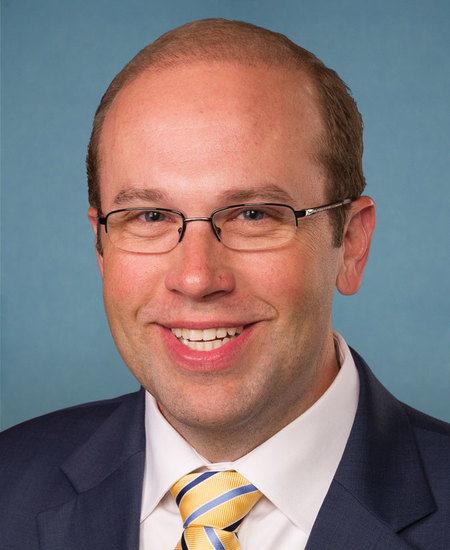
Rep. Jason Smith
Sponsored bills
Maddy summaryHR 4382 authorizes the U.S. Mint to produce commemorative coins for the 2028 Los Angeles Olympics/Paralympics and 2034 Salt Lake City Winter Olympics/Paralympics. It specifies gold, silver, and half-dollar coin designs with defined mintage limits (e.g., up to 100,000 $5 gold coins for each event), all bearing inscriptions like "2028" or "2034" and standard coin features. A surcharge ($5-$50 per coin) is added to sales, with all funds directed to the respective Olympic committees to support event hosting and legacy programs like youth sports. The bill ensures no net cost to the government by requiring surcharge revenues to cover all design, production, and marketing expenses before funds are disbursed.
Maddy summaryHRES 535 is a non-binding resolution designating June 24th as "Public Safety Awareness Day" to highlight community-focused approaches to safety. It does not create new laws or allocate funds, but instead makes five supportive statements: promoting citizen empowerment, strengthening law enforcement, encouraging community-based crime prevention, advocating for evidence-based policies, and affirming support for officers. The resolution emphasizes collaboration between residents, law enforcement, and local leaders to address safety challenges, referencing high-crime cities like Chicago as context for its goals. It focuses on symbolic recognition rather than concrete legislative action.
Maddy summaryThis symbolic House resolution (HRES 521) expresses support for Israel’s military actions against Iran’s nuclear facilities, citing Iran’s nuclear enrichment progress (including 60% enriched uranium stockpiles nearing weapons-grade levels) and Iran’s attacks on Israeli civilians. It specifically endorses Israel’s "proportional" strikes on Iranian nuclear sites and military targets following Iran’s rejection of diplomatic efforts, while condemning Iran’s attacks that killed 24 Israelis and wounded 590. The resolution calls on Iran to halt nuclear enrichment and dismantle its program, reaffirms U.S. support for Israel’s security, and urges global condemnation of Iran’s nuclear activities. As a non-binding resolution, it does not enact policy but formally aligns the House with Israel’s actions against Iran’s nuclear program.
Maddy summaryHR 4053, the "Stop Funding Rioters Act," blocks individuals convicted of specific offenses from accessing Small Business Administration (SBA) programs. It directly affects people convicted of assaulting police officers (as a misdemeanor or felony) or committing a felony during a riot that destroyed a small business. The bill's key provision denies eligibility for any SBA assistance, loans, or programs to these individuals. This policy change modifies SBA program access based solely on prior criminal convictions related to violence against law enforcement or riot-related property damage.
Maddy summaryHR 2360 permanently exempts school bus drivers from the engine compartment inspection requirement during their commercial driver's license skills test, which was previously granted as a temporary measure in a 2024 federal notice. This affects school bus drivers in states that choose to participate in the exemption program. For six years after the bill's enactment, participating states must submit annual reports to the Transportation Secretary detailing how many drivers use this exemption. The exemption maintains the specific conditions established in the 2024 notice.
Maddy summaryHR 1156, the Pandemic Unemployment Fraud Enforcement Act, extends the time limit for prosecuting fraud related to pandemic unemployment programs. It adds a 10-year window for criminal or civil actions against individuals who falsely claimed benefits under Pandemic Unemployment Assistance (PUA), Federal Pandemic Unemployment Compensation (FPUC), or Mixed Earner Unemployment Compensation (MEUC). The law applies only to fraud committed during these specific pandemic-era programs and does not revive cases where the original statute of limitations had already expired before this bill passed. This change gives authorities more time to pursue fraud cases without altering the programs' core eligibility rules.
Maddy summaryThis procedural resolution (H.Res. 212) returns Senate Joint Resolution 3 to the Senate, as the House of Representatives has determined it violates constitutional provisions and infringes on the House's privileges. The House specifically claims the Senate resolution - which sought congressional disapproval of an IRS rule on digital asset reporting - contravenes the Constitution's separation of powers. This is a routine legislative step to address inter-chamber disagreements, not a policy change affecting the public. The resolution serves only to formally return the Senate measure without further House action.
Maddy summaryHRES 153 is a ceremonial resolution expressing condolences to the families and loved ones of the 67 victims who died in two aviation incidents: American Eagle Flight 5342 and U.S. Army flight PAT 25, which crashed near Washington, D.C.'s Reagan National Airport on January 29, 2025. It specifically honors the victims - many connected to Wichita, Kansas (known as the "Air Capital of the World") - and extends sympathies to affected communities including Wichita, Kansas, and the National Capital Region. The resolution also commends first responders who aided in the recovery efforts. As a non-binding expression of sympathy with no policy changes, it does not affect laws or regulations.
Federal Firearms Licensee Protection Act of 2025 This bill modifies criminal penalties for an offense involving the theft of a firearm from a licensed importer, manufacturer, or dealer, or from their business premises. Specifically, the bill does the following: increases from 10 to 20 years the maximum prison term, and creates a 3- or 5-year mandatory minimum prison term for an offense that occurs during the commission of a burglary or robbery. An attempt to commit an offense is subject to the same penalties as a substantive offense.