Maddy summaryHR 7008, the Stop Insider Trading Act, restricts Members of Congress, their spouses, and dependent children from purchasing certain investments like stocks in publicly traded companies. It requires 7-14 days' advance public notice before selling any such investment, including the sale date, description, and number of shares. Exceptions apply for work-related transactions (e.g., employer compensation) and reinvesting dividends. Violations trigger a fee of $2,000 or 10% of the investment’s value (whichever is greater), plus any net gain, paid from personal funds - not congressional allowances or campaign donations. The bill aims to prevent conflicts of interest by increasing transparency around congressional financial dealings.
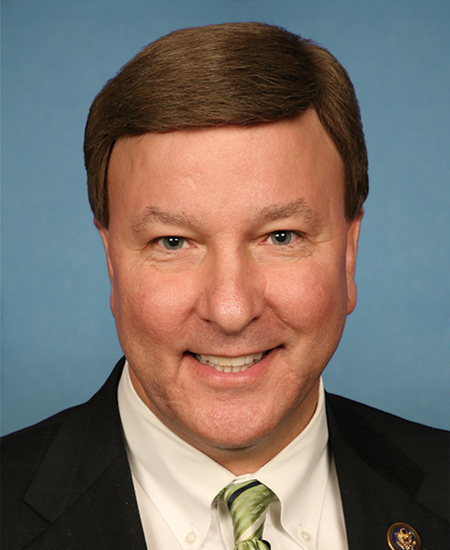
Rep. Mike Rogers
Sponsored bills
Maddy summaryThe PERFORM Act restricts the Postmaster General from receiving bonuses or performance-based pay if the Postal Service runs a financial deficit, misses service targets, or fails to pass its annual audit. To enforce this, the law requires the Postmaster General to submit an annual report to Congress detailing all executive compensation, the metrics used to justify those payments, and the agency's financial and service performance data. Additionally, the Postal Service Inspector General must review these reports to ensure compliance with the new restrictions. These measures directly affect the compensation of senior Postal Service leadership and increase transparency regarding the agency's financial and operational results.
Maddy summaryThe Tuskegee Airmen Memorial Act of 2026 authorizes the organization Tuskegee Airmen, Inc. to build a commemorative monument on federal land in Washington, D.C., honoring the original Tuskegee Airmen who served in World War II. This legislation allows the group to accept private donations and cover all costs for the project without using federal funds, while requiring any leftover money to be deposited into specific government accounts. The bill also mandates that the memorial be constructed in compliance with existing federal standards for commemorative works.
Maddy summaryThe Wildfire Reduction Market Expansion Act of 2026 updates the Clean Air Act to broaden the definition of renewable biomass eligible for carbon credits. It specifically allows materials from forest management, such as slash, storm debris, and wood residuals, to be counted as renewable fuel if they come from sustainably managed lands or public forests designated for fuel reduction. The bill also includes vegetation cleared from defensible space around buildings and from wildfire risk reduction projects in the wildland-urban interface. By clarifying these categories and establishing certification requirements, the legislation aims to increase the supply of biomass available for generating renewable energy credits.
Maddy summaryThis bill requires pharmacy benefits managers (PBMs) administering prescription drug benefits for federal employee health plans to reimburse pharmacies at specific rates, including the national average drug cost plus a small percentage or $50, whichever is lower. It prohibits PBMs from favoring their own pharmacies, restricting patient choice, or reducing pharmacy payments after claims are processed. The bill establishes $10,000 civil penalties for violations, with debarment from federal health plans after 10 penalties in 10 years. This directly affects PBMs, in-network pharmacies, and federal health benefit plans covering millions of federal employees and their families. The law aims to ensure fair reimbursement practices and maintain pharmacy choice under the Federal Employees Health Benefits Program.
Maddy summaryThis bill establishes a legal framework allowing banks and credit unions to provide financial services to businesses operating marijuana or hemp industries under state laws without fear of losing federal protections. It specifically shields these institutions from penalties, insurance termination, or liability if they accept deposits or make loans to state-sanctioned marijuana or hemp companies. The legislation also clarifies that income from these businesses can be used to qualify for federally backed mortgages and requires regulators to update guidance on how to handle suspicious activity reports related to these sectors. Additionally, the bill mandates annual reports and studies to assess access to banking services for minority-owned and small businesses within the industry.
Protecting Privacy in Purchases Act This bill prohibits payment card networks from using merchant codes that distinguish firearms retailers from general-merchandise retailers or sporting-goods retailers. The Department of Justice must enforce this bill and report annually on the resulting investigations and cases.
Maddy summaryThe Securing Agriculture's Workforce Act of 2026 modernizes the H-2A visa program by transferring administrative authority to the Department of Homeland Security and introducing a unified online platform to streamline applications for employers and workers. Key provisions include establishing new housing standards with mandatory inspections, creating a system for staggered worker entry and exit, and allowing workers to transfer between employers without losing their status. The bill also defines specific job classifications for wage calculations, expands the scope of covered agricultural activities, and provides legal protections for employers who document the employment of workers seeking visa status. Additionally, it requires agencies to develop a heat illness prevention plan and allows for contract termination due to natural disasters.
Maddy summaryThis bill redesignates the existing National Parks and Public Land Legacy Restoration Fund as the America's Legacy Restoration Fund to address deferred maintenance on federal lands. It directs revenue from recreation fees and a portion of energy development income into the fund, which must be used primarily for repairing critical infrastructure like roads, trails, and buildings managed by agencies such as the National Park Service and the Forest Service. The legislation establishes strict rules requiring that most funds go toward non-transportation projects, mandates transparency through public dashboards tracking project status, and sets aside a small percentage for matching private donations. Additionally, the bill increases entrance fees for foreign visitors to ensure they contribute to the fund, while prohibiting the use of these specific funds for land acquisition or employee bonuses.
Repealing Big Brother Overreach Act This bill repeals the Corporate Transparency Act. The act requires existing companies and newly created companies to report beneficial ownership information to the Department of the Treasury’s Financial Crimes Enforcement Network for purposes of addressing the financing of terrorism and money laundering.