

Jumpstart Our Businesses by Supporting Students Act of 2021 or the JOBS Act of 2021 This bill expands student eligibility for Pell Grants by establishing the Job Training Federal Pell Grant program. Specifically, the bill requires the Department of Education to award a job training Pell Grant to a student who does not have a degree; attends an institution of higher education (IHE); is enrolled in a career and technical education program at an IHE that provides 150 to 600 clock hours of instructional time over a period of 8 to 15 weeks and provides training aligned with high-skill, high-wage, or in-demand industry sectors (i.e., job training programs); and meets all other eligibility requirements for a Pell Grant. It also specifies that any period during which a student receives a job training Pell Grant counts toward that student's Pell Grant eligibility period.
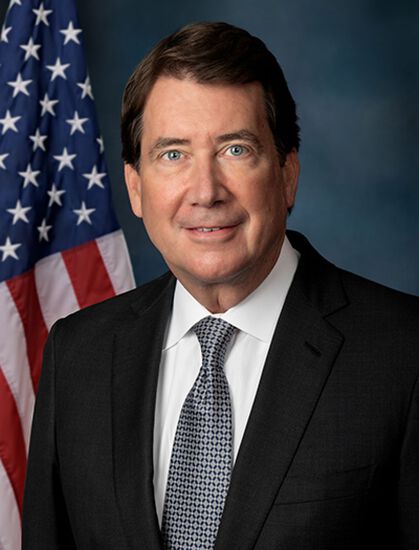
Sen. Bill Hagerty
Sponsored bills
This bill prohibits aliens who are not lawfully present in the United States from receiving 2021 recovery rebates. It also modifies identification requirements for nonimmigrant workers.
Fair Access to Banking Act This bill restricts certain banks, credit unions, and payment card networks from refusing to do business with a person who is in compliance with the law. Restrictions include prohibiting the use of certain lending programs, initiating the process of terminating an institution's depository insurance, and instituting specified civil penalties.
SFC Sean Cooley and SPC Christopher Horton Congressional Gold Star Family Fellowship Program Resolution This resolution establishes in the Senate the Congressional Gold Star Family Fellowship Program under which certain family members of a member of the Armed Forces who is a hostile casualty or died from a training-related injury may serve a 12-month fellowship in the office of a Senator.
Taiwan Fellowship Act This bill directs the Department of State to establish a program to provide fellowships in Taiwan to qualifying U.S. government employees. Each program fellow shall work in (1) a Taiwanese government agency; or (2) a nongovernmental organization, such as the American Institute in Taiwan, whose interests are associated with the interests of the fellow's employing U.S. government agency. (In 1979, the United States established diplomatic relations with China and ended formal diplomatic ties with Taiwan. The American Institute in Taiwan is a private organization that has a contract with the State Department to represent U.S. interests in Taiwan and provide consular services.)
CBO Show Your Work Act This bill requires the Congressional Budget Office (CBO) to make available to Congress and the public each fiscal model, policy model, and data preparation routine that the CBO uses to estimate the costs and other fiscal, social, or economic effects of legislation. For each estimate of the costs and other fiscal effects of legislation, the CBO must also disclose, in a manner sufficient to permit replication by individuals not employed by the CBO, the data, programs, models, assumptions, and other details of the computations used to prepare the estimate. For data that may not be disclosed, the CBO must make available to Congress and the public a complete list of all data variables for the data; descriptive statistics for all data variables for the data, to the extent that the descriptive statistics do not violate the rule against disclosure; a reference to the statute requiring that the data not be disclosed; and contact information for the individual or entity who has unrestricted access to the data.
Combating Global Poverty Through Energy Development Act This bill supports the elimination of restrictions that limit support for certain energy projects at specified international financial institutions. Specifically, the bill requires the Department of the Treasury to instruct the U.S. executive directors of certain financial institutions (e.g., the International Finance Corporation, the International Monetary Fund, and the Inter-American Development Bank) to (1) oppose any restriction or prohibition on the financing of coal, oil, natural gas, or civil nuclear energy projects; and (2) seek to rescind current restrictions or prohibitions on this financing. Further, not more than 50% of amounts made available for the International Bank for Reconstruction and Development may be used until Treasury certifies that the bank (1) has rescinded any restrictions or prohibitions on the financing of coal, oil, natural gas, or civil nuclear energy projects; and (2) has in effect a policy promoting the financing of these projects. Treasury must coordinate with designated agencies to identify steps the United States can take to promote international financing of these energy projects in order to help developing countries access affordable and reliable power.
Protect and Serve Act of 2021 This bill establishes a new criminal offense for knowingly assaulting a law enforcement officer and causing serious bodily injury (or attempting to do so) in circumstances that affect interstate commerce. It imposes criminal penalties—a prison term, a fine, or both—on a violator.
American Innovation and Jobs Act This bill revises and expands the deductibility of research and experimental expenditures to allow immediate expensing of such expenditures. It also allows the amortization over a period of at least 60 months of certain other types of research and experimental expenditures not treated as expenses. The bill increases the maximum amount eligible for the tax credit for new and small businesses and increases to 20% the rate of the credit for business startups.
This resolution (1) recognizes Girl Scouts of the United States of America for 109 years of inspiring girl leadership and encourages them to continue to support the leadership development of girls, and (2) congratulates all Girl Scouts who earned the Gold Award in 2020.