

Native American Direct Loan Improvement Act This bill addresses housing and homeownership for Native American veterans. Specifically, the bill revises the Native American Direct Loan program administered by the Department of Veterans Affairs (VA) to (1) allow Native American veterans to refinance existing mortgage loans; and (2) award grants to local service providers for conducting outreach, homebuyer education, housing counseling, risk mitigation, and other technical assistance to assist Native American veterans seeking to qualify for mortgage financing. Additionally, the bill directs the VA to carry out a pilot program to address the feasibility and advisability of making direct housing loans to Native community development financial institutions for relending loan amounts to qualified veterans.
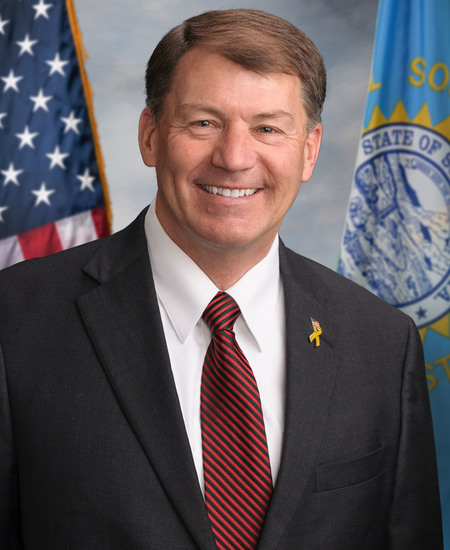
Sen. Mike Rounds
Sponsored bills
Cattle Price Discovery and Transparency Act of 2022 This bill requires the Department of Agriculture (USDA) to take various actions to address transparency in contract terms and pricing in the cattle industry. Among these requirements, USDA must maintain a publicly available library or catalog of contracts entered into between meat packers and livestock producers for the purchase of cattle, including any schedules of premiums or discounts associated with the contracts and other specific details. USDA must make this information available to producers and other interested parties in a monthly report. The bill further requires USDA to establish five to seven regions encompassing the entire continental United States that reasonably reflect similar fed cattle purchase practices for processing plants and establish mandatory minimums for each region (i.e., the minimum percentage of cattle purchases that are required to be made through approved pricing mechanisms from producers that are not packers). Under the bill, approved pricing mechanisms are generally purchases of fed cattle made through a negotiated purchase, through a negotiated grid purchase, at a stockyard, or through trading systems or platforms where multiple buyers and sellers can regularly make and accept bids and offers. The bill also establishes a maximum penalty for mandatory minimum violations by covered packers. Under the bill, a covered packer is a packer that has slaughtered an average of 5% or more of the number of fed cattle slaughtered nationally during the immediately preceding five calendar years.
Meat and Poultry Special Investigator Act of 2022 This bill establishes within the Department of Agriculture (USDA) the Office of the Special Investigator for Competition Matters. Specifically, the office must use all available tools (e.g., subpoenas) to investigate and prosecute violations of the Packers and Stockyards Act of 1921 by packers and live poultry dealers. Further, the bill grants the office the authority to bring any civil or administrative action authorized by that act against a packer or live poultry dealer. Additionally, the office must serve as a liaison to the Department of Justice and the Federal Trade Commission with respect to competition and trade practices in the food and agricultural sector, consult with the Department of Homeland Security on national security and critical infrastructure security in the food and agricultural sector, maintain a staff of attorneys and other professionals with appropriate expertise, and coordinate with the USDA Office of the General Counsel and the Packers and Stockyards Division of the Agricultural Marketing Service.
This joint resolution nullifies a Bureau of Alcohol, Tobacco, Firearms and Explosives rule published on April 26, 2022, concerning regulatory definitions and identification of firearms.
Prohibiting Federal Emergencies for Abortion Act This bill prohibits the President and the Department of Health and Human Services (HHS) from declaring a federal emergency relating to abortion. Specifically, neither the President nor HHS may declare a national emergency for purposes of (1) promoting, supporting, or expanding access to abortion; or (2) taking adverse action against or litigating against states that prohibit or otherwise restrict abortion.
Air America Act of 2022 This bill establishes the service of Air America employees as qualifying service for purposes of the Civil Service Retirement System. (Air America was a government-owned airline that provided air transport for certain covert operations in Southeast Asia, including Laos and Vietnam, between 1950 and 1976.) The bill applies to U.S. citizens who were employees of Air America or another affiliated company, as specified, between January 1, 1950, and December 31, 1976. Benefit applications must be filed within two years of the date of enactment of this bill.
Somaliland Partnership Act This bill requires the Department of State to annually report to Congress on U.S. assistance to Somaliland. The State Department must also report to Congress on the feasibility of establishing a U.S.-Somaliland partnership, including opportunities for collaboration on regional security issues. For the purposes of this bill, Somaliland is the territory within Somalia that has been a self-declared independent and sovereign state since 1991 that is not internationally recognized.
Keep Our Communities Safe Act of 2022 This bill revises provisions related to the authority of the Department of Homeland Security (DHS) to detain aliens. DHS may detain an alien pending a removal decision for any length of time until the alien is subject to a final removal order. DHS must detain certain aliens, such as those convicted of an aggravated felony, beyond certain time limits for detaining an alien. The authority of the Department of Justice to review DHS custody decisions concerning an alien awaiting a removal decision shall be limited to whether the alien may be detained, released on bond, or released with no bond. DHS may release such an alien on bond only if the alien is not a flight risk or risk to the community. For an alien subject to a removal order, DHS may extend the 90-day removal period (generally the window in which DHS has to remove an alien after a final order of removal) in certain instances, such as when the alien's removal is stayed during an appeal. DHS may continue to detain an alien beyond the removal period and any removal period extensions. DHS shall periodically certify a justification for detaining an alien beyond the removal period. DHS shall establish a detention review process for aliens who (1) have made all reasonable efforts to comply with a removal order, and (2) are not subject to mandatory detention. DHS shall use the review process to determine whether an alien should be detained or released with conditions.
Black Hills Forest Protection and Jobs Preservation Act of 2022 This bill provides for vegetation management projects and timber production projects on certain National Forest System lands in Montana, South Dakota, and Wyoming. The bill directs the Forest Service to issue one or more decisions using expedited authorities for compliance with environmental review requirements to carry out vegetation management projects on land in the Black Hills National Forest. Furthermore, the Forest Service shall categorize the Black Hills National Forest and the Bighorn National Forest as being very high priority for ecological restoration that involves vegetation removal. The Forest Service must also use specified amounts made available for forest thinning and timber harvesting for timber production in the Bighorn National Forest, the Custer Gallatin National Forest, and the Black Hills National Forest. In carrying out such timber production, the Forest Service shall use, to the extent practicable, the categorical exclusion for certain forest management activities and specified emergency action authority. A vegetation management or timber production project carried out under this bill shall not be subject to judicial review. Such a project may not be carried out on (1) a component of the National Wilderness Preservation System, or (2) an inventoried roadless area.
This resolution designates June 2022 as Great Outdoors Month. The resolution encourages all individuals in the United States to responsibly participate in recreation activities in the great outdoors.