

Keeping Gun Dealers Honest Act of 2021 This bill modifies the requirements and penalties applicable to an individual who engages in the business of dealing, importing, or manufacturing firearms (i.e., a federal firearms licensee, or FFL). Among other things, the bill does the following: increases the allowable number of annual compliance inspections; authorizes the Bureau of Alcohol, Tobacco, Firearms and Explosives (ATF) to hire at least 80 additional personnel to conduct additional inspections; increases the maximum prison term for an FFL or licensed collector who knowingly makes a false statement or representation in required firearms records; allows the ATF to require an FFL to conduct physical inventories if the FFL unlawfully transfers a firearm or if 10 or more crime guns are traced back to the FFL; allows the ATF to deny an application for a federal firearms license if it would endanger public safety or if the applicant is unlikely to comply with the law; and modifies the liability standard for an FFL who fails to comply with laws or regulations.
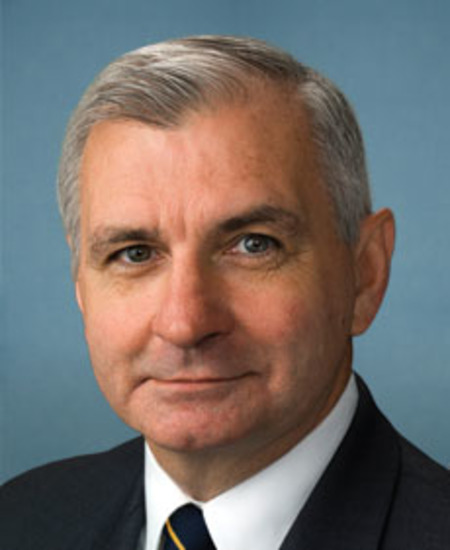
Sen. Jack Reed
Sponsored bills
This joint resolution nullifies the Oil and Natural Gas Sector: Emission Standards for New, Reconstructed, and Modified Sources Review rule published by the Environmental Protection Agency on September 14, 2020. The rule finalized amendments to new source performance standards under the Clean Air Act for the oil and natural gas sector, such as an amendment that removed limitations on methane emissions from such sector.
This joint resolution nullifies the final rule issued by the Office of the Comptroller of the Currency titled National Banks and Federal Savings Associations as Lenders and published on October 30, 2020. The rule requires that to be considered a lender, a national bank or federal saving association must, as of the date of origination of the loan (1) be named as the lender in the loan agreement, or (2) fund the loan.
Prevent All Soring Tactics Act of 2021 or the PAST Act of 2021 This bill addresses the practice of soring horses. The soring of horses includes various actions taken on horses' limbs to produce higher gaits that may cause pain, distress, inflammation, or lameness. Specifically, the bill expands soring regulation and enforcement at horse shows, exhibitions, sales, and auctions, including by establishing a new system for inspecting horses for soring. In addition, the bill increases penalties for violations.
Unity through Service Act of 2021 This bill establishes a Council on Military, National, and Public Service in the Executive Office of the President to, among other things, advise the President on promoting and expanding opportunities for military service, national service, and public service. The council shall establish an internet-based platform to serve as a centralized resource and database for people to learn about and connect with service organizations and opportunities, and assist in the recruiting needs of service organizations. The council may carry out a pilot program to focus on recruiting individuals from underserved markets and demographic populations, such as those defined by gender, geography, socioeconomic status, and critical skills. The Department of Defense, the corporation, and the Peace Corps shall establish a joint plan to provide an applicant who is ineligible, or otherwise not selected, for service in the Armed Forces, in a national service program administered by the corporation or in the Peace Corps, with information about forms of service for which the applicant has not applied.
Therapeutic Fraud Prevention Act of 20 21 This bill prohibits commercial conversion therapy, which is a practice or treatment designed to change a person's sexual orientation or gender identity or otherwise change behaviors, thoughts, or expressions related to gender or sexual attraction. This prohibition does not apply to treatment that assists an individual undergoing a gender transition or facilitates identity exploration and development.
Volunteer Innovation Act This bill creates a new pay-for-results pilot program within AmeriCorps that allows for the private funding of national service projects in exchange for payment of federal funds upon successful project completion. Eligible entities selected to participate in the pilot program must use AmeriCorps participants or volunteers for a national service project and must finance the entire up-front cost of the project. A participating entity must agree to achieve some desired outcome through the project. A participating entity that achieves the desired outcome will receive a grant from AmeriCorps in a negotiated amount that is less than or equal to the value to the federal government of the outcome. An entity that does not achieve the desired outcome on a project is not eligible to receive federal funds under the bill.
Charitable Conservation Easement Program Integrity Act of 2021 This bill imposes a limitation on the tax deduction for qualified conservation contributions made by certain partnerships if the amount of the contribution exceeds 2.5% times the sum of each partner's relevant basis in the partnership. This limitation also applies to other pass-thru entities, such as S corporations.
Break the Cycle of Violence Act This bill establishes federal grant programs and related entities to support violence intervention initiatives. Specifically, the bill directs the Department of Health and Human Services (HHS) to award grants for coordinated community violence intervention initiatives in communities disproportionately impacted by homicides and community violence. HHS must also establish several related entities, including an Office of Community Violence Intervention to administer programs and activities related to violence intervention; the Community Violence Intervention Advisory Committee to advise and assist the office and HHS; and the National Community Violence Response Center to provide training and technical assistance, coordinate research, and develop data collection policies. Additionally, the bill directs the Department of Labor to award grants for job training and workforce programs in communities disproportionately affected by gun violence to connect youth ages 16 to 24 to in-demand occupations.
Better Care Better Jobs Act This bill establishes programs and provides funds for state Medicaid programs to improve home- and community-based services (HCBS), such as home health care, personal care, case management, and rehabilitative services. Specifically, the bill provides funds for the Centers for Medicare & Medicaid Services to award planning grants, develop quality measures, and provide technical assistance to states regarding specified HCBS improvements, particularly with respect to access, utilization, and the associated workforce. The bill also increases the Federal Medical Assistance Percentage (i.e., federal matching rate) for HCBS in states that develop plans and meet specified benchmarks for improvements. The bill also makes permanent (1) the Money Follows the Person Rebalancing Demonstration Program (a grant program to help states increase the use of HCBS for long-term care and decrease the use of institutional care), and (2) certain provisions regarding Medicaid eligibility that protect against spousal impoverishment for recipients of HCBS.