Maddy summaryThis bill provides $16 billion in federal funding over five years (2024-2028) to stabilize the child care sector. It directly affects child care providers by offering grants to offset operating costs, support higher wages for early childhood educators without increasing fees for families, and expand access to high-quality care. Key provisions include funding for providers in underserved areas (like rural communities, infant/toddler care, and inclusive services for children with disabilities) and a requirement that 99% of funds go directly to providers. The funds are administered through the existing framework of the American Rescue Plan Act's child care program.
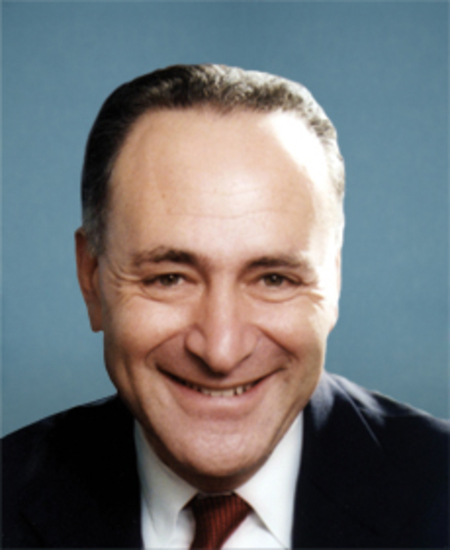
Sen. Charles E. Schumer
Sponsored bills
Maddy summaryThis bill reauthorizes federal funding for Long Island Sound restoration and stewardship programs through 2028, extending existing grant programs that support environmental cleanup and community projects in the Long Island Sound watershed. It updates two key provisions: extending the "Long Island Sound Grants" program (under the Federal Water Pollution Control Act) and the "Long Island Sound Stewardship Grants" program (under the 2006 Act) to cover 2024-2028 instead of 2019-2023. The bill does not create new programs or change eligibility but ensures continued funding for states and local organizations already participating in these initiatives. This is a procedural extension, not a policy change to the programs themselves.
Maddy summaryThis bill (S 2757) freezes current payment rates for veterans' transportation services provided through "special modes" (like non-emergency medical transport) starting January 1, 2023, preventing the VA from lowering these rates without strict conditions. It directly affects veterans relying on these transportation services and the contractors providing them. The key provision allows rate increases but requires the VA to conduct a detailed economic impact review, consult with veterans' groups and industry experts, and ensure new rates cover actual costs before any decrease can occur. This aims to protect veterans' access to care by preventing rate cuts that could disrupt transportation services.
Maddy summarySRES 329 authorizes Senate gallery directors Michael J. Mastrian (Senate Radio and Television Gallery) and Jeffrey S. Kent (Press Photographers' Gallery) to provide testimony in the federal case *United States v. Horn* (Cr. No. 21-301). It also directs the Senate Legal Counsel to represent them regarding evidence production related to their official duties. This procedural resolution does not alter substantive law but addresses Senate privilege concerns in a pending court matter.
Maddy summaryThis bill requires the Supreme Court to establish a code of conduct for justices within 180 days of enactment, with public access to these rules on the Court's website. It sets minimum disclosure standards for gifts, income, and reimbursements received by justices and their law clerks, and strengthens recusal requirements when justices have financial ties to parties in cases. The bill creates procedures for filing complaints about justices' conduct and establishes a judicial investigation panel to review such complaints, while also requiring parties and amicus curiae to disclose gifts to justices and lobbying activities related to the nomination of justices. These provisions aim to increase transparency and accountability in Supreme Court operations.
Maddy summaryThis is a commemorative resolution (SRES 322), not a legislative bill. It honors the late singer Tony Bennett by designating August 3, 2023 (his birthday) as "Tony Bennett Day" across the United States. The resolution recognizes Bennett's 20 Grammy Awards, his civil rights activism (including marching with Dr. Martin Luther King Jr.), his philanthropy, and his connection to Astoria, Queens. It urges citizens, schools, and organizations to celebrate his musical legacy and contributions to the arts, but contains no binding policy changes or direct impacts on individuals or programs.
Maddy summaryThe Break the Cycle of Violence Act creates federal grant programs to fund community-based violence intervention initiatives that aim to reduce gun violence in high-risk communities. It authorizes $300 million in 2024, increasing to $700 million annually from 2026-2031, for grants to community organizations and local governments to implement evidence-based strategies that provide trauma-informed services, job training, and wraparound support to individuals at high risk of violence. The bill establishes a National Community Violence Response Center to coordinate efforts, collect data, and share best practices, while also creating IMPACT grants for job training programs targeting opportunity youth in communities disproportionately affected by gun violence. The legislation specifically addresses racial disparities in violence exposure, with findings showing Black children and teens are over 12 times more likely to be shot to death than White peers. The program requires grantees to use strategies that reduce violence without contributing to mass incarceration, and to partner with community organizations reflecting the populations impacted by violence.
Maddy summaryThe Rural Outdoor Investment Act (S 2604) creates federal grants to fund outdoor recreation projects in rural communities, aiming to spur local economic development. It authorizes $30 million annually (2024-2028) for grants under existing programs, plus $12.5 million annually for a new "Recreation Economy for Rural Communities" grant program. The bill also requires training for rural small businesses and communities on accessing existing federal funding for outdoor recreation projects, including business development, infrastructure, and marketing. These provisions directly support rural areas, small businesses, and local planning efforts through targeted financial resources and capacity-building.
Maddy summaryThis Senate resolution (SRES 315) authorizes former Senate employee Daniel Schwager to provide testimony in the federal criminal case *United States v. Bozell* (Case No. 21-216, D.C. District Court), excluding matters protected by Senate privileges. It directs Senate Legal Counsel to represent Schwager and any current or former Senate office employee regarding evidence requests related to this case. The resolution cites Senate rules and the Ethics in Government Act, which allow the Senate to manage testimony involving official responsibilities. It does not change laws but formally permits testimony and legal support for Senate employees in this specific court matter.
This resolution authorizes (1) Daniel Schwager, a former employee of the Office of the Secretary of the Senate, to provide relevant testimony in the case of United States v. Sahady , except concerning matters for which a privilege should be asserted; and (2) the Senate Legal Counsel to represent Mr. Schwager and any current or former officer or employee of his office in connection with this case.