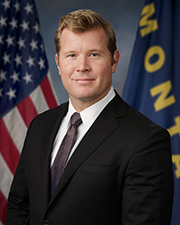
Photo of Tim Sheehy
R United States Senate · Montana

Sen. Tim Sheehy

Compare
Total votes
444
all sessions
Attendance
99%
6 missed
Near the chamber average
With party
99%
of cast votes
Higher than 83% of chamber peers
Bipartisan score
0%
crosses aisle rarely
Lower than 85% of chamber peers
Sponsored
406
bills & resolutions
Near the chamber average
Committees
9
assignments
406 bills and resolutions

Sponsored bills

Total
406
Primary
75
Co-sponsor
331
This page
406
matching current filters
Co-sponsor S 1821
In committee · Utah Senate · Co-sponsor
Tackling Predatory Litigation Funding Act

Maddy summaryThis bill imposes a new tax on entities receiving funding for civil lawsuits through litigation financing agreements. It requires a 3.8% surcharge (added to regular income tax rates) on profits from such funding, applied at the entity level for businesses like partnerships. The tax applies to third parties (e.g., corporations, individuals) who receive funds for lawsuits but excludes small agreements under $10,000 and standard loans with interest capped at 7% or 2x Treasury rates. The tax takes effect for 2026 taxable years, with 50% of the tax withheld directly from settlement payments.

In committee May 20, 2025 1 co-sponsor
Co-sponsor S 1816
In committee · Utah Senate · Co-sponsor
Improving Seniors’ Timely Access to Care Act of 2025

Maddy summaryThis bill requires Medicare Advantage plans to implement electronic prior authorization systems by 2028 and report detailed transparency data starting in 2027. Plans must publicly disclose approval/denial rates, average processing times (including for appeals), technology use, and other metrics for covered medical services. It mandates 24-hour response standards for expedited requests and routinely approved services, with data collection to analyze access patterns and potential disparities in rural/low-income communities. These changes directly affect Medicare Advantage plans, providers, and seniors enrolled in these plans by standardizing and increasing visibility into prior authorization processes.

In committee May 20, 2025 1 co-sponsor
Co-sponsor S 419
In committee · Utah Senate · Co-sponsor
Reauthorizing Support and Treatment for Officers in Crisis Act of 2025

Maddy summaryThis bill reauthorizes funding for existing mental health support programs designed to assist law enforcement officers experiencing crisis. It extends the authorization period for these programs from 2020-2024 to 2025-2029 under Section 1001(a)(21) of the 1968 Omnibus Crime Control and Safe Streets Act. The bill directly affects law enforcement officers who access these crisis support services, ensuring continued availability of the established program. It does not create new programs but maintains current funding for existing mental health treatment and support resources for officers.

In committee May 20, 2025 1 co-sponsor
Co-sponsor S 237
In committee · Utah Senate · Co-sponsor
Honoring Our Fallen Heroes Act of 2025

Maddy summaryThis bill expands benefits for public safety officers (like police and firefighters) who develop certain cancers linked to their work. It creates a presumption that specific cancers - such as lung, bladder, or mesothelioma - were caused by job-related exposure to carcinogens, if the officer served at least 5 years, was diagnosed within 15 years of leaving active duty, and the cancer caused death or permanent disability. The list of covered cancers will be updated every 3 years based on medical evidence from agencies like the National Institute for Occupational Safety and Health. Claims must be filed within 3 years of the bill’s enactment, applying to cases involving deaths or disabilities occurring after January 1, 2020.

In committee May 20, 2025 1 co-sponsor
Co-sponsor S 146
Signed into law · Utah Senate · Co-sponsor
TAKE IT DOWN Act

Maddy summaryThe TAKE IT DOWN Act requires major social media platforms and websites hosting user-generated content to establish a 48-hour removal process for nonconsensual intimate visual depictions (including deepfakes) upon verified request. It defines "nonconsensual intimate visual depictions" as images or videos of identifiable people shared without consent, with criminal penalties for sharing such content with intent to cause harm. The law exempts law enforcement activities, medical purposes, and content shared for legitimate educational reasons. Platforms must remove these materials quickly but are protected from liability if they act in good faith. This law directly affects social media companies and individuals whose intimate images are shared without consent.

Signed into law May 19, 2025 1 co-sponsor
Co-sponsor S 1779
In committee · Utah Senate · Co-sponsor
LOCOMOTIVES Act

Maddy summaryThis bill (S 1779, the LOCOMOTIVES Act) amends the Clean Air Act to prevent states from setting their own emissions standards for locomotives and engines used in locomotives. It specifically removes exemptions for smaller nonroad engines and clarifies that all locomotives engaged in commercial railroad transportation (as defined by federal law) fall under federal emissions regulations, not state rules. The key provision eliminates state authority over emissions standards for locomotives used in commerce, making federal EPA regulations the exclusive standard. This directly affects railroad companies operating locomotives and the Environmental Protection Agency, which would enforce the uniform federal standards.

In committee May 15, 2025 1 co-sponsor
Co-sponsor S 1763
In committee · Utah Senate · Co-sponsor
Motorsports Fairness and Permanency Act of 2025

Maddy summaryThe Motorsports Fairness and Permanency Act of 2025 makes permanent a 7-year recovery period for motorsports entertainment complexes, which was previously temporary. This change directly affects businesses that own or operate motorsports facilities, such as race tracks and related entertainment venues. The bill amends the Internal Revenue Code by removing a temporary provision (subparagraph (D) of Section 168(i)(15)), ensuring these businesses can use the 7-year recovery period indefinitely. This provides long-term tax certainty for the motorsports industry without altering other tax rules.

In committee May 14, 2025 1 co-sponsor
Co-sponsor SRES 220
Passed · Utah Senate · Co-sponsor
A resolution designating the week of May 11 through May 17, 2025, as "National Police Week".

Maddy summarySRES 220 designates the week of May 11-17, 2025, as "National Police Week" to honor law enforcement officers across the United States. The resolution recognizes officers who have been killed, disabled, or injured in the line of duty, including 234 officers honored for 2024 fatalities and 18 officers killed in 2025. It expresses the Senate’s support for law enforcement, acknowledges the need for adequate resources for officer safety, and encourages public observance to celebrate their service and sacrifices. This is a ceremonial resolution with no new policy or funding changes.

Passed May 13, 2025 1 co-sponsor
Primary S 1732
In committee · Utah Senate · Lead sponsor
CHEERS Act

Maddy summaryThe CHEERS Act (S 1732) creates a new tax deduction for restaurants, bars, and entertainment venues that install energy-efficient draft beer systems. It amends tax code Section 179D to include "qualified energy-efficient draft property" - specifically stainless steel or aluminum containers and tap equipment used for alcohol distribution - as eligible for the same deductions previously available for broader energy-efficient building property. This allows businesses to deduct the cost of qualifying draft systems when they purchase or lease them, directly benefiting owners of establishments that serve alcohol. The provision applies to equipment placed in service after the bill's enactment date.

In committee May 13, 2025 0 co-sponsors
Co-sponsor S 1715
In committee · Utah Senate · Co-sponsor
Protecting Privacy in Purchases Act

Maddy summaryThis bill prohibits payment card networks and covered entities (like payment processors) from requiring or assigning merchant category codes that distinguish firearm retailers from general merchandise or sporting goods stores. It directly affects firearm retailers (those selling guns or ammunition) and payment networks (such as Visa or Mastercard), ensuring their transactions are processed without special classification. Key provisions ban the use of discriminatory codes, establish an enforcement process through the Attorney General with complaint mechanisms, and preempt state or local laws on this issue. The bill does not change gun sales laws but alters how payment systems categorize firearm-related transactions. It explicitly states no private lawsuits can be filed under this law.

In committee May 12, 2025 1 co-sponsor
Showing 251 to 260 of 406 bills
Previous 1 25 26 27 41 Next