Maddy summarySRES 208 is a Senate resolution designating November 12, 2023, as "National Warrior Call Day." It encourages U.S. citizens, particularly those connected to military service, to reach out to veterans through peer-to-peer conversations to support their mental health and transition from military life. The resolution highlights veteran suicide statistics (6,146 deaths in 2020) and emphasizes that isolation - exacerbated by the pandemic - increases risks for conditions like PTSD. It does not create new programs but urges public engagement to connect veterans with support systems. This is a symbolic, awareness-raising measure with no binding policy changes.
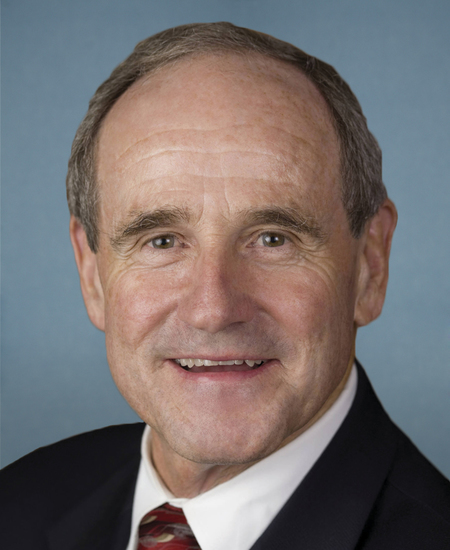
Sen. James E. Risch
Sponsored bills
Maddy summaryS 2895, the Adoption Tax Credit Refundability Act of 2023, makes the federal adoption tax credit refundable. This change directly affects low-income adoptive parents who previously could not claim the credit if they owed no federal income tax. The bill restructures the credit in the tax code to allow families to receive it as a direct payment, even if their tax liability was zero. It applies to taxable years beginning after December 31, 2022, and includes a transitional rule for credits carried forward from prior years. The law does not alter the credit amount or eligibility criteria, only its refundability.
Maddy summaryThe Protecting Access to Recreation with Cash Act (PARC Act) requires all National Park System units that charge entrance fees to accept cash payments. This ensures visitors can pay with cash at every park entrance where a fee is collected, not just through electronic methods. The bill amends existing law to explicitly mandate cash acceptance at all such fee locations. The policy change applies to all national parks, monuments, and other units currently charging entrance fees under federal regulations.
Maddy summaryS 2911, the "Protecting the Right To Keep and Bear Arms Act of 2023," prevents federal officials from using emergency declarations to impose gun control. It bans the President from declaring emergencies under the National Emergencies Act or the Stafford Act for gun control purposes, and stops the Health and Human Services Secretary from declaring public health emergencies for the same reason. The bill also amends the Stafford Act to explicitly prohibit emergency declarations that would restrict firearm possession, sale, or transfer of firearms, ammunition, or related accessories. This directly affects how federal emergency powers can be used during crises, limiting actions that could impact gun rights under the Second Amendment.
Maddy summaryThis bill requires the Secretary of State to notify Congress before entering, renewing, or extending any science and technology agreement with China. It mandates a 30-day waiting period after submitting detailed documentation to congressional committees, including the full agreement text, national security justification, risk assessments of technology transfer, human rights considerations, and monitoring plans. Existing agreements with China must be revoked unless the Secretary submits this notification within 60 days of the bill's enactment. The law directly affects U.S. diplomatic negotiations with China on scientific and technical collaborations.
Maddy summaryThis bill amends the Endangered Species Act to create an exception for sturgeon farmed in the United States. It exempts legally held farmed sturgeon and their offspring from certain ESA requirements (like section 7(a)(2) protections) while they remain in captivity or controlled environments, until intentionally released into the wild. Farmers must be able to demonstrate their sturgeon qualify under this exception and maintain records for the Secretary's review, without duplicating existing regulatory requirements. The bill directly affects U.S. sturgeon aquaculture operations by providing regulatory clarity for their farmed stock.
Maddy summaryThis bill requires the Federal Aviation Administration (FAA) to hire the maximum number of new air traffic controllers each year from 2024 through 2028, based on the training capacity of the FAA Academy. It directly affects the FAA, which must set annual hiring targets aligned with its ability to train new controllers. The law does not change existing hiring rules but mandates that the FAA utilize its full training capacity each year for new controller hires during this period. It excludes certain individuals specified under federal law, but the core provision focuses on maximizing new controller recruitment within available training resources.
Maddy summaryThis bill amends the tax code to exclude certain veterinary student loan repayment or forgiveness assistance from taxable income. It specifically applies to veterinarians participating in programs under the National Agricultural Research, Extension, and Teaching Policy Act of 1977 or similar state programs designed to increase rural veterinary access. The key change clarifies that financial assistance provided through these targeted programs is not considered taxable income for participants. This directly benefits veterinarians in rural areas who use these loan repayment options to practice in underserved communities.
Maddy summarySRES 342 is a symbolic Senate resolution congratulating the Czech Republic and Slovak Republic on the 30th anniversary of their independence as separate nations. It specifically recognizes their substantial support for Ukraine in response to Russia's invasion, including military, humanitarian, and economic aid. The resolution highlights historical ties between the U.S., Czech Republic, and Slovakia, including shared democratic values, NATO cooperation, and their joint commitment to Ukraine. As a commemorative resolution, it does not create new policies or obligations but serves as a formal expression of appreciation for these nations' contributions to transatlantic security.
Maddy summaryThis bill (S 2820) would amend the Antiquities Act to impose time limits on national monument designations. It requires that any new national monument or land reservation under the Act expire 6 months after creation unless Congress passes a new law extending it. If a monument expires without extension, the same land cannot be re-designated as a national monument for 25 years. This directly affects the President’s authority to establish monuments under the Antiquities Act and limits the permanence of such designations without congressional action.