

Vote Outcome Transparency in Elections Act or the VOTE Act This bill establishes certain requirements for counting ballots in federal elections. Specifically, the bill requires the appropriate state or local election official, within one hour after the closure of a polling place on election day, to submit a report to the chief state election official. The report must document (1) the total number of voted ballots in the possession of the state or local official, and (2) the total number of voted ballots that have been tabulated for the election. Within one hour after the closure of polling places on election day, the chief state election official must (1) submit a final report to the chief executive of the state, and (2) make the final report publicly available on a government website. The bill also requires each state and local jurisdiction to ensure that voted ballots delivered by postal mail are postmarked, signed, or otherwise indicated as delivered by the U.S. Postal Service.
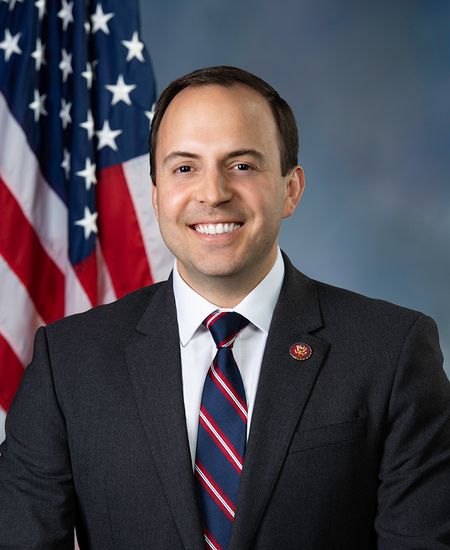
Rep. Lance Gooden
Sponsored bills
Open for Business Act This bill eliminates federal pandemic unemployment compensation. Under current law, this supplementary compensation is available to claimants in participating states until September 6, 2021.
Puppy Protection Act of 2021 This bill requires the Department of Agriculture to expand standards that govern the humane handling, care, treatment, and transportation of animals to include new requirements for commercial dog dealers. Specifically, the standards must require dog dealers to provide to dogs adequate housing, exercise, and veterinary care; appropriate and nutritious food; continuous access to potable water; and meaningful socialization with humans and compatible dogs for at least 30 minutes each day. The standards must also include requirements for breeders to use safe breeding practices and make all reasonable efforts to find humane placement for retired breeding dogs.
Telling Everyone the Location of data Leaving the U.S. Act or the TELL Act This bill requires online sellers or distributors of mobile applications that maintain and store information in China to conspicuously disclose to users that such information is stored in China and whether the information is accessible by the Chinese Communist Party or a Chinese state-owned entity.
Shark Fin Sales Elimination Act of 20 21 This bill addresses the sale of shark fins and the inclusion of rays and skates in the Seafood Traceability Program. The Seafood Traceability Program has data reporting and recordkeeping requirements at the time of entry for imported fish or fish products entered into U.S. commerce. The bill makes it illegal to possess, buy, or sell shark fins or any product containing shark fins, except for certain dogfish fins. A person may possess a shark fin that was lawfully taken consistent with a license or permit under certain circumstances. Penalties are imposed for violations under the Magnuson-Stevens Fishery Conservation and Management Act. The Department of Commerce must revise its regulations to include rays and skates as species that are subject to the Seafood Traceability Program.
This bill provides for the award of Congressional Gold Medals to the U.S. Capitol Police and the Metropolitan Police Department of the District of Columbia in recognition of the law enforcement agencies that protect the U.S. Capitol.
Compensation for Americans Act of 2021 This bill requires the Department of State to negotiate with China to secure compensation for China's distortion of information related to the spread of COVID-19. The bill also contains other China-related provisions, such as those imposing sanctions on certain Chinese individuals and entities. As part of such negotiations, the President shall (1) freeze Chinese assets subject to U.S. jurisdiction; (2) suspend the required review of any proposed acquisition of a U.S. entity by a Chinese entity; (3) impose sanctions on Chinese entities in certain industries, such as artificial intelligence and pharmaceuticals; (4) impose sanctions on various individuals, including Chinese government officials and Chinese citizens responsible for stealing intellectual property from U.S. entities; and (5) prohibit using federal funds to procure goods manufactured or sourced from a Chinese company, if such goods pose a supply chain risk to U.S. national security. The President may terminate such prohibitions and sanctions if China and the United States come to an agreement regarding compensation related to COVID-19. The Department of the Treasury shall establish a public repository with information about entities that are owned, financed, or controlled by the Chinese government. Other provisions in this bill include (1) imposing export controls on telecommunications equipment that would help China carry out censorship or surveillance, (2) banning researchers affiliated with China's military from obtaining visas, and (3) requiring U.S. World Bank representatives to end China's eligibility for World Bank assistance.
Flexible Financing for Rural America Act This bill allows rural utility service providers to submit to the Department of Agriculture (USDA) a request to adjust the interest rate or modify the terms of certain loans. The request shall include a report summarizing how the adjustment or modification will assist the borrower in providing critical utility services to a rural community. Specifically, on receipt of a request, USDA or the Department of the Treasury (in the case of a loan owned by the Federal Financing Bank) must adjust the interest rate on the loan to match certain interest rates for obligations of comparable maturity to the term remaining on the loan (or a higher rate requested by the borrower), and make modifications to the loan terms as necessary to address changes in the financial position of the borrower due to the COVID-19 public health emergency and to promote the financial sustainability of the borrower. In carrying out the adjustments or modifications, USDA or Treasury shall not impose or collect any fee from, or impose any penalty on, a borrower. The bill also provides funding to implement the adjustments and modifications and for the liquidation of residual intragovernmental amounts owed by the Federal Financing Bank in connection with certain loans.
This resolution requires an analytical statement to be included in committee reports on whether, and the extent to which, the increased budget authority, outlays, or revenue produced by the enactment of a bill or joint resolution may have an inflationary impact on prices and costs in the operation of the national economy and the purchasing power of low- and middle-income families.
This bill allows permanent expensing of property used in the mining, reclaiming, or recycling of certain critical minerals and metals within the United States and of nonresidential real property used in mining such minerals and metals. Expensing is the treatment of expenditures as operating costs deductible in full in the current taxable year. The bill allows a new tax deduction for 200% of the cost of purchasing or acquiring such critical minerals and metals extracted from deposits in the United States and a 22% rate of percentage depletion for such critical minerals and metals. The bill requires the Department of the Interior to establish a pilot project grant program for the development of critical minerals and metals in the United States. A grant awarded under such program may not exceed $10 million. In awarding grants, Interior must give priority to projects determined to be economically viable over the long term and must allot not less than 30% of grants funds to the secondary recovery of critical minerals and metals.