Maddy summaryThe Restoring American Freedom Act (HR 3719) prohibits the U.S. Department of State and entities receiving federal funds from it from censoring U.S. citizens' First Amendment-protected speech. It bans using federal funds to create or distribute "censorship tools" without safeguards and prohibits "advertising blacklists" that target citizens based on their speech content. The bill requires the Department to monitor for censorship, correct past misconduct, and notify Congress and affected citizens when such violations occur. This law directly affects Department of State operations and organizations receiving State Department grants or contracts.
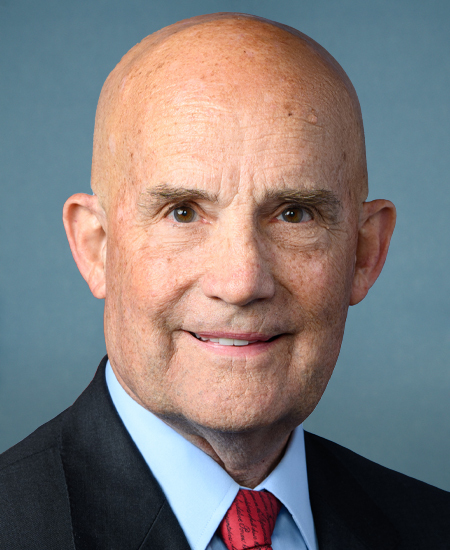
Rep. Keith Self
Sponsored bills
Maddy summaryHR 3688, the Protecting Children from Experimentation Act of 2025, prohibits healthcare professionals from performing or aiding gender transition procedures on minors (under age 18) when the procedure involves interstate commerce (e.g., travel, payments, or communications across state lines). The bill defines "gender transition procedures" broadly to include hormonal treatments and surgeries like puberty blockers, hormone therapy, and genital reconstruction, but excludes medically necessary care for disorders of sex development, precocious puberty, or life-threatening conditions. Healthcare providers violating this prohibition face criminal penalties of up to five years in prison or fines, while minors cannot be prosecuted for receiving such procedures. The law explicitly targets providers, not parents or minors, and includes specific medical exceptions to avoid restricting standard care for qualifying health conditions.
Maddy summaryHR 3677 codifies Executive Order 14292 (signed May 5, 2025) into law, making its provisions about "Improving the Safety and Security of Biological Research" legally binding. The bill does not change the order's content but elevates it to statutory force, requiring federal agencies and biological research institutions to follow its safety and security protocols. This directly affects research facilities, federal agencies managing biological research, and entities subject to the order's requirements. The key mechanism is converting an executive directive into enforceable law, ensuring consistent implementation without altering the original safety standards.
Maddy summaryThis resolution (HRES 433) is a symbolic congressional statement condemning former FBI Director James Comey for a social media post described in the bill as inciting violence against President Trump. It claims Comey's post - featuring the phrase "86-47" with "cool shell formation" - seemed to call for eliminating the president, jeopardizing his security during a foreign trip. The resolution formally condemns this as "indefensible," urges barring Comey from future federal employment, and requests a DOJ investigation into his post. As a non-binding resolution, it does not change laws but reflects the sponsors' position on the matter. The bill focuses on the stated claims within its text, not on verified facts about the post or Comey's intent.
Maddy summaryHR 3523 requires the Treasury Secretary to designate foreign organizations engaged in fraud against U.S. citizens or lawful permanent residents as "Foreign Financial Threat Organizations" (FFTOS). This directly affects foreign entities that deceive U.S. residents into sending money or assets through fraudulent schemes. Key mechanisms include freezing the assets of designated FFTOS, blocking their communication with U.S. residents, and subjecting them to penalties similar to terrorist designations. The bill mandates annual reports to Congress detailing designations, assets seized, and funds returned to victims.
Maddy summaryHR 3463 (COUNTER Act) expands the U.S. military's authority to counter drone threats by allowing the Department of Defense and Coast Guard to neutralize unmanned aircraft systems without being restricted by certain federal laws. It exempts related technology, procedures, and protocols from public disclosure requirements under federal and state laws, and permits military commanders to delegate these actions. The bill applies to both domestic and overseas operations, clarifying that other federal laws do not apply to U.S. military or Coast Guard activities mitigating drone threats abroad. Key changes include broadening legal authority beyond previous restrictions and extending reporting deadlines for related activities.
Maddy summaryThe Conscience Protection Act of 2025 would protect health care providers, facilities, and insurers that choose not to provide, refer for, or cover abortion services. It prohibits discrimination against such entities by the federal government, states, or any recipient of federal funds. The bill creates a private right of action allowing affected individuals or entities to sue for violations of conscience protections. It also establishes administrative enforcement mechanisms through the Department of Health and Human Services' Office for Civil Rights. This would strengthen existing conscience protections like the Weldon Amendment by ensuring entities can maintain religious or moral objections without facing penalties.
Maddy summaryHR 3392, the STOP Screwworms Act, requires the U.S. Department of Agriculture to build modular facilities for rearing sterile New World screwworm flies within 180 days of enactment. These facilities will disperse sterile flies into at-risk agricultural areas - identified based on migratory patterns and suitability for dispersal - to prevent infestations that threaten livestock. The bill authorizes $300 million in funding for construction, operation, and annual reporting to Congress on threat assessments and effectiveness. It directly affects livestock producers and agricultural regions vulnerable to screwworm fly migration, using sterile insect technique as a preventive measure.
Maddy summaryHR 3406, the "Readiness Over Wokeness Act," prohibits individuals with a current diagnosis, history, or symptoms of gender dysphoria, or a history of gender-affirming care (like hormone therapy or surgery), from serving in the U.S. Armed Forces. It requires the military to administratively discharge affected service members, with the key provision that they won’t need to repay educational benefits or fulfill remaining service obligations. The bill also mandates security clearance reinvestigations for those discharged who previously held access to classified information. This policy directly affects transgender and gender-diverse service members who have sought gender-affirming care or received a gender dysphoria diagnosis. The bill focuses on altering military medical standards for service eligibility, not on broader societal or policy changes.
Maddy summaryThis bill phases out enhanced federal funding for Medicaid in states that expanded coverage under the Affordable Care Act. It gradually reduces the federal share of Medicaid costs for states that expanded coverage, decreasing the percentage each year from 2027 through 2034 before returning to standard funding levels after 2035. The change directly affects low-income residents in expansion states who rely on Medicaid, as states will pay more for their coverage over time. Non-expansion states (those that haven't expanded Medicaid) are exempt from these reductions, and expansion states can choose to limit coverage to individuals at or below 100% of the federal poverty line to maintain the higher federal funding rate.