Maddy summaryHR 3179 proposes renaming the Anahuac National Wildlife Refuge in Texas to the "Jocelyn Nungaray National Wildlife Refuge." The bill directly affects the refuge's official name and all federal references to it, including documents and maps. It cites findings about 12-year-old Jocelyn Nungaray's murder in Houston and states the renaming honors her, given her love of animals and local connection. The key mechanism is a straightforward name change for all federal records, with no new policies or funding impacts.
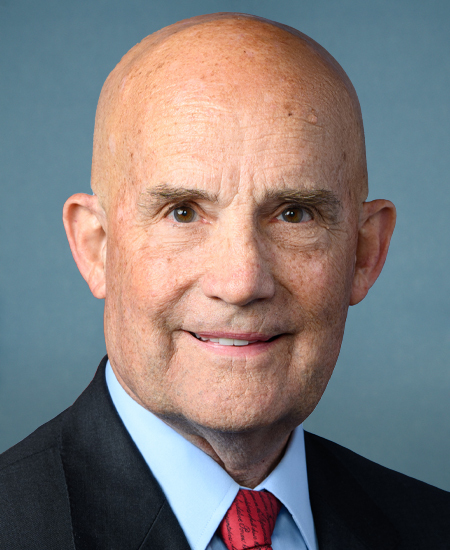
Rep. Keith Self
Sponsored bills
Maddy summaryThis bill directs the Secretary of State to lead negotiations for at least 20 new nuclear cooperation agreements (commonly called "123 agreements") by 2029, while also seeking to renew or renegotiate expiring agreements. It directly affects U.S. nuclear suppliers, investors, and lenders seeking to compete globally for nuclear projects in foreign countries. Key provisions include creating a cross-agency program to remove regulatory barriers for U.S. nuclear exports, expedite international agreements, and promote adherence to global nuclear liability standards. The law mandates specific actions to enhance U.S. competitiveness in the international nuclear energy market, focusing on concrete policy changes like streamlining export processes.
Maddy summaryHR 875 amends immigration law to make non-citizens with DUI convictions inadmissible (preventing entry) and deportable (requiring removal after entry). It applies to any conviction for driving while intoxicated or impaired under state, tribal, or local law, regardless of whether the offense is classified as a misdemeanor or felony. The bill directly affects non-citizens convicted of driving under the influence of alcohol or drugs, including impairment from other substances. This policy change expands immigration consequences for DUI offenses beyond current standards.
Maddy summaryHR 4172, the OCED Elimination Act, abolishes the Office of Clean Energy Demonstrations (OCED) within the U.S. Department of Energy. It repeals Section 41201 of the Infrastructure Investment and Jobs Act (42 U.S.C. 18861), which previously authorized the OCED's operations. This bill directly affects the Department of Energy by eliminating a specific office and its associated funding mechanisms for clean energy demonstration projects. The change removes a dedicated structure for advancing clean energy demonstrations but does not alter broader clean energy funding programs. As a procedural bill, it focuses solely on the elimination of the office and its related statutory provision.
Maddy summaryHR 4148 disapproves a Department of Labor regulation (88 Fed. Reg. 57526) that would have updated wage requirements under the Davis-Bacon Act for federal construction projects. The bill states this regulation "shall have no force or effect," preventing federal contractors from being subject to the proposed changes. This is a procedural measure targeting a specific regulatory update, directly affecting contractors working on federally funded construction projects.
Maddy summaryThe LEDGER Act (HR 4091) requires the Treasury Department to create a system tracking every government payment within 180 days of enactment. It mandates that all federal departments, agencies, and branches (executive, legislative, judicial) must report disbursements from every funding source, including how long funds remain available for spending. This system will detail each payment's origin, recipient, and timing across all government accounts. The bill directly affects all federal spending entities by standardizing expenditure tracking previously handled inconsistently.
Maddy summaryThis bill mandates a 90-day government review to determine if CAIR (Council on American-Islamic Relations) meets criteria for designation as a foreign terrorist organization under U.S. law. The review, led by the Secretary of State with input from the Attorney General and Treasury Secretary, would assess CAIR's ties to terrorism based on findings cited in the bill, including alleged connections to Hamas, the Holy Land Foundation, and individuals convicted of terrorism-related offenses. The bill does not immediately designate CAIR as a terrorist group but requires a formal evaluation and a congressional report on the outcome. This process directly affects CAIR by triggering an official government assessment of its status, though no immediate action is taken by the bill itself.
Maddy summaryHR 4081, the Foreign Adversary Federal Offense Act of 2025, increases penalties for economic espionage and defense information offenses committed to benefit nations designated as adversaries by the U.S. government. It adds mandatory minimum 10-year prison terms (up to 20 years for severe harm) and fines up to $5 million for individuals, while imposing organizational fines of up to $20 million or 5 times the value of stolen trade secrets. The law specifically targets offenses involving critical infrastructure data - such as security vulnerabilities of systems covered under the USA PATRIOT Act - that could cause significant harm if exploited. This directly affects individuals and organizations convicted of sharing U.S. economic or defense secrets with foreign adversaries.
Maddy summaryHR 4065, the "Bring the Space Shuttle Home Act," directs NASA to move the Discovery space shuttle from the Smithsonian’s Udvar Hazy Center near Washington, DC, to Houston’s Johnson Space Center within 18 months. It requires NASA and the Smithsonian to jointly develop a transfer plan with cost and timeline details, submit it to Congress within 90 days, and ensure the shuttle is displayed publicly for STEM education within 5 miles of Johnson Space Center. After NASA takes title one year post-transfer, the shuttle must be handed to a nonprofit entity for continued public exhibition focused on science and technology learning. The bill affects NASA, the Smithsonian, and Houston’s educational community through this physical relocation and exhibition mandate.
Maddy summaryHR 3998, the Firearms Congressional Notification Modernization Act, raises the financial threshold requiring congressional notification for certain firearm exports. It modifies the Arms Export Control Act to increase the notice requirement from $1 million to $4 million for defense articles classified as Category I firearms under the U.S. Munitions List. This change directly affects firearm exporters by reducing the number of transactions needing prior congressional review. The bill makes a specific procedural update to the existing notification process without altering export regulations or policy.