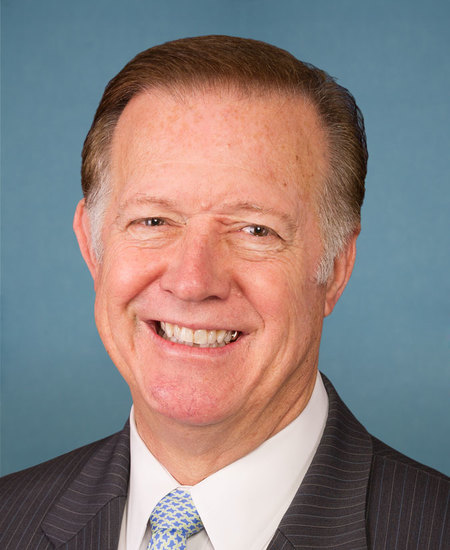
Photo of Randy K. Weber, Sr.
R United States House · District 14 · Texas On the 2026 ballot

Rep. Randy K. Weber, Sr.

Compare
Total votes
2,837
all sessions
Attendance
98%
68 missed
Near the chamber average
With party
92%
of cast votes
Near the chamber average
Bipartisan score
4%
crosses aisle rarely
Near the chamber average
Sponsored
1,847
bills & resolutions
Higher than 84% of chamber peers
Committees
6
assignments
1,847 bills and resolutions

Sponsored bills

Total
1,847
Primary
60
Co-sponsor
1,787
This page
1,847
matching current filters
Co-sponsor HR 9337
In committee · Utah House · Co-sponsor
Hydropower Licensing Affordability Act

Maddy summaryThe Hydropower Licensing Affordability Act amends the Federal Power Act to modify how federal licenses for hydropower projects are issued. Specifically, it requires that license conditions include measures to reasonably mitigate direct adverse effects on federal reservations and fish populations within applicable river systems. These changes aim to ensure that new or existing hydropower projects address environmental impacts on protected lands and aquatic species before a license is granted. The bill directly affects hydropower project developers and federal agencies responsible for licensing and environmental oversight.

In committee Jun 18, 2026 1 co-sponsor
Co-sponsor HR 425
In committee · Utah House · Co-sponsor
Repealing Big Brother Overreach Act

Repealing Big Brother Overreach Act This bill repeals the Corporate Transparency Act. The act requires existing companies and newly created companies to report beneficial ownership information to the Department of the Treasury’s Financial Crimes Enforcement Network for purposes of addressing the financing of terrorism and money laundering.

In committee Jun 18, 2026 1 co-sponsor
Primary HR 9325
In committee · Utah House · Lead sponsor
Lone Star Coastal National Recreation Area Act

Maddy summaryThis bill establishes the Lone Star Coastal National Recreation Area as a unit of the National Park System to protect the natural, cultural, and recreational resources along the Texas Gulf Coast. The area would be created only after the Secretary of the Interior acquires sufficient land through voluntary means such as donations, purchases from willing sellers, or exchanges, with no use of condemnation. A new partnership involving federal, state, local, and private stakeholders will develop a management plan that coordinates activities across both federally owned lands and participating private or state lands. The legislation ensures that private landowners retain their rights and that existing economic activities like hunting, fishing, and oil and gas operations continue without new regulations, while allowing the National Park Service to provide technical assistance and interpretive services.

In committee Jun 15, 2026 0 co-sponsors
Primary HR 9308
In committee · Utah House · Lead sponsor
Tax Relief for First Responder Beneficiaries Act

Maddy summaryThe Tax Relief for First Responder Beneficiaries Act expands tax benefits for families of public safety officers who die in the line of duty. It allows surviving beneficiaries, not just dependents, to receive certain compensation without paying federal income tax, and it extends survivor annuity benefits to children or beneficiaries of life insurance policies. These changes apply to taxable years starting after December 31, 2022, ensuring broader financial support for the families of fallen first responders.

In committee Jun 11, 2026 0 co-sponsors
Co-sponsor HR 9298
In committee · Utah House · Co-sponsor
Stopping Harmful and Outrageous Torts Act

Maddy summaryThis bill, known as the Stopping Harmful and Outrageous Torts Act, expands legal protections for firearm manufacturers and sellers by strengthening their immunity from civil lawsuits. It requires courts to immediately dismiss any pending cases against these companies that are based on the criminal or unlawful misuse of a gun by a third party, while also clarifying that sellers are not liable for negligence in entrusting products to others. The legislation further restricts who can file such suits by prohibiting foreign governments from bringing these claims and adding a specific exception for victims under the age of 17, though it maintains immunity for cases involving design or manufacturing defects. Additionally, the bill allows companies to move these cases to federal court and grants them the right to appeal dismissal orders immediately, along with the ability to recover legal fees if they win. Finally, it preempts state and local laws that attempt to impose liability on these entities for the same types of misuse-related harms.

In committee Jun 11, 2026 1 co-sponsor
Co-sponsor HR 9154
In committee · Utah House · Co-sponsor
SHRIMP Act of 2026

Maddy summaryThe SHRIMP Act of 2026 directs the Secretary of Commerce to create a testing method for identifying the country of origin for shrimp, covering raw, cooked, and prepared forms. This new methodology must include chemical analysis, be usable in a portable field kit, and minimize testing time to help law enforcement combat illegal fishing and improve food safety. Within 18 months of enactment, officials must develop this approach, and within two years, submit a report detailing the method and a plan to put it into practice. The law specifically applies to shrimp harvested, cultivated, or imported into the United States for human consumption.

In committee Jun 4, 2026 1 co-sponsor
Co-sponsor HR 9147
In committee · Utah House · Co-sponsor
Abraham Accords Expansion Act of 2026

Maddy summaryThe Abraham Accords Expansion Act of 2026 updates the legal framework for the Special Envoy to include Central Asia and the Caucasus in normalization efforts alongside existing regions. This change formally recognizes Kazakhstan as the first Central Asian nation to join the Abraham Accords and defines specific countries within the Caucasus and Central Asia regions. The bill requires the Special Envoy to coordinate with other federal agencies like Defense and Commerce while implementing these goals using existing authorities without requesting new funding. Additionally, the act allows the Special Envoy to appoint a Deputy Special Envoy with relevant regional expertise to assist in these expanded diplomatic activities.

In committee Jun 4, 2026 1 co-sponsor
Co-sponsor HR 9146
In committee · Utah House · Co-sponsor
Millstone Act

Maddy summaryThe Millstone Act amends federal criminal laws to increase penalties for specific sexual offenses involving violence, exploitation, or minors. Directly affecting individuals charged with these crimes, the bill mandates that they face the possibility of the death penalty or life imprisonment alongside fines. Key provisions include expanding the death penalty for acts such as female genital mutilation, civil rights offenses involving sexual misconduct, sex trafficking of children, and the production or distribution of child pornography. By removing previous caps on sentencing, the legislation ensures that these serious violations can result in the most severe punishments allowed under federal law.

In committee Jun 4, 2026 1 co-sponsor
Co-sponsor HRES 1338
In committee · Utah House · Co-sponsor
Supporting the designation of June as Family Month.

Maddy summaryThis resolution proposes to officially designate June as "Family Month" to highlight the importance of the traditional nuclear family. It also calls for the House of Representatives to stop recognizing Pride Month, which it argues has replaced the celebration of family values. The bill is sponsored by a group of representatives who believe that strengthening traditional marriage is essential for societal stability and population growth.

In committee Jun 3, 2026 1 co-sponsor
Co-sponsor HR 175
In committee · Utah House · Co-sponsor
Deport Alien Gang Members Act

Maddy summaryThis bill creates new grounds for deporting non-citizens who are members of or associated with criminal gangs. It defines a "criminal gang" as a group of five or more people whose primary purpose is committing serious crimes like drug offenses, violence, trafficking, or weapons violations. The Secretary of Homeland Security can designate groups as criminal gangs after consultation with the Attorney General, and these designations make gang members ineligible for asylum, temporary protected status, parole, and other immigration benefits. The bill also establishes procedures for reviewing and revoking these designations, with limited judicial review options.

In committee Jun 3, 2026 1 co-sponsor
Showing 61 to 70 of 1,847 bills
Previous 1 … 6 7 8 … 185 Next