United States-Israel PTSD Collaborative Research Act This bill establishes a grant program for collaborative efforts between the United States and Israel to advance research on post-traumatic stress disorders. The Department of Defense, in coordination with the Department of Veterans Affairs and the Department of State, shall award grants to eligible academic institutions or nonprofit entities in the United States. Work shall be conducted by the eligible entity and an entity in Israel under a joint research agreement.
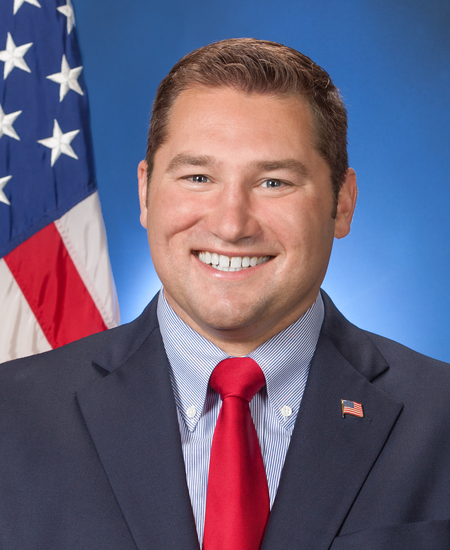
Rep. Guy Reschenthaler
Sponsored bills
Coronavirus Assistance for American Families Act This bill provides individual taxpayers with additional recovery rebates in 2021. The amount of such rebates is $1,400 per individual ($2,800 for married individuals filing joint tax returns) and $1,400 for each dependent of the taxpayer. The rebate is phased out for individuals whose adjusted gross income exceeds $75,000 ($150,000 for joint returns). To be eligible for the rebate, taxpayers must include a valid Social Security account number on their tax returns. The bill directs the Department of the Treasury to conduct a public awareness campaign to inform taxpayers of the availability of the rebate.
Giving Increased Variety to Ensure Milk Into the Lives of Kids Act or the GIVE MILK Act This bill revises the Special Supplemental Nutrition Program for Women, Infants, and Children (WIC) to allow WIC participants (or the parent or guardian of such participants) to elect to be issued nonfat milk, 1% low-fat milk, 2% reduced-fat milk, or whole milk.
Flood Resiliency and Taxpayer Savings Act of 2021 This bill requires federal agencies to take specified actions to evaluate and mitigate the risk of floods to federally funded projects. Specifically, the bill directs federal agencies to evaluate the potential for flooding throughout the planned lifetime or duration of a federally funded project to reduce the risk of financial and property losses and prevent the disruption of critical services during floods. Further, federal agencies must consider certain data and information (e.g., the most recent flood insurance rate map published by the Federal Emergency Management Agency) when evaluating whether a federally funded project is in a floodplain. If the agency determines the data and information are not adequate for understanding the flood risks to the project, then the agency must use an alternative design standard outlined by the bill. Finally, the bill directs the Federal Interagency Floodplain Management Task Force to issue guidelines for federal agencies related to flood risk management.
Veteran Overmedication and Suicide Prevention Act of 2021 This bill requires the Department of Veterans Affairs (VA) to contract with the National Academies of Sciences, Engineering, and Medicine to report on the deaths of covered veterans who died by suicide during the last five years, regardless of whether information relating to such deaths has been reported by the Centers for Disease Control and Prevention. A covered veteran is any veteran who received VA hospital care or medical services during the five-year period preceding the veteran's death. Among other elements, the report shall include the total number of covered veterans who died by suicide, violent death, or accidental death, as well as certain demographic information.
This resolution expresses the opposition of the House of Representatives to any plans by the Department of Defense to deliver COVID-19 (i.e., coronavirus disease 2019) vaccines to prisoners held at United States Naval Station, Guantanamo Bay, Cuba, until all Americans have had the opportunity to be vaccinated. Additionally, the resolution asserts that the government should prioritize U.S. citizens for COVID-19 vaccinations.
Reopen Schools Act This bill requires a local educational agency (LEA) to reopen its elementary and secondary schools as a condition for receiving certain supplemental education emergency relief funding. Specifically, an LEA must provide in-person instruction to at least 50% of its students in order to receive the full funding. An LEA that provides in-person instruction to at least some of its students shall have its funding reduced on a pro rata basis.
USPS Fairness Act This bill repeals the requirement that the U.S. Postal Service annually prepay future retirement health benefits.
Personalized Care Act of 2021 This bill revises provisions relating to health savings accounts (HSAs), including to redefine eligible individual for HSA purposes to allow increased participation in HSAs, increase the limit on contributions to HSAs, permit the payment of health insurance premiums from HSAs, include within the definition of qualified medical expenses periodic fees paid for medical services and amounts paid by a member of a health care sharing ministry, treat periodic provider fees as deductible medical expenses, and lower the 20% penalty for nonqualified distributions from HSAs to 10%.
Second Chance at Life Act of 2021 This bill requires abortion providers to disclose information about the possibility of reversing a medication abortion. This is a procedure that uses a medication regimen to terminate a pregnancy, typically with a two-drug protocol. Providers must inform patients that it may be possible to reverse the effects of a medication abortion after taking the first drug. They must also let patients know that more information and assistance is available on the Department of Health and Human Services (HHS) website. At least 24 hours before the procedure, the provider must share this information with the patient in person or by telephone. The provider must also include the information in written discharge instructions after the first drug is dispensed. The bill sets out an exception to these notification requirements when an abortion is necessary to resolve a physical injury or condition that threatens the life of the woman. The provider must document the circumstances giving rise to the exception in the patient's medical file. Furthermore, providers must post signs with this information in their offices or facilities, and HHS must maintain information about reversing medication abortions on its website.