Maddy summaryThe SLOT Act of 2025 raises the tax reporting threshold for slot machine winnings from $1,200 to $5,000 per play, meaning casinos no longer need to report winnings under this amount to the IRS. It directly affects slot machine players who win less than $5,000 in a single play and casino operators who previously filed tax forms for smaller wins. The threshold will automatically increase annually after 2026 based on inflation, rounded to the nearest $100. The change applies to winnings occurring after December 31, 2025.
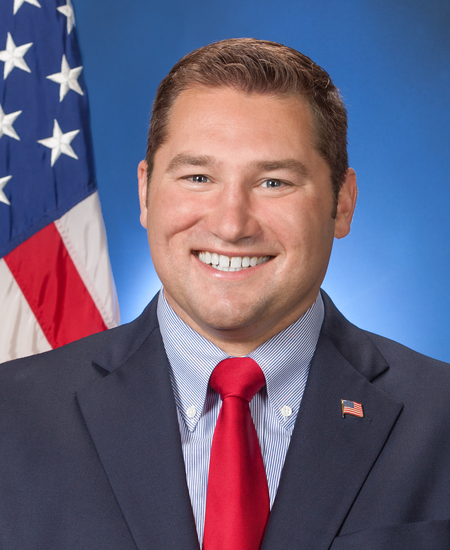
Rep. Guy Reschenthaler
Sponsored bills
Maddy summaryHR 1881, the Methane Reduction and Economic Growth Act, creates a new tax credit for businesses that capture methane emissions from mining operations. It directly affects mining facilities (including underground, abandoned, or surface mines) that install methane capture equipment and capture at least 2,500 metric tons of methane annually. The bill provides a tax credit by modifying existing carbon capture tax rules to apply specifically to methane, requiring captured methane to be used for energy (e.g., in pipelines meeting safety standards or for industrial heat) with minimal atmospheric release. The credit applies to methane captured after December 2024, aiming to incentivize reducing methane emissions from mining sources.
Federal Firearms Licensee Protection Act of 2025 This bill modifies criminal penalties for an offense involving the theft of a firearm from a licensed importer, manufacturer, or dealer, or from their business premises. Specifically, the bill does the following: increases from 10 to 20 years the maximum prison term, and creates a 3- or 5-year mandatory minimum prison term for an offense that occurs during the commission of a burglary or robbery. An attempt to commit an offense is subject to the same penalties as a substantive offense.
Maddy summaryThis bill awards a Congressional Gold Medal to the 761st Tank Battalion (known as the "Black Panthers"), the first predominantly Black armored unit in World War II's European Theater. It recognizes their combat service from 1944-1946, including key roles in the Battle of the Bulge and breaking the Siegfried Line, despite facing racial prejudice during and after the war. The medal will be displayed at the National Museum of African American History and Culture, with bronze duplicates available for sale to cover costs. The bill commemorates the battalion's 130,000 enemy casualties inflicted, 50% casualty rate, and their 1978 Presidential Unit Citation. It does not create new laws or affect current policies.
Maddy summaryHR 1556, "Eric’s Law," changes federal jury procedures in capital sentencing cases. It requires a new jury to be impaneled if the original jury cannot unanimously recommend a sentence (death, life without parole, or a lesser sentence) for a defendant convicted of a capital offense. If the new jury also fails to reach unanimity, the judge must impose a sentence other than death. This law directly affects federal defendants in capital cases where juries deadlock on sentencing recommendations. The policy change ensures that unresolved sentencing deadlocks do not prevent a final sentence from being imposed.
Dentist and Optometric Care Access Act of 2025 or the DOC Access Act of 20 25 This bill prohibits private health insurance plans from setting rates for items and services, except for dental cleanings, provided by a doctor of optometry, of dental surgery, or of dental medicine (or an employer of such a doctor) for which the plan does not pay a substantial amount. Additionally, an agreement between a plan and such a doctor for limited scope dental or vision benefits may last longer than two years only with the prior acceptance of the doctor for each term extension. Plans also may not restrict such a doctor's choice of laboratories or suppliers. Such doctors may elect to waive the application of the payment amount and choice of laboratories provisions of this bill. The bill does not supersede state laws regarding health insurers and dental or vision benefit plans.
Maddy summaryThe Rare Earth Magnet Security Act of 2025 creates a tax credit for U.S. manufacturers producing rare earth magnets domestically. The credit pays $20 per kilogram for magnets with less than 90% of component materials sourced in the U.S., and $30 per kilogram if at least 90% of materials are domestically produced. The bill restricts the credit for magnets using components from "non-allied foreign nations" (with a temporary exception for certain materials until 2027) and phases out the credit after 2034 (reducing to 70% in 2035, 35% in 2036-2037, and 0% after 2037). The credit applies to taxable years beginning after December 31, 2024.
Maddy summaryHR 1440, the Discriminatory Gaming Tax Repeal Act of 2025, repeals Chapter 35 of the Internal Revenue Code, which imposed excise taxes on wagering activities. This repeal directly affects gambling businesses and individuals subject to these taxes, removing the federal tax obligation. The change takes effect for taxable years beginning after December 31, 2024, eliminating the tax requirement for future reporting periods. The bill focuses solely on repealing the existing tax provision without altering other gambling regulations.
Maddy summaryHR 1410 expands access to mental health care for 9/11 responders and survivors by allowing licensed mental health providers (not just physicians) to conduct initial health evaluations and certifications under the World Trade Center Health Program. It adjusts the program’s funding formula to account for changing enrollment numbers by linking annual funding to the previous year’s enrollment ratio, and clarifies that deceased individuals are excluded from enrollment counts. The bill also extends the timeframe for adding new health conditions to the program’s list and requires a 2028 report assessing long-term funding needs through 2090. These changes aim to streamline eligibility, improve care access, and ensure sustainable funding for the program.
This concurrent resolution declares that Congress should not impose any new performance fee, tax, royalty, or other charge relating to the public performance of sound recordings on a local radio station for broadcasting sound recordings over the air, or on any business for such public performance of sound recordings.