

Maddy summaryHR 648, the Agriculture Export Promotion Act of 2023, increases federal funding for key USDA export promotion programs to boost U.S. agricultural sales abroad. It raises annual funding for the Market Access Program from $200 million to $400 million and for the Foreign Market Development Cooperator Program from $34.5 million to $69 million, effective 2024-2029. These changes directly benefit U.S. farmers and agricultural businesses exporting commodities like soybeans, beef, and dairy by expanding their access to international markets. The bill aims to counter competitive disadvantages as foreign competitors grow their export programs faster than U.S. funding has kept pace. This represents a significant funding adjustment to address years of stagnant investment in these programs.
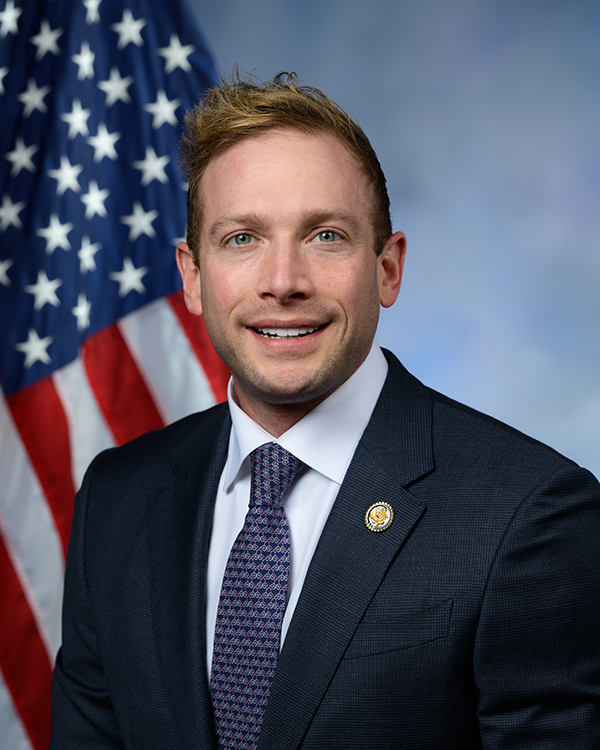
Rep. Max L. Miller
Sponsored bills
Maddy summaryThis bill would prohibit the FDA from approving new abortion medications or investigational uses of existing ones. It would restrict currently approved abortion drugs to in-person administration only in clinics, hospitals, or medical offices by certified providers who can handle complications like ectopic pregnancy or severe bleeding. The law requires detailed adverse event reporting (excluding patient identifiers) to the FDA by both manufacturers and prescribers, and mandates provider certification covering pregnancy assessment, surgical intervention capabilities, and patient safety documentation. These provisions apply directly to healthcare providers, patients seeking medication abortions, and manufacturers of abortion drugs.
Maddy summaryThe Educational Choice for Children Act creates tax credits for individuals and corporations that contribute to scholarship granting organizations providing education scholarships. Individuals can claim a credit up to $5,000 or 10% of their income, while corporations can claim up to 5% of taxable income. The scholarships are available to students from households with income up to 300% of the area median income, and can be used for private school tuition, tutoring, and other educational expenses at elementary and secondary schools. The bill includes strict requirements for scholarship organizations to verify income, conduct audits, and prevent misuse of funds, while also prohibiting government control over these organizations and protecting private and religious schools from discrimination in the program. It establishes a $10 billion annual cap on the total tax credits available.
Maddy summaryHR 506, the HARM Act, requires the U.S. Secretary of State to designate the Wagner Group as a foreign terrorist organization under immigration law within 90 days of the bill's enactment. This designation would directly affect the Wagner Group and its affiliated entities, subjecting them to sanctions under U.S. law. The bill mandates that the designation apply to any successor or affiliated groups engaged in activities against U.S. interests, including operations in Ukraine, Africa, and the Middle East. It also requires the Secretary of State to submit an annual report on the Wagner Group's international activities to specific congressional committees. The bill focuses on the legal process for designation, not on outcomes or advocacy.
Maddy summaryThis bill renames a U.S. Postal Service facility at 620 East Pecan Boulevard in McAllen, Texas, as the "Agent Raul H. Gonzalez Jr. Memorial Post Office." It updates all federal references to the location to reflect this new name. The bill has no policy impact - it is purely a ceremonial designation honoring an individual. No other provisions or affected groups are involved.
Standardizing Thresholds Of Penalties for Fentanyl Act or the STOP Fentanyl Act This bill reduces the drug quantity thresholds that trigger a mandatory minimum prison term for a defendant who manufactures, distributes, imports, exports, or possesses with intent to distribute fentanyl. The bill also creates enhanced criminal penalties for certain violations involving fentanyl that was imported along the U.S.-Mexico border. Specifically, the bill reduces from 400 to 5 grams the fentanyl quantity and from 100 to 0.05 grams the fentanyl analogue quantity that trigger a mandatory minimum prison term for high-level first-time or repeat offenders. It also reduces from 40 to 0.5 grams the fentanyl quantity and from 10 to 0.005 grams the fentanyl analogue quantity that trigger a mandatory minimum prison term for low-level first-time or repeat offenders. Additionally, the bill creates enhanced mandatory minimum prison terms for importing or exporting fentanyl that was imported along the U.S.-Mexico border.
Maddy summaryHJRES 8 proposes a constitutional amendment to permanently set the Supreme Court's size at nine justices. The bill would require any future changes to the Court's composition to follow this specific number, locking in the current structure. It does not alter the existing Court size (which has been nine since 1869) but aims to prevent future adjustments through legislative action. The amendment must be ratified by three-fourths of state legislatures within seven years to take effect. This is a procedural proposal focused on constitutional structure, not a direct policy affecting citizens or programs.
WHO Withdrawal Act This bill requires the President to immediately withdraw the United States from the World Health Organization (WHO) and prohibits using any federal funds to provide for U.S. participation in the WHO. The bill also repeals the 1948 act authorizing the United States to join the WHO.
Maddy summaryHR 53 (FIND Act) requires federal contractors to certify they do not refuse to work with firearm manufacturers, dealers, ammunition sellers, or related safety device companies based on bias. It prohibits main contractors from awarding subcontracts exceeding 10% of a contract’s value to entities that fail to make this certification, and bans efforts to circumvent the rule through complex subcontract tiers. The law applies to all federal procurement contracts, directly affecting businesses bidding on government work. Violations risk contract termination and suspension from future government contracts.