

Maddy summaryHR 5811, the Public Safety and Community Support Act, allows federal Byrne JAG funds to support law enforcement-assisted deflection and diversion programs. These programs connect individuals with substance use or mental health disorders to treatment instead of arresting them for low-level offenses, using six defined pathways like "warm handoffs" by first responders. The bill requires states and local governments receiving grants to report program outcomes by race and gender, track reincarceration rates, and ensure racial equity. It also authorizes $30 million for a 5-year technical assistance grant to develop best practices and training for implementing these programs nationwide. This directly affects local law enforcement agencies, community treatment providers, and people facing arrest for non-violent offenses linked to addiction or mental health.
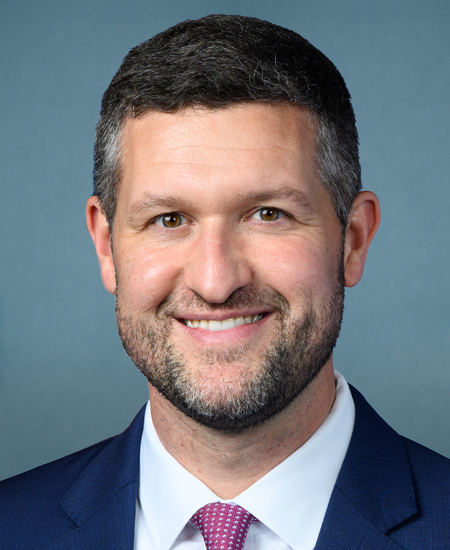
Rep. Patrick Ryan
Sponsored bills
Water Access Act This bill provides FY2024 appropriations to the Department of Health and Human Services for the Low-Income Household Water Assistance Program. The program provides grants to assist low-income households with water and wastewater bills.
Maddy summaryHR 5730, the Military Academy Honor and Conduct Act, requires the Government Accountability Office (GAO) to submit a report by February 1, 2024, updating a 1995 study on honor systems at the Service Academies (West Point, Annapolis, etc.). The report must compare each academy's honor codes, punishments, due process protections, and how misconduct affects service records, while also measuring cadet/midshipman perceptions and recommending improvements. This bill does not change existing policies but mandates a comprehensive review of how military academies handle conduct and honor matters. It directly affects the Service Academies' administrative processes and their reporting to Congress.
Maddy summaryHR 5731 requires the Secretary of Defense to submit a detailed report to Congress by December 1, 2023, about illicit drug use and overdoses among active-duty military members. The report must include statistics on drug use and fentanyl-related overdoses, details on drug testing methods and their effectiveness, policies preventing retaliation for seeking treatment, demographic data of affected service members, shortcomings in counternarcotics programs, and the availability and wait times for addiction treatment across the military branches. This bill directly affects active-duty service members by mandating transparency around drug use and treatment access, and it targets the Department of Defense to provide specific, data-driven insights. The legislation focuses solely on establishing a reporting mechanism, not on changing current policies or treatment programs.
Maddy summaryThis bill encourages colleges and universities to develop evidence-based campus mental health and suicide prevention plans, without creating new mandatory requirements. It directs the Education Secretary to coordinate with the Health Secretary and align efforts with existing federal programs like the 21st Century Cures Act and Garrett Lee Smith Act. The Secretary must report to Congress on these efforts within one and three years of enactment. The bill focuses on voluntary collaboration with experts and existing initiatives, not regulatory changes.
Maddy summaryThis bill extends the funding period for the Distance Learning and Telemedicine Program from 2023 to 2028. It directly affects rural communities by ensuring continued access to telehealth services and educational programs through this existing federal initiative. The key provision is a simple amendment to the program's authorization date in existing law, without creating new requirements or altering the program's scope. The change ensures uninterrupted support for rural healthcare and education providers relying on this funding.
Maddy summaryThis bill amends the Higher Education Act to require all U.S. colleges and universities receiving federal financial aid to create detailed anti-harassment policies covering physical, online, and institution-sponsored settings. It mandates policies prohibiting harassment based on race, sex (including sexual orientation and gender identity), disability, religion, and other protected characteristics, including harassment via institutional email, computers, or electronic messaging. The bill also establishes a $50 million annual grant program to fund colleges developing prevention programs, victim support services, and training for students and staff on recognizing and addressing harassment. These policies and grants must comply with existing civil rights laws like Title IX but add specific requirements for reporting and prevention.
Maddy summaryHRES 698 designates the week of September 18-24, 2023, as "Rail Safety Week" in the United States. It expresses congressional support for efforts to reduce highway-rail grade crossing incidents, fatalities, and injuries - directly affecting drivers, pedestrians, and communities near railroad crossings. The resolution encourages public education on rail safety, references existing initiatives like Operation Lifesaver, and cites 2022 data showing 274 deaths at grade crossings. It has no binding effect but promotes awareness through symbolic recognition of ongoing safety campaigns. (HRES 698, introduced September 18, 2023)
Saving Our Mainstreet American Locations for Leisure and Shopping Act of 2023 This bill excludes from gross income, for income tax purposes, income attributable to certain discharges of commercial or retail indebtedness secured by real property.
Maddy summaryHR 5566, the *Supreme Court Tenure Establishment and Retirement Modernization Act of 2023*, establishes an 18-year term limit for all Supreme Court justices. It requires the President to nominate one new justice every two years (during first and third years after presidential elections), with Senate confirmation within 90 days, and prohibits lifetime appointments. Current justices are automatically retired in order of service length as new justices are appointed, while retired justices may temporarily fill vacancies through a randomized process. The bill directly affects all sitting and future Supreme Court justices by restructuring appointments and retirement timelines.