Maddy summaryHRES 1073 is a non-binding resolution designating February 21-28, 2026, as "National FFA Week" to recognize the National Future Farmers of America (FFA) Organization’s role in developing agricultural education leaders and to celebrate the 50th anniversary of Alaska’s State FFA Association. It does not create new laws or affect any specific groups or policies; instead, it formally expresses the House’s support for this commemorative week. The resolution highlights FFA’s mission to prepare students for leadership and careers in agriculture, food, and natural resources. As a symbolic gesture, it has no direct legislative or financial impact on constituents.
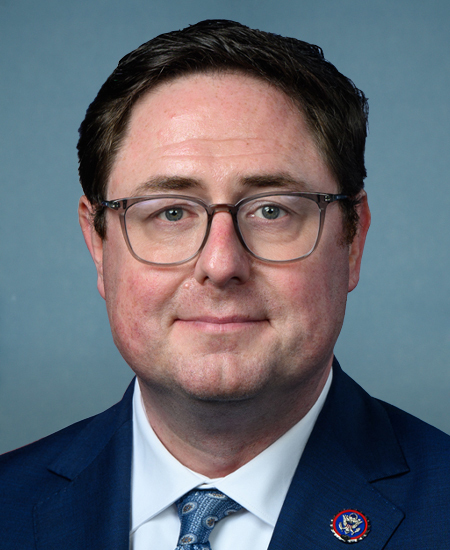
Rep. Mike Flood
Sponsored bills
Maddy summaryThe SCAM Act requires online platforms that display paid advertisements (like social media sites) to verify advertiser identities, implement scam detection systems, and remove fraudulent ads within 24 hours of confirmation. It directly affects platforms that accept payment for ads, targeting scams such as fake giveaways, romance scams, and AI impersonations that cost consumers $195 billion in 2024 (per FTC data). Key mechanisms include mandatory identity checks for advertisers, active monitoring systems, and a 72-hour investigation window for reported scams. The law aims to reduce fraud by shifting responsibility to platforms, with enforcement by the FTC and state attorneys general.
Maddy summaryHR 7409, the Defend Rural Health Act of 2026, prevents rural hospitals from being reclassified as urban Medicare facilities after October 1, 2029, unless they met specific criteria before October 1, 2026. The bill amends Medicare rules to block hospitals from retaining rural status beyond 2029, even if they applied for reclassification earlier. It also prohibits the Medicare Geographic Classification Review Board from approving new reclassification requests for hospitals already treated as rural under current rules for fiscal years starting after October 1, 2026. This directly affects rural hospitals that rely on higher Medicare payments tied to their geographic classification. The law aims to maintain stable funding for rural hospitals by restricting future reclassifications.
Maddy summaryHRES 1036 is a symbolic House resolution calling for the annual designation of the first Saturday after the Spring Equinox as "National Day of Play." It does not create new laws or funding but encourages Americans to reduce screen time and engage in community activities. The resolution cites health impacts of loneliness and excessive device use, emphasizing play’s role in improving social connections, mental well-being, and physical health. It specifically urges people to "put their electronics down" and participate in local events on this designated day, with the first observance set for March 21, 2026. The resolution directly affects all U.S. residents by promoting a voluntary annual practice to strengthen community bonds.
Maddy summaryHR 6547, the Least Cost Exception Act, modifies the Federal Deposit Insurance Act to allow the FDIC (as the "Corporation") to select non-least-cost resolution methods for failing banks if certain conditions are met. It directly affects the FDIC, the Deposit Insurance Fund, and major global banking institutions by permitting exceptions to standard cost-minimization rules. Key provisions require the FDIC to determine that an alternative method limits further concentration among large banks, comply with specific cost and risk thresholds, and pay the Fund for cost differences over at least five years. The bill mandates annual reporting to Congress on such decisions and defines "covered alternatives" as the least-cost method involving sales to global systemically important banks.
Maddy summaryHRES 1022 is a non-binding congressional resolution expressing support for Catholic schools and celebrating the 52nd annual National Catholic Schools Week (January 25-31, 2026). It recognizes Catholic schools' contributions to education, noting their role in serving 1.7 million students across diverse backgrounds, with high graduation rates and community-focused values. The resolution specifically supports the week's goals, highlights the National Catholic Educational Association and U.S. Conference of Catholic Bishops' partnership, and applauds the 2026 theme "Catholic Schools: United in Faith and Community." It does not create new policies, allocate funding, or impose obligations.
Maddy summaryHRES 375 is a symbolic resolution designating May 2025 as "Renewable Fuels Month" to recognize renewable fuels' role in reducing carbon emissions, lowering consumer fuel prices, supporting rural economies, and decreasing reliance on foreign energy sources. The resolution expresses the House's support for this designation without creating new laws or funding. It highlights renewable fuels' economic contributions (e.g., jobs, GDP impact) and environmental benefits as context for the recognition, but does not alter existing policies. As a non-binding resolution, it has no direct legal effect on consumers, industries, or government programs.
This bill designates a portion of Interstate Route 680 in Omaha, Nebraska, as the Hal Daub Freeway. Harold John Daub Jr. served in the House of Representatives from 1981-1989 and as the mayor of Omaha, Nebraska, from 1995-2001.
Maddy summaryThe Jumpstart Savings Act creates a new tax-advantaged savings program for state-run accounts that help individuals save for career-specific training and expenses. It directly affects workers, apprentices, and students pursuing certified trades or occupations by allowing tax-free contributions to accounts covering costs like community college tuition, apprenticeship fees, certification exams, trade tools, and business startup expenses. The bill enables rollovers from existing 529 college savings plans into these accounts and requires states to administer the programs with reporting rules similar to current 529 plans. The program will apply to taxable years beginning after December 31, 2025, and is designed to support career advancement in regulated fields.
Maddy summaryThe Renewed Hope Act (HR 6998) requires the Department of Homeland Security to hire 200 new staff, including 40 forensics analysts and 30 child exploitation investigators for the Victim Identification Laboratory, plus 130 additional personnel for the Child Exploitation Investigations Unit, to improve identification and rescue efforts for victims of child sexual exploitation. It establishes a mandatory training program for law enforcement and related organizations to use updated victim identification techniques and mandates coordination between DHS and the National Center for Missing and Exploited Children to streamline investigations. The bill also includes strict privacy rules to secure victim information and allows temporary hiring of experts for forensic analysis at specified rates.